• Fri frakt över 249 kr
  • •
  • Snabba leveranser
  • •
  • Billiga böcker
Kundservice

Du är på sajten för privatpersoner.

Företag, bibliotek eller offentlig verksamhet?

Du handlar på classic.bokus.com, där alla dina funktioner finns intakta.
Till classic.bokus.com
Bokus logotyp. Gå till startsidan.
  • Erbjudanden
  • Nyheter
  • Student
  • Topplistor
  • Barn & ungdom
  • Bokus Play
  • E-böcker
  • Pocketböcker
  • Spel & pussel

10% studentrabatt med kod TERM26

Sidfot

Mina sidor

    Hjälp

    • Kundservice
    • Vanliga frågor och svar
    • Frakt och leverans
    • Retur vid ångerrätt
    • Reklamera vara
    • Betalning
    • Köpvillkor
    • Allmänna villkor
    • Information om webbplatsens tillgänglighet

    Om Bokus

    • Om oss
    • Pressrum
    • För studenter
    • För företag
    • För bibliotek och offentlig verksamhet
    • För leverantörer
    • Hållbarhet

    Populärt

    • Aktuella erbjudanden
    • Presentkort
    • Studentlitteratur
    • Nya böcker
    • Topplistor
    • Signerade böcker
    • Engelska böcker

    Inspiration

    • Boktips
    • BookTok
    • Populära bokserier
    • Barnbokskaraktärer
    • Populära författare
    Logotyp för Bokus
    Följ oss på Facebook (extern länk)Följ oss på Instagram (extern länk)Följ oss på YouTube (extern länk)Följ oss på TikTok (extern länk)
    bokus @ CookiesAnpassa cookiesIntegritetspolicyKöpvillkor
    Till Citymail hemsida (extern länk)Till Budbee hemsida (extern länk)Till Postnord hemsida (extern länk)Till Schenker hemsida (extern länk)Till Early Bird hemsida (extern länk)Till Walleys hemsida (extern länk)
    1. Samhälle och politik
    2. Sociologi och antropologi
    3. Antropologi

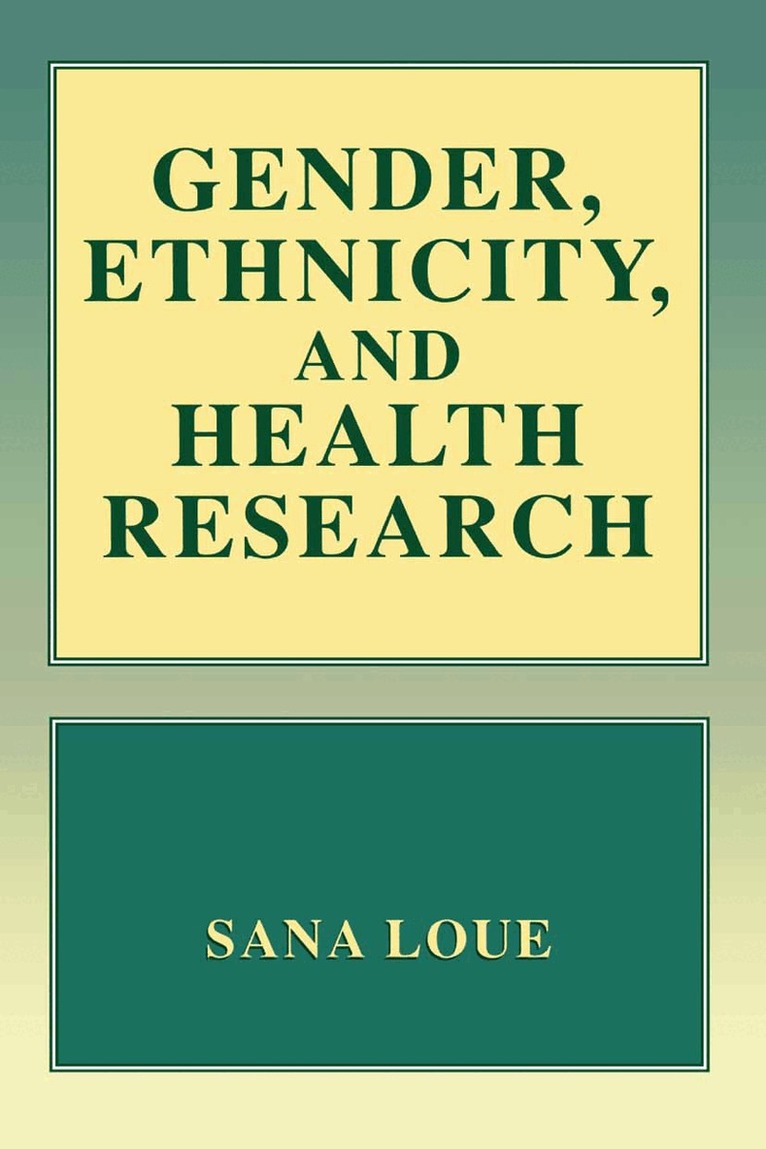
    Gender, Ethnicity, and Health Research

    AvSana Loue

    Inbunden, Engelska, 1999

    1 124 kr

    Beställningsvara. Skickas inom 10-15 vardagar. Fri frakt över 249 kr.

    Fler format och utgåvor

    E-bok

    1 459 kr

    Övrigt

    665 kr

    Häftad

    1 124 kr

    Beskrivning

    This text examines the basic constructs of gender, sex, ethnicity, and race. These constructs are routinely used in the analysis of data in a number of fields, including epidemiology, health services research, sociology, and medical anthropology. Despite the widespread use of these terms, little thought has been given to what they really mean. What does it mean, for instance, to say that African Americans are at a higher risk of AIDS than other groups? Is this really a surrogate for sexual behaviour? For access to medical care? For an unknown genetic difference in the immune system? Since ethnicity/race is not a mutable characteristic, are we accomplishing anything by focusing on it as a risk factor or risk marker, or should we be examining its underlying meaning? Should we continue to utilize these constructs and, if so, how? What are the implications for intervention programs and intervention research? This text addresses these constructs of gender and ethnicity in a manner that challenges the conventional wisdom within the health sciences.

    Produktinformation

    • Utgivningsdatum:1999-08-31
    • Mått:178 x 254 x 13 mm
    • Vikt:592 g
    • Format:Inbunden
    • Språk:Engelska
    • Antal sidor:195
    • Upplaga:1999
    • Förlag:Springer Science+Business Media
    • ISBN:9780306461729

    Utforska kategorier

    • Antropologi inom Samhälle och politik
    • Samhällsmedicin och preventiv medicin inom Medicin

    Innehållsförteckning

    • Prologue: Understanding Social Constructs.- Prologue: Understanding Social Constructs.- Foundations.- Ethical Principles Governing Research Involving Human Participants.- Principles of Research Design.- Race and Ethnicity.- Sex, Gender, and Sexual Orientation.- Health Care Utilization and Access.- The Health of Communities.- African-American Health.- Asian and Pacific Islander Health.- Hispanic Health.- The Health of Native Americans.- Women and Health.- Sexual Orientation and Health.- Case Studies of Disease.- Case Study One Human Immunodeficiency Virus (HIV) and the Acquired Immunodeficiency Syndrome (AIDS).- Case Study Two Diabetes Mellitus.