E-bok, Engelska, 2017
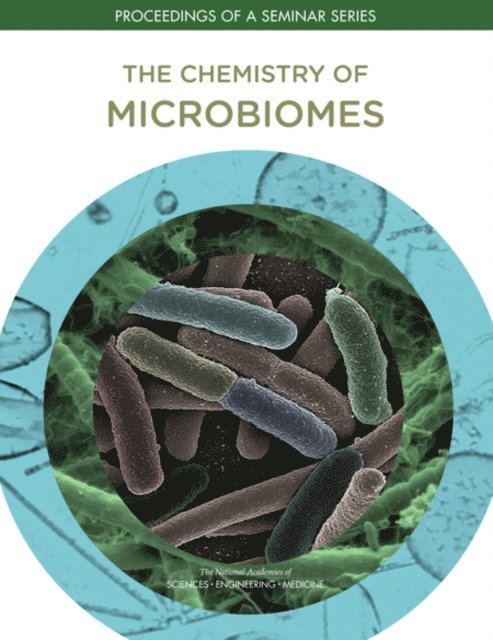
Chemistry of Microbiomes
Av Chemical Sciences Roundtable, Board on Chemical Sciences and Technology, Division on Earth and Life Studies, and Medicine National Academies of Sciences, Engineering
814 kr
Läs direkt i Bokus Reader – eller ladda ned till din enhet
Beskrivning
The 21st century has witnessed a complete revolution in the understanding and description of bacteria in eco- systems and microbial assemblages, and how they are regulated by complex interactions among microbes, hosts, and environments. The human organism is no longer considered a monolithic assembly of tissues, but is instead a true ecosystem composed of human cells, bacteria, fungi, algae, and viruses. As such, humans are not unlike other complex ecosystems containing microbial assemblages observed in the marine and earth environments. They all share a basic functional principle: Chemical communication is the universal language that allows such groups to properly function together. These chemical networks regulate interactions like metabolic exchange, antibiosis and symbiosis, and communication.
The National Academies of Sciences, Engineering, and Medicine''s Chemical Sciences Roundtable organized a series of four seminars in the autumn of 2016 to explore the current advances, opportunities, and challenges toward unveiling this "chemical dark matter" and its role in the regulation and function of different ecosystems. The first three focused on specific ecosystems—earth, marine, and human—and the last on all microbiome systems. This publication summarizes the presentations and discussions from the seminars.
Produktinformation
- Utgivningsdatum: 2017-07-19
- Språk: Engelska
- Antal sidor: 132
- Filformat: EPUB
- Kopieringsskydd: LCP
- ISBN: 9780309458399
- Förlag: National Academies Press
Utforska kategorier
Betyg & recensioner
0 recensioner
Inga recensioner tillgängliga.