E-bok, Engelska, 2002
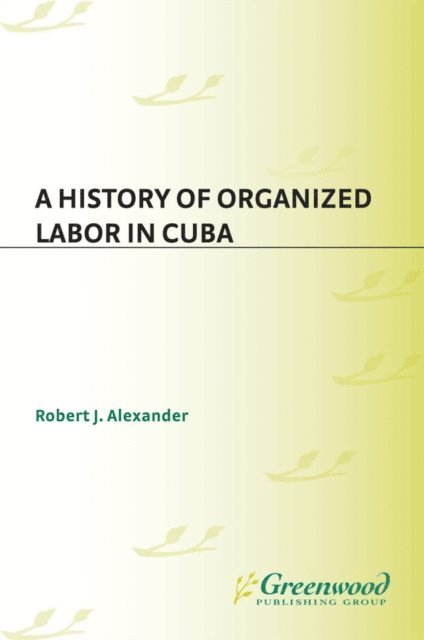
History of Organized Labor in Cuba
1166 kr
Läs direkt i Bokus Reader – eller ladda ned till din enhet (PDF kräver ofta zoom och scroll på små skärmar).
Beskrivning
Robert J. Alexander traces organized labor from its origins in colonial Cuba, examining its evolution under the Republic, noting the successive political forces within it and the development of collective bargaining, culminating after 1959 in its transformation into a Stalin-model labor movement. In Castro's Cuba, organized labor has been subordinate to the Party and government and has been converted into a movement to control the workers and stimulate production and productivity instead of being a movement to defend the interests and desires of the workers.
Starting with the organization of tobacco workers and a few other groups in the last years of Spanish colonial rule, Robert J. Alexander traces the growth of the labor movement during the early decades of the republic, noting particularly the influence of three political tendencies: anarchosyndicalists, Marxists, and independents. He examines the generally unfavorable attitudes of early republican governments to the labor movement, and he discusses the first central labor body, the CNOC, which was at first under anarchist influence, and soon captured by the Communists. The role of the CNOC vis-á-vis the Machado dictatorship, including the deal with Machado in 1933 is also discussed. Alexander then looks at the unions during the short Grau San Martine nationalist regime of 1933 and the near-destruction of organized labor by the Batista dictatorship of 1934-1937; the revival of the labor movement after the 1937 deal of the Communists with Batista and the establishment of the Confederacion de Trabajadores de Cuba, as well as the struggles for power within it, resulting in a split in the CTC in 1947, with the dominance of the Autentico-party controlled group. During this period regular collective bargaining became more or less the rule. He then describes the deterioration of the Confederacion of Trabajadores de Cuba under the Batista dictatorship of 1952-1959. Alexander ends with a description of organized labor during the Castro regime: the early attempt of revolutionary trade unionists to establish an independent labor movement, followed by the Castro government's seizure of control of the CTC and its unions, and the conversion of the Cuban labor movement into one patterned after the Stalinist model of a movement designed to stimulate production and productivity—under government control—instead of defending the rights and interests of the unions' members.
Based on an extensive review of Cuban materials as well as Alexander's numerous interviews, correspondence, and conversations with key figures from the late 1940s onward, this is the most comprehensive English-language examination of organized labor in Cuba ever written. Essential reading for all scholars and students of Cuban and Latin American labor and economic affairs as well as important to political scientists and historians of the region.
Starting with the organization of tobacco workers and a few other groups in the last years of Spanish colonial rule, Robert J. Alexander traces the growth of the labor movement during the early decades of the republic, noting particularly the influence of three political tendencies: anarchosyndicalists, Marxists, and independents. He examines the generally unfavorable attitudes of early republican governments to the labor movement, and he discusses the first central labor body, the CNOC, which was at first under anarchist influence, and soon captured by the Communists. The role of the CNOC vis-á-vis the Machado dictatorship, including the deal with Machado in 1933 is also discussed. Alexander then looks at the unions during the short Grau San Martine nationalist regime of 1933 and the near-destruction of organized labor by the Batista dictatorship of 1934-1937; the revival of the labor movement after the 1937 deal of the Communists with Batista and the establishment of the Confederacion de Trabajadores de Cuba, as well as the struggles for power within it, resulting in a split in the CTC in 1947, with the dominance of the Autentico-party controlled group. During this period regular collective bargaining became more or less the rule. He then describes the deterioration of the Confederacion of Trabajadores de Cuba under the Batista dictatorship of 1952-1959. Alexander ends with a description of organized labor during the Castro regime: the early attempt of revolutionary trade unionists to establish an independent labor movement, followed by the Castro government's seizure of control of the CTC and its unions, and the conversion of the Cuban labor movement into one patterned after the Stalinist model of a movement designed to stimulate production and productivity—under government control—instead of defending the rights and interests of the unions' members.
Based on an extensive review of Cuban materials as well as Alexander's numerous interviews, correspondence, and conversations with key figures from the late 1940s onward, this is the most comprehensive English-language examination of organized labor in Cuba ever written. Essential reading for all scholars and students of Cuban and Latin American labor and economic affairs as well as important to political scientists and historians of the region.
Produktinformation
- Utgivningsdatum: 2002-11-30
- Språk: Engelska
- Antal sidor: 304
- Filformat: PDF
- Kopieringsskydd: LCP
- ISBN: 9780313014222
- Förlag: Bloomsbury Publishing Plc
Utforska kategorier
Betyg & recensioner
0 recensioner
Inga recensioner tillgängliga.