E-bok, Engelska, 1996
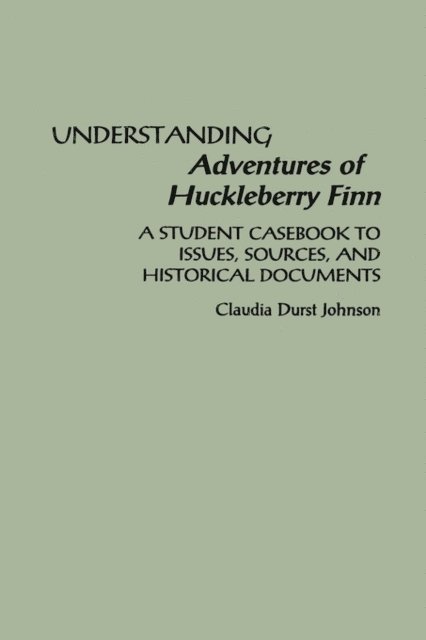
Understanding Adventures of Huckleberry Finn
986 kr
Läs direkt i Bokus Reader – eller ladda ned till din enhet (PDF kräver ofta zoom och scroll på små skärmar).
Beskrivning
Since the time of its publication in 1884, Adventures of Huckleberry Finn has generated heated controversy. One of the most frequently banned books in the history of literature, it raises issues of race relations, censorship, civil disobedience, and adolescent group psychology as relevant today as they were in the 1880s. This collection of historical documents, collateral readings, and commentary captures the stormy character of the slave-holding frontier on the eve of war and highlights the legacy of past conflicts in contemporary society. Among the source materials presented are: memoirs of fugitive slaves, a river gambler, a gunman, and Mississippi Valley settlers; the Southern Code of Honor; rules of dueling; and an interview with a 1990s gang member.
These materials will promote interdisciplinary study of the novel and enrich the student's understanding of the issues raised. The work begins with a literary analysis of the novel's structure, language, and major themes and examines its censorship history, including recent cases linked to questions of race and language. A chapter on censorship and race offers a variety of opposing contemporary views on these issues as depicted in the novel. The memoirs in the chapter Mark Twain's Mississippi Valley illuminate the novel's pastoral view of nature in conflict with a violent civilization resting on the institution of slavery and shaped by the genteel code of honor. Slavery, Its Legacy, and Huck Finn features 19th-century pro-slavery arguments, firsthand accounts of slavery, the text of the Missouri Compromise of 1820 and the Fugitive Slave Law of 1850, and opposing views on civil disobedience from such 19th- and 20th-century Americans as Ralph Waldo Emerson, Stephen A. Douglas, and William Sloane Coffin. Nineteenth-century commentators on the Southern Code of Honor and Twain's sentimental cultural satire directly relate the novel to the social and cultural milieu in which it was written. Each chapter closes with study questions, student project ideas, and sources for further reading on the topic. This is an ideal companion for teacher use and student research in English and American history courses.
These materials will promote interdisciplinary study of the novel and enrich the student's understanding of the issues raised. The work begins with a literary analysis of the novel's structure, language, and major themes and examines its censorship history, including recent cases linked to questions of race and language. A chapter on censorship and race offers a variety of opposing contemporary views on these issues as depicted in the novel. The memoirs in the chapter Mark Twain's Mississippi Valley illuminate the novel's pastoral view of nature in conflict with a violent civilization resting on the institution of slavery and shaped by the genteel code of honor. Slavery, Its Legacy, and Huck Finn features 19th-century pro-slavery arguments, firsthand accounts of slavery, the text of the Missouri Compromise of 1820 and the Fugitive Slave Law of 1850, and opposing views on civil disobedience from such 19th- and 20th-century Americans as Ralph Waldo Emerson, Stephen A. Douglas, and William Sloane Coffin. Nineteenth-century commentators on the Southern Code of Honor and Twain's sentimental cultural satire directly relate the novel to the social and cultural milieu in which it was written. Each chapter closes with study questions, student project ideas, and sources for further reading on the topic. This is an ideal companion for teacher use and student research in English and American history courses.
Produktinformation
- Utgivningsdatum: 1996-06-24
- Språk: Engelska
- Antal sidor: 264
- Filformat: PDF
- Kopieringsskydd: LCP
- ISBN: 9780313090370
- Förlag: Bloomsbury Publishing Plc
- Serie: Greenwood Press "Literature in Context" Series
Utforska kategorier
Betyg & recensioner
0 recensioner
Inga recensioner tillgängliga.