• Fri frakt över 249 kr
  • •
  • Snabba leveranser
  • •
  • Billiga böcker
Kundservice

Du är på sajten för privatpersoner.

Företag, bibliotek eller offentlig verksamhet?

Du handlar på classic.bokus.com, där alla dina funktioner finns intakta.
Till classic.bokus.com
Bokus logotyp. Gå till startsidan.
  • Erbjudanden
  • Nyheter
  • Student
  • Topplistor
  • Barn & ungdom
  • Bokus Play
  • E-böcker
  • Pocketböcker
  • Spel & pussel

10% rabatt på allt med kod: NYSTART10 →

Sidfot

Mina sidor

    Hjälp

    • Kundservice
    • Vanliga frågor och svar
    • Frakt och leverans
    • Retur vid ångerrätt
    • Reklamera vara
    • Betalning
    • Köpvillkor
    • Allmänna villkor
    • Information om webbplatsens tillgänglighet

    Om Bokus

    • Om oss
    • Pressrum
    • För studenter
    • För företag
    • För bibliotek och offentlig verksamhet
    • För leverantörer
    • Hållbarhet

    Populärt

    • Aktuella erbjudanden
    • Presentkort
    • Studentlitteratur
    • Nya böcker
    • Topplistor
    • Signerade böcker
    • Engelska böcker

    Inspiration

    • Boktips
    • BookTok
    • Populära bokserier
    • Barnbokskaraktärer
    • Populära författare
    Logotyp för Bokus
    Följ oss på Facebook (extern länk)Följ oss på Instagram (extern länk)Följ oss på YouTube (extern länk)Följ oss på TikTok (extern länk)
    bokus @ CookiesAnpassa cookiesIntegritetspolicyKöpvillkor
    Till Citymail hemsida (extern länk)Till Budbee hemsida (extern länk)Till Postnord hemsida (extern länk)Till Schenker hemsida (extern länk)Till Early Bird hemsida (extern länk)Till Walleys hemsida (extern länk)
    1. Ekonomi och Ledarskap
    2. Nationalekonomi

    Income and Wealth

    AvAlan Reynolds

    Inbunden, Engelska, 2006

    Del i serien Greenwood Guides to Business and Economics

    793 kr

    Beställningsvara. Skickas inom 10-15 vardagar. Fri frakt över 249 kr.

    Fler format och utgåvor

    E-bok

    855 kr

    Beskrivning

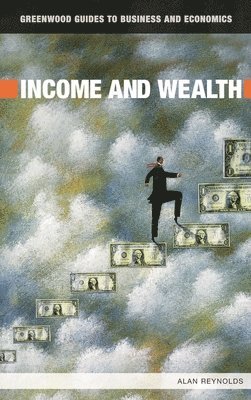
    Why some people are rich and others poor can be explained in a number of ways. Income and Wealth focuses on who gets what and why. It explains the dynamics of income generation, how it is measured, and how such dramatic disparities in distribution come about. The book first defines various characteristics of income, with an emphasis on the gap between the rich and the poor, and reviews several theories to explain the disparities. Subsequent chapters discuss such timely topics as the vanishing middle class and the sky-high salaries of CEOs, Hollywood stars, and athletes. The final chapters consider the implications of policies, such as the minimum wage, taxes, immigration, and trade quotas, and expand the discussion to consider international comparisons. Featuring graphs and charts, a glossary of key terms, and a listing of references and resources, Income and Wealth explains the intricate, and often controversial, effects of economic policies on individuals, families, and communities. Moreover, it shows how the numbers can be manipulated by policymakers, pundits, journalists, and academics to promote various agendas—and shows readers how to recognize hyberbole and make better-informed decisions.

    Produktinformation

    • Utgivningsdatum:2006-09-30
    • Mått:156 x 235 x 18 mm
    • Vikt:510 g
    • Format:Inbunden
    • Språk:Engelska
    • Serie:Greenwood Guides to Business and Economics
    • Antal sidor:248
    • Förlag:Bloomsbury Publishing Plc
    • ISBN:9780313336881
    • Utmärkelser:Winner of The National Chamber Foundation's Top Ten Books that Drive the Debate 2006

    Utforska kategorier

    • Nationalekonomi inom Ekonomi och Ledarskap

    Mer om författaren

    Alan Reynolds is a Senior Fellow at the Cato Institute and was formerly Director of Economic Research at the Hudson Institute. He served as Research Director with the National Commission on Tax Reform and Economic Growth, as advisor to the National Commission on the Cost of Higher Education, and as a member of the OMB transition team in 1981. His studies have been published by the Organization for Economic Cooperation and Development, the Joint Economic Committee, the Federal Reserve Banks of Atlanta and St. Louis, and the Australian Stock Exchange. Author of The Microsoft Antitrust Appeal (2001), he has written for numerous publications since 1971, including The Wall Street Journal, The New York Times, National Review, The New Republic, Fortune, and the Harvard Business Review. A former columnist with Forbes and Reason, his weekly column is now nationally syndicated.

    Recensioner i media

    Reynolds challenges many so-called myths held by academics, columnists, and public affairs junkies concerning inequities in the recent growth of individual income and wealth in the US. Beginning with a useful, lucid-to-the-general-reader chapter on concepts and measures, this book is intended to show that the growing gap between the rich and the poor in the US is mainly the result of the number of workers in households and their age and education, and that the so-called disappearance of the middle class is more statistical than actual. In fact, Reynolds contends that since 1973 total labor compensation has been increasing and that the distribution of consumption expenditures by income class points to a reduction in inequality as compared with 1986. A critical chapter refutes recent literature concerning huge increases in income going to the top 1 percent of taxpayers as being due merely to changes in tax laws. Reynolds also addresses the minimum wage, taxes, immigration, international trade, and globalization. The book excels in charts and tables, glossary of terms, and references, including online resources. An extremely useful addition to the literature in the ongoing conservative-liberal debate on the distribution of US income and wealth. Highly recommended. General readers; academic audiences, upper-division undergraduate and up; professionals.

    Innehållsförteckning

    • IllustrationsSeries Foreword by Wesley B. TruittIntroduction1. Concepts and Measures2. Work Matters3. A Vanishing Middle Class?4. The Wage Stagnation Thesis5. The Top 1 Percent6. CEOs and Celebrities7. Wealth Is Not Distributed8. Consumption Inequality, Lifetime Income, and Mobility9. Causes and CuresGlossaryOnline ResourcesIndex