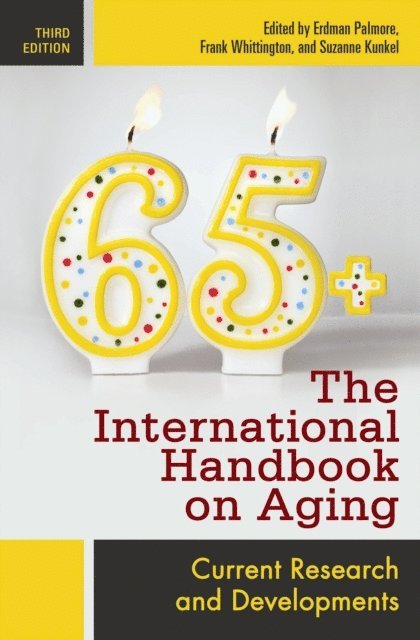
E-bok, Engelska, 2009
International Handbook on Aging
Av Erdman P. Palmore, Frank Whittington, Suzanne Kunkel
561 kr
Läs direkt i Bokus Reader – eller ladda ned till din enhet (PDF kräver ofta zoom och scroll på små skärmar).
Beskrivning
The United Nations World Assembly on Aging has made advancing health and well-being into old age a worldwide call for action. And this text at hand shows us what researchers worldwide are doing to answer that call. Here, three of America's most esteemed experts on aging lead a global team of contributors - each an expert in his or her country - to show us what the top challenges of each nation are, and what top research is being done there to meet those. While we cannot predict with absolute certainty all of the issues that will arise over the next 20 years, we can anticipate some and we must start now to prepare for these challenges, an expert from the U.S. Department of Health and Human Services warned at a recent UN World Assembly on Aging. Needed response to the global population shift is not just the responsibility of governments, but will be a product of wise, long-term decisions made by individuals and societies, she explained.
In most nations globally, populations are graying and the number of people aged 65 and older is vastly increasing, creating a larger segment of senior citizens than the world has ever before seen. Across human history, the elderly accounted for no more than 3 percent of the world population. By the year 2030, the elderly are expected to make up about 25 percent of the world population. And while longevity is of course seen as a great success, longer lifespan for such masses also creates dilemmas. For example, the incidence of dementia has already increased significantly with an 11-fold increase in people aged 65 and older in the US since the turn of the century, and a similar increase in aged people in Scotland has researchers there scrambling to find treatments for what they expect will be a 75 percent increase in dementia over the next 25 years. Chronic diseases that come with aging are already taxing health care systems in the US and around the world to Japan, with most experts aware their current health systems would be overrun and lack enough staff and facilities to handle the needs of an elderly population multiplying largely in the coming two decades. Increases in psychological issues such as dealing with the depression often striking aged people are impending, too, as are social issues such as how families, and public policies, will deal with the changing shape of the family.
In most nations globally, populations are graying and the number of people aged 65 and older is vastly increasing, creating a larger segment of senior citizens than the world has ever before seen. Across human history, the elderly accounted for no more than 3 percent of the world population. By the year 2030, the elderly are expected to make up about 25 percent of the world population. And while longevity is of course seen as a great success, longer lifespan for such masses also creates dilemmas. For example, the incidence of dementia has already increased significantly with an 11-fold increase in people aged 65 and older in the US since the turn of the century, and a similar increase in aged people in Scotland has researchers there scrambling to find treatments for what they expect will be a 75 percent increase in dementia over the next 25 years. Chronic diseases that come with aging are already taxing health care systems in the US and around the world to Japan, with most experts aware their current health systems would be overrun and lack enough staff and facilities to handle the needs of an elderly population multiplying largely in the coming two decades. Increases in psychological issues such as dealing with the depression often striking aged people are impending, too, as are social issues such as how families, and public policies, will deal with the changing shape of the family.
Produktinformation
- Utgivningsdatum: 2009-10-27
- Språk: Engelska
- Antal sidor: 724
- Filformat: PDF
- Kopieringsskydd: LCP
- ISBN: 9780313352317
- Förlag: Bloomsbury Publishing Plc
- Upplaga: 3
- Medarbetare: George L. Maddox
Utforska kategorier
Betyg & recensioner
0 recensioner
Inga recensioner tillgängliga.