Du är på sajten för privatpersoner.
349 kr
Beställningsvara. Skickas inom 7-10 vardagar. Fri frakt över 249 kr.
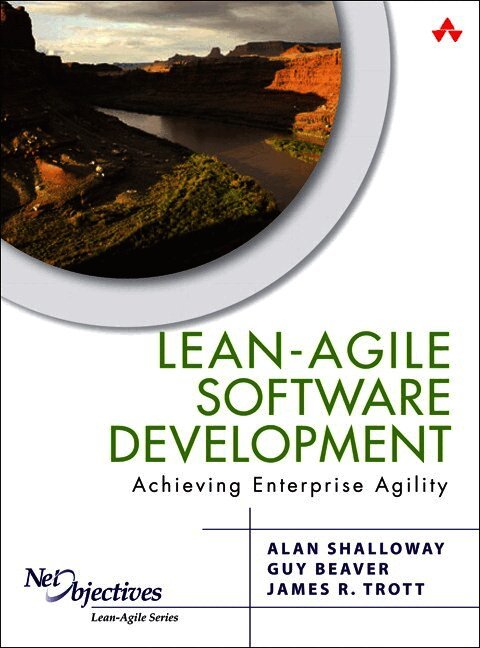
Alan Shalloway is the founder and CEO of Net Objectives. With almost 40 years of experience, Alan is an industry thought leader. He helps companies transition to Lean and Agile methods enterprise-wide as well teaches courses in Lean, Kanban, Scrum, Design Patterns, and Object-Orientation. Alan has developed training and coaching methods for Lean-Agile that have helped his clients achieve long-term, sustainable productivity gains. He is a popular speaker at prestigious conferences worldwide. He is the primary author of Design Patterns Explained: A New Perspective on Object-Oriented Design, Lean-Agile Pocket Guide for Scrum Teams, Lean-Agile Software Development: Achieving Enterprise Agility and is currently writing Essential Skills for the Agile Developer. He has a Master of Science in Computer Science from MIT as well as a Master of Science in Mathematics from Emory University. Guy Beaver is Vice-President, Enterprise Engagements and a senior consultant for Net Objectives. He is a technology executive with a track record of success in Lean-Agile implementations in large, mid-sized, and start-up organizations. He is a recognized expert in Lean, Agile, and Scrum technical development with a proven ability to lead, manage, and motivate organizations to realize significant productivity and quality improvements. He has over 25 years of experience in Software Engineering and IT across several industries including financial services, defense, and healthcare. Guy has a Master of Science in Physics from Wake Forest University. James R. Trott is a senior consultant for Net Objectives. He has used object-oriented and pattern-based analysis techniques throughout his 20-year career in knowledge management and knowledge engineering. He is the co-author of Design Patterns Explained: A New Perspective on Object-Oriented Design, Lean-Agile Software Development: Achieving Enterprise Agility, and the Lean-Agile Pocket Guide for Scrum Teams. He is a trainer and coach in the area of reflective practices, knowledge management, and process improvement and is a knowledge management consultant for international relief and development agencies. He has a Master of Science in Applied Mathematics and a Master of Business Administration from the University of Oklahoma and a Master of Arts in Intercultural Studies from Hope International University. An Associate Technical Fellow of a large aerospace company, he has also worked in the energy industry, banking and finance, software development, and artificial intelligence.
“This book is a timely addition to our Agile body of knowledge. Very little has been said to date about how we scale Agile software projects beyond the single team. The authors do an excellent job of explaining the foundations of Lean thinking and how these concepts can be applied across the enterprise. Lean is the key to scaling Agile projects, and this book provides the foundational knowledge you need to make it happen.”–Mike Cottmeyer, product consultant and Agile evangelist, VersionOne “The book brings a pragmatic approach to the difficult transition from early adoption of Agile practices to enabling product development. It is thought provoking in the context of the teams I am currently coaching, and it highlights a number of areas for improvement. I would recommend this book to anyone who is coaching an enterprise-wide Lean-Agile transformation.”–Kay Johnson, PMP, Agile development consultant and project manager “The ideas from the Toyota Production System and Lean manufacturing in general are gradually making their way into the world of software development, and this book provides both a gentle introduction to those unfamiliar with Agile/Lean as well as more advanced material for those who are already practitioners in this area. Worth reading.”–Mark Needham, application developer, ThoughtWorks “For a good few years, when asking why Agile approaches work, we got the response ‘It’s empirical. We tried things and kept the ones that worked.’ Now people have applied theory from the Lean body of knowledge, and it tells us why Agile approaches work. Using this theory, we can make well-reasoned choices about what changes to our ways of working would be improvements, overall. This book is about this synergy between Lean and Agile. For those who believe in magic, find an empirical guru to believe. For the rationalists among us, here’s a good book for you.”–Paul Oldfield, Capgemini “This book is a worthy roadmap to a successful adoption of Lean-Agile development and management. You can see in every detail the authors have on-the-job experience. The way they write shows their enthusiasm for Lean, and this motivates the reader to follow the principles and practices in the book. I had a great time reading this book and I am using it daily as a reference.”–Domingo Chabalgoit , independent IT consultant “There are many sources of information for Agile software development and Lean systems thinking. Until now, attempts to merge the two have often resulted in frustration, delays, quality issues, and budget overruns. Lean-Agile Software Development is the roadmap to achieving success using Lean-Agile techniques and applying them throughout the enterprise and product-development life cycle.”–Bob Bogetti, lead system designer, Baxter Healthcare
Alan Shalloway, James Trott
Häftad, 2004
418 kr
Alan Shalloway, Scott Bain, Ken Pugh, Amir Kolsky
Häftad, 2011
349 kr
Amir Kolsky, Ken Pugh, Scott Bain, Alan Shalloway
379 kr
Alan Shalloway, Scott Bain, Ken Pugh, Amir Kolsky
Häftad, 2011
349 kr
Alan Shalloway, James Trott
Häftad, 2004
418 kr
Alan Shalloway, Scott Bain, Ken Pugh, Amir Kolsky
Häftad, 2011
349 kr
Amir Kolsky, Ken Pugh, Scott Bain, Alan Shalloway
379 kr
Peter Englund
Inbunden, 2026
199 kr239 kr