• Fri frakt över 249 kr
  • •
  • Snabba leveranser
  • •
  • Billiga böcker
Kundservice

Du är på sajten för privatpersoner.

Företag, bibliotek eller offentlig verksamhet?

Du handlar på classic.bokus.com, där alla dina funktioner finns intakta.
Till classic.bokus.com
Bokus logotyp. Gå till startsidan.
  • Erbjudanden
  • Nyheter
  • Student
  • Topplistor
  • Barn & ungdom
  • Bokus Play
  • E-böcker
  • Pocketböcker
  • Spel & pussel

10% rabatt på allt med kod: NYSTART10 →

Sidfot

Mina sidor

    Hjälp

    • Kundservice
    • Vanliga frågor och svar
    • Frakt och leverans
    • Retur vid ångerrätt
    • Reklamera vara
    • Betalning
    • Köpvillkor
    • Allmänna villkor
    • Information om webbplatsens tillgänglighet

    Om Bokus

    • Om oss
    • Pressrum
    • För studenter
    • För företag
    • För bibliotek och offentlig verksamhet
    • För leverantörer
    • Hållbarhet

    Populärt

    • Aktuella erbjudanden
    • Presentkort
    • Studentlitteratur
    • Nya böcker
    • Topplistor
    • Signerade böcker
    • Engelska böcker

    Inspiration

    • Boktips
    • BookTok
    • Populära bokserier
    • Barnbokskaraktärer
    • Populära författare
    Logotyp för Bokus
    Följ oss på Facebook (extern länk)Följ oss på Instagram (extern länk)Följ oss på YouTube (extern länk)Följ oss på TikTok (extern länk)
    bokus @ CookiesAnpassa cookiesIntegritetspolicyKöpvillkor
    Till Citymail hemsida (extern länk)Till Budbee hemsida (extern länk)Till Postnord hemsida (extern länk)Till Schenker hemsida (extern länk)Till Early Bird hemsida (extern länk)Till Walleys hemsida (extern länk)
    1. Data och IT
    2. Programmeringsböcker

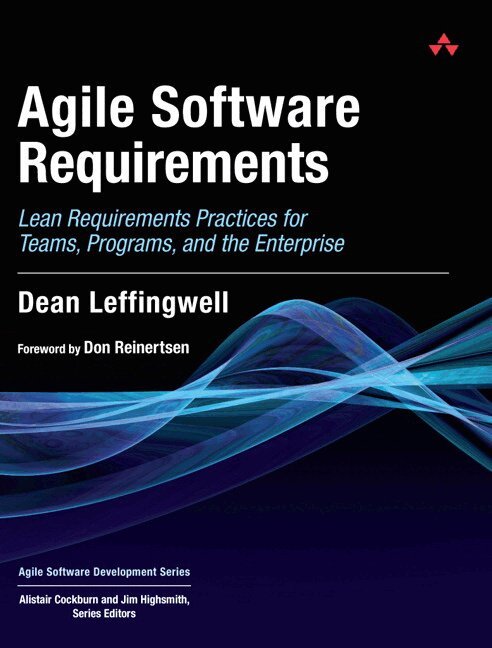
    Agile Software Requirements

    Lean Requirements Practices for Teams, Programs, and the Enterprise

    AvDean Leffingwell

    Inbunden, Engelska, 2011

    Del i serien Agile Software Development Series

    400 kr

    Beställningsvara. Skickas inom 7-10 vardagar. Fri frakt över 249 kr.

    Beskrivning

    “We need better approaches to understanding and managing software requirements, and Dean provides them in this book. He draws ideas from three very useful intellectual pools: classical management practices, Agile methods, and lean product development. By combining the strengths of these three approaches, he has produced something that works better than any one in isolation.”

    –From the Foreword by Don Reinertsen, President of Reinertsen & Associates; author of Managing the Design Factory; and leading expert on rapid product development

    Effective requirements discovery and analysis is a critical best practice for serious application development. Until now, however, requirements and Agile methods have rarely coexisted peacefully. For many enterprises considering Agile approaches, the absence of effective and scalable Agile requirements processes has been a showstopper for Agile adoption. In Agile Software Requirements, Dean Leffingwell shows exactly how to create effective requirements in Agile environments.

    • Part I presents the “big picture” of Agile requirements in the enterprise, and describes an overall process model for Agile requirements at the project team, program, and portfolio levels
    • Part II describes a simple and lightweight, yet comprehensive model that Agile project teams can use to manage requirements
    • Part III shows how to develop Agile requirements for complex systems that require the cooperation of multiple teams
    • Part IV guides enterprises in developing Agile requirements for ever-larger “systems of systems,” application suites, and product portfolios

    This book will help you leverage the benefits of Agile without sacrificing the value of effective requirements discovery and analysis. You’ll find proven solutions you can apply right now–whether you’re a software developer or tester, executive, project/program manager, architect, or team leader.

    Produktinformation

    • Utgivningsdatum:2011-02-03
    • Mått:194 x 239 x 34 mm
    • Vikt:1 085 g
    • Format:Inbunden
    • Språk:Engelska
    • Serie:Agile Software Development Series
    • Antal sidor:560
    • Upplaga:1
    • Förlag:Pearson Education
    • ISBN:9780321635846

    Utforska kategorier

    • Programmeringsböcker inom Data och IT

    Mer om författaren

    Dean Leffingwell, a thirty-year software industry veteran, has spent his career helping software teams achieve their goals. A renowned methodologist, author, coach, entrepreneur, and executive, he founded Requisite, Inc., makers of RequisitePro, and served as its CEO. As vice president at Rational Software (now part of IBM), he led the commercialization of the Rational Unified Process. As an independent consultant and as an advisor to Rally Software, he has helped entrepreneurial teams and large, distributed, multinational corporations implement Agile methods at scale. He is the author of Scaling Software Agility: Best Practices for Large Enterprises (Addison-Wesley, 2007) and is the lead author of Managing Software Requirements, Second Edition (Addison-Wesley, 2003), which has been translated into five languages.

    Recensioner i media

    Praise for Agile Software Requirements  “In my opinion, there is no book out there that more artfully addresses the specific needs of agile teams, programs, and portfolios all in one. I believe this book is an organizational necessity for any enterprise.”–Sarah Edrie, Director of Quality Engineering, Harvard Business School  “Agile Software Requirements and Mr. Leffingwell’s teachings have been very influential and inspiring to our organization. They have allowed us to make critical cultural changes to the way we approach software development by following the framework he’s outlined here. It has been an extraordinary experience.”–Chris Chapman, Software Development Manager, Discount Tire  “This book supplies empirical wisdom connected with strong and very well-structured theory of succeeding with software projects of different scales. People new to agile, practitioners, or accomplished agilists–we all were waiting for such a book.”–Oleksandr (Alex) Yakyma, Agile Consultant, www.enter-Agile.com  “This book presents practical and proven agile approaches for managing software requirements for a team, collaborating teams of teams, and all across the enterprise. However, this is not only a great book on agile requirements engineering; rather, Leffingwell describes the bigger picture of how the enterprise can achieve the benefits of business agility by implementing lean product development flow. His ‘Big Picture’ of agile requirements is an excellent reference for any organization pursuing an intrinsically lean software development operational mode. Best of all, we’ve applied many of these principles and practices at Nokia (and even helped create some of them), and therefore we know they work.–Juha-Markus Aalto, Agile Change Program Manager, Nokia Corporation  “This pragmatic, easy-to-understand, yet thought-provoking book provides a hands-on guide to addressing a key problem that enterprises face: How to make requirements practices work effectively in large-scale agile environments. Dean Leffingwell’s focus on lean principles is refreshing and much needed!”–Per Kroll, author, and Chief Architect for Measured Improvements, IBM  “Agile programming is a fluid development environment. This book serves as a good starting point for learning.”–Brad Jackson, SAS Institute Inc.  “Dean Leffingwell captures the essence of agile in its entirety, all the way from the discrete user story in the ‘trenches’ to complex software portfolios at the enterprise level. The narrative balances software engineering theory with pragmatic implementation aspects in an easy-to-understand manner. It is a book that demands to be read in a single sitting.”–Israel Gat, http://theAgileexecutive.com, @Agile_exec on Twitter  “An incredibly complete, clear, concise, and pragmatic reference for agile software development. Much more than mere guidelines for creating requirements, building teams, and managing projects, this reference work belongs on the bookshelf of anyone and everyone involved with not only agile processes but software development in general.”–R.L. Bogetti, Lead System Designer, Baxter Healthcare  “This book covers software requirements from the team level to program and portfolio levels, including the architecture management and a consistent framework for the whole enterprise. We have practiced the multi-team release planning and the enterprise-level architecture work with kanban and achieved instant success in our organization. Combining the principles of the product development flow with the current large-scale agile and lean software development is a really novel concept. Well worth reading and trying out the ideas here.” –Santeri Kangas, Chief Software Architect, and Gabor Gunyho, Lean Change Agent, F-Secure Corp.  “Dean Leffingwell and his Agile Release Train (ART) concept guides us from teamlevel agile to enterprise-level agile. The ART concept is a very powerful tool in planning and managing large software programs and helps to identify and solve potential organizational roadblocks–early.”–Markku Lukkarinen, Head of Programs, Nokia Siemens Networks

    Innehållsförteckning

    • Foreword xxiiiPreface xxviiAcknowledgments xxxiiiAbout the Author xxxv  Part I: Overview: The Big Picture 1  Chapter 1: A Brief History of Software Requirements Methods 3Software Requirements in Context: Decades ofPredictive, Waterfall-Like Processes 5Iterative and Incremental Processes 9Adaptive (Agile) Processes 12Requirements Management in Agile Is Fundamentally Different 16Enterprise-Scale Adaptive Processes 19Introduction to Lean Software 20Summary 28  Chapter 2: The Big Picture of Agile Requirements 31The Big Picture Explained 32Big Picture: Team Level 34Big Picture: Program Level 38Big-Picture Elements: Portfolio Level 43Summary 45  Chapter 3: Agile Requirements for the Team 47Introduction to the Team Level 47Agile Team Roles and Responsibilities 50User Stories and the Team Backlog 55Acceptance Tests 58Unit Tests 60Summary 61  Chapter 4: Agile Requirements for the Program 63Introduction to the Program Level 63Organizing Agile Teams at Scale 64Vision 74Features 75Nonfunctional Requirements 77The Agile Release Train 80Roadmap 81Summary 82  Chapter 5: Agile Requirements for the Portfolio 83Introduction to the Portfolio Level 83Investment Themes 84Portfolio Management Team 85Epics and the Portfolio Backlog 85Epics, Features, and Stories 87Architectural Runway and Architectural Epics 88Summary 91Summary of the Full, Enterprise Requirements Information Model 91  Interlude: Case Study: Tendril Platform 93Background for the Case Study 93System Context Diagram 95  Part II: Agile Requirements for the Team 97  Chapter 6: User Stories 99Introduction 99User Story Form 102INVEST in Good User Stories 105Splitting User Stories 111Spikes 114Technical Spikes and Functional Spikes 114Story Modeling with Index Cards 116Summary 117  Chapter 7: Stakeholders, User Personas, and User Experiences 119Stakeholders 119Identifying Stakeholders 122User Personas 126Agile and User Experience Development 129Summary 133  Chapter 8: Agile Estimating and Velocity 135Introduction 135Why Estimate? The Business Value of Estimating 137Estimating Scope with Story Points 138Understanding Story Points: An Exercise 138An Alternate Technique: Tabletop Relative Estimation 145From Scope Estimates to Team Velocity 146Caveats on the Relative Estimating Model 147From Velocity to Schedule and Cost 148Estimating with Ideal Developer Days 149A Hybrid Model 151Summary 152  Chapter 9: Iterating, Backlog, Throughput, and Kanban 155Iterating: The Heartbeat of Agility 155Backlog, Lean, and Throughput 169Software Kanban Systems 179Summary 180  Chapter 10: Acceptance Testing 183Why Write About Testing in an Agile Requirements Book? 183Agile Testing Overview 184What Is Acceptance Testing? 187Characteristics of Good Story Acceptance Tests 188Acceptance Test-Driven Development 190Acceptance Test Template 192Automated Acceptance Testing 193Unit and Component Testing 196Summary 199  Chapter 11: Role of the Product Owner 201Is This a New Role? 201Perspectives on Dual Roles of Product Owner and Product Manager 202Responsibilities of the Product Owner in the Enterprise 207Five Essential Attributes of a Good Product Owner 218Collaboration with Product Managers 220Product Owner Bottlenecks: Part-Time Product Owners, Product Owner Proxies, Product Owner Teams 221Seeding the Product Owner Role in the Enterprise 222Summary 224  Chapter 12: Requirements Discovery Toolkit 227The Requirements Workshop 228Brainstorming 232Interviews and Questionnaires 237User Experience Mock-Ups 241Forming a Product Council 243Competitive Analysis 244Customer Change Request Systems 245Use-Case Modeling 247Summary 247  Part III: Agile Requirements for the Program 249  Chapter 13: Vision, Features, and Roadmap 251Vision 251Expressing the Vision 252Features 255Estimating Features 257Testing Features 260Prioritizing Features 261The Roadmap 271Summary 273  Chapter 14: Role of the Product Manager 275Product Manager, Business Analyst? 276Responsibilities of the Product Manager in a Product Company 276Business Responsibilities of the Role in the IT/IS Shop 278Responsibility Summary 279Phases of Product Management Disillusionment in the Pre-Agile Enterprise 280Evolving Product Management in the Agile Enterprise 283Responsibilities of the Agile Product Manager 287Summary 297  Chapter 15: The Agile Release Train 299Introduction to the Agile Release Train 300Driving Strategic Alignment 304Institutionalizing Product Development Flow 305Designing the Agile Release Train 308Planning the Release 308Tracking and Managing the Release 309Release Retrospective 310Measuring Release Predictability 310Releasing 313Summary 317  Chapter 16: Release Planning 319Preparing for Release Planning 319Release Planning Narrative, Day 1 322Release Planning Narrative, Day 2 328Stretch Goals 336Summary 338  Chapter 17: Nonfunctional Requirements 339Modeling Nonfunctional Requirements 340Exploring Nonfunctional Requirements 342Persisting Nonfunctional Requirements 347Testing Nonfunctional Requirements 348Template for an NFR Specification 352Summary 354  Chapter 18: Requirements Analysis Toolkit 355Activity Diagrams 357Sample Reports 358Pseudocode 358Decision Tables and Decision Trees 359Finite State Machines 361Message Sequence Diagrams 364Entity-Relationship Diagrams 365Use-Case Modeling 366Summary 366  Chapter 19: Use Cases 367The Problems with User Stories and Backlog Items 368Five Good Reason to Still Use Use Cases 368Use Case Basics 369A Use Case Example 375Applying Use Cases 377Use Cases in the Agile Requirements Information Model 378Summary 379  Part IV: Agile Requirements for the Portfolio 381  Chapter 20: Agile Architecture 383Introduction to the Portfolio Level of the Big Picture 383Systems Architecture in Enterprise-Class Systems 384Eight Principles of Agile Architecture 390Implementing Architectural Epics 399Splitting Architecture Epics 403Summary 405  Chapter 21: Rearchitecting with Flow 407Architectural Epic Kanban System 408Overview of the Architectural Epic Kanban System 4091. The Funnel: Problem/Solution Needs Identification 4122. Backlog 4153. Analysis 4184. Implementation 423Summary 427  Chapter 22: Moving to Agile Portfolio Management 429Portfolio Management 429When Agile Teams Meet the PMO: Two Ships Pass in the Night 431Legacy Mind-Sets Inhibit Enterprise Agility 432Legacy Mind-Sets in Portfolio Management 433Eight Recommendations for Moving to Agile Portfolio Management 436Summary: On to Agile Portfolio Planning 447  Chapter 23: Investment Themes, Epics, and Portfolio Planning 449Investment Themes 450Epics 452Identifying and Prioritizing Business Epics: A Kanban System for Portfolio Planning 456Summary 467  Chapter 24: Conclusion 469Further Information 470  Appendix A: Context-Free Interview 471  Appendix B: Vision Document Template 475  Appendix C: Release Planning Readiness Checklist 485  Appendix D: Agile Requirements Enterprise Backlog Meta-model 489   Bibliography 491Index 495

    Betyg & recensioner

    4/5