• Fri frakt över 249 kr
  • •
  • Snabba leveranser
  • •
  • Billiga böcker
Kundservice

Du är på sajten för privatpersoner.

Företag, bibliotek eller offentlig verksamhet?

Du handlar på classic.bokus.com, där alla dina funktioner finns intakta.
Till classic.bokus.com
Bokus logotyp. Gå till startsidan.
  • Erbjudanden
  • Nyheter
  • Student
  • Topplistor
  • Barn & ungdom
  • Bokus Play
  • E-böcker
  • Pocketböcker
  • Spel & pussel

10% studentrabatt med kod TERM26

Sidfot

Mina sidor

    Hjälp

    • Kundservice
    • Vanliga frågor och svar
    • Frakt och leverans
    • Retur vid ångerrätt
    • Reklamera vara
    • Betalning
    • Köpvillkor
    • Allmänna villkor
    • Information om webbplatsens tillgänglighet

    Om Bokus

    • Om oss
    • Pressrum
    • För studenter
    • För företag
    • För bibliotek och offentlig verksamhet
    • För leverantörer
    • Hållbarhet

    Populärt

    • Aktuella erbjudanden
    • Presentkort
    • Studentlitteratur
    • Nya böcker
    • Topplistor
    • Signerade böcker
    • Engelska böcker

    Inspiration

    • Boktips
    • BookTok
    • Populära bokserier
    • Barnbokskaraktärer
    • Populära författare
    Logotyp för Bokus
    Följ oss på Facebook (extern länk)Följ oss på Instagram (extern länk)Följ oss på YouTube (extern länk)Följ oss på TikTok (extern länk)
    bokus @ CookiesAnpassa cookiesIntegritetspolicyKöpvillkor
    Till Citymail hemsida (extern länk)Till Budbee hemsida (extern länk)Till Postnord hemsida (extern länk)Till Schenker hemsida (extern länk)Till Early Bird hemsida (extern länk)Till Walleys hemsida (extern länk)
    1. Naturvetenskap och teknik
    2. Teknik och industri
    3. Tillverkningsteknik

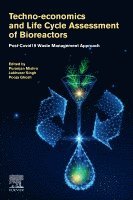
    Techno-economics and Life Cycle Assessment of Bioreactors

    Post-COVID-19 Waste Management Approach

    AvPuranjan Mishra,Lakhveer Singh

    Häftad, Engelska, 2022

    1 933 kr

    Beställningsvara. Skickas inom 10-15 vardagar. Fri frakt över 249 kr.

    Beskrivning

    Techno-economics and Life Cycle Assessment of Bioreactors: Post-Covid19 Waste Management Approach covers the emerging trends in bioreactor research, including techno-economics and life cycle assessment perspectives, both key considerations in making the anaerobic-digestion process technically feasible, economically viable and environmentally sustainable. The book is divided into three sections, with an introductory chapter on the impact of COVID-19 on existing practices of waste and resource management. Sections cover advances in bioreactor development for enhanced valorization of waste, the techno-economics of the different bioreactor systems, the life cycle assessment of bioreactors, their methodological challenges and future perspectives.

    Providing a holistic overview of bioreactors and taking into account recent trends in their design, the chapters also highlight the advances needed to manage COVID-19 waste in a sustainable manner. With contributions from leading experts in bioreactor and life cycle assessment, this book will be an invaluable reference source for academics working on anaerobic digesters and energy sustainability, as well as for research and development professionals in the renewable energy industry, and scientists and engineers working on clean and efficient energy generation from wastes.


    • Reinforces our understanding of the basic concepts and applications of bioreactors
    • Includes a comprehensive evaluation of "Techno-economics� and "Environmental impact analysis� through a life cycle assessment approach
    • Covers bioreactor advancements and a prognosis for the maximum utilization of waste for the increase transformation of waste to wealth
    • Enables the broad range spectrum of potential technological and environmental impacts occurring across product generation

    Produktinformation

    • Utgivningsdatum:2022-06-17
    • Mått:152 x 229 x 18 mm
    • Vikt:390 g
    • Format:Häftad
    • Språk:Engelska
    • Antal sidor:246
    • Förlag:Elsevier Science
    • ISBN:9780323898485

    Utforska kategorier

    • Tillverkningsteknik inom Naturvetenskap och teknik

    Mer om författaren

    Dr. Puranjan Mishra, studied Biotechnology at Himachal Pradesh University, India. Then he moved University Malaysia Pahang, Malaysia, where he completed his doctorate. In his Ph. D dissertation, he studied waste-water treatment processes for maximum energy recovery from waste, further investigated the impact of nano-metal oxides on the fermentation processes and received degree in area of Renewable Energy and Environmental Engineering. Presently he is carrying out his Post-doctoral at University Malaysia Pahang, Pahang (Malaysia). His current research interest is in the area of anaerobic digestion, Enzymology, Nanomaterials synthesis, mainly for Energetic applications (H2 and CH4, Biomass utilization). His scientific research work has been published in more than 20 peer-reviewed with high impacts manuscripts including book chapter. His works have been cited more than 192 times with an h index of 8 and an i10 index of 8 (https://scholar.google.com.my/citations?user=7n0WuWgAAAAJ&hl=en). He is reviewer of Elsevier’s journal including International journal of hydrogen energy, Journal of Cleaner Production, Waste and Biomass valorisation etc. He has also reviewed many book chapters which later-on published under American Chemical Society and Taylor & Francis publication house. Dr Lakhveer Singh, an associate professor at Sardar Patel University, Mandi (Himachal Pradesh), India, is a leading figure in sustainable research. His focus areas include energy production, bio?electrochemical systems, wastewater treatment, and nanomaterial synthesis. Singh’s impact is evident through his 30 edited books, 130 high-impact papers, and his editorial role at Biomass Conversion and Biorefineries, published by Springer. Pooja Ghosh did her Masters in Environmental Biology from University of Delhi, India followed by her doctorate in Environmental Microbiology and Biotechnology from Jawaharlal Nehru University, India. Her doctoral work involved risk assessment of landfill leachate from unengineered landfill sites and its treatment and detoxification. It contributed significantly in aiding policymakers, environmentalists, scientists, students, and most importantly, citizens, in realizing the problem of unengineered landfill sites of India. Currently, she is working as a DST-Inspire Faculty at Indian Institute of Technology Delhi, India and carrying out her post-doctoral research on energy recovery from municipal solid wastes using bioreactor landfill technology and assessing the environmental profiles and greenhouse gas emissions in the bioreactor landfill and comparing it with the alternative waste management options used in India using Life Cycle Assessment methodology. Her broad research interests include Solid waste management, Bioremediation, Wastewater treatment, Toxicology, Life cycle assessment and sustainability. She has published in over 20 peer-reviewed journals and book chapters, being cited 385 times with an h index of 11 and an i10 index of 12. She is a reviewer of Bioresource Technology, Science of the total environment, Environmental Science and Pollution Research, Ecotoxicology and Environmental Safety, Chemosphere and Journal of Environmental Management.

    Innehållsförteckning

    • Section 1. Bioreactors: Current status, recent trends and challenges1. Impact of COVID-19 on waste and resource management practices2. Aerobic and anaerobic bioreactor systems3. Global scenario of bioreactors for organic removing and recycling4. Emerging trends in bioreactor systems5. Bioreactors: Potential and research challengesSection 2. Techno-economic assessment of bioreactors6. Concept of techno-economics7. Sustainability matrices for bioreactors8. Technological Impact assessment of Bioreactors9. Economic Impact assessment of BioreactorsSection 3. Life cycle assessment of bioreactors10. Basics of life cycle assessment11. Life cycle assessment models for bioreactors12. Life cycle inventory (LCI) of bioreactors13. Life cycle Impact Assessment of bioreactors14. Challenges and emerging approaches in life cycle assessment15. Role of LCA in policy making