• Fri frakt över 249 kr
  • •
  • Snabba leveranser
  • •
  • Billiga böcker
Kundservice

Du är på sajten för privatpersoner.

Företag, bibliotek eller offentlig verksamhet?

Du handlar på classic.bokus.com, där alla dina funktioner finns intakta.
Till classic.bokus.com
Bokus logotyp. Gå till startsidan.
  • Erbjudanden
  • Nyheter
  • Student
  • Topplistor
  • Barn & ungdom
  • Bokus Play
  • E-böcker
  • Pocketböcker
  • Spel & pussel

10% rabatt på allt med kod: NYSTART10 →

Sidfot

Mina sidor

    Hjälp

    • Kundservice
    • Vanliga frågor och svar
    • Frakt och leverans
    • Retur vid ångerrätt
    • Reklamera vara
    • Betalning
    • Köpvillkor
    • Allmänna villkor
    • Information om webbplatsens tillgänglighet

    Om Bokus

    • Om oss
    • Pressrum
    • För studenter
    • För företag
    • För bibliotek och offentlig verksamhet
    • För leverantörer
    • Hållbarhet

    Populärt

    • Aktuella erbjudanden
    • Presentkort
    • Studentlitteratur
    • Nya böcker
    • Topplistor
    • Signerade böcker
    • Engelska böcker

    Inspiration

    • Boktips
    • BookTok
    • Populära bokserier
    • Barnbokskaraktärer
    • Populära författare
    Logotyp för Bokus
    Följ oss på Facebook (extern länk)Följ oss på Instagram (extern länk)Följ oss på YouTube (extern länk)Följ oss på TikTok (extern länk)
    bokus @ CookiesAnpassa cookiesIntegritetspolicyKöpvillkor
    Till Citymail hemsida (extern länk)Till Budbee hemsida (extern länk)Till Postnord hemsida (extern länk)Till Schenker hemsida (extern länk)Till Early Bird hemsida (extern länk)Till Walleys hemsida (extern länk)
    1. Naturvetenskap och teknik
    2. Matematik och naturvetenskap
    3. Biologi

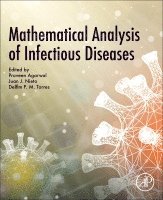
    Mathematical Analysis of Infectious Diseases

    AvPraveen Agarwal,Juan J. Nieto

    Häftad, Engelska, 2022

    1 436 kr

    Beställningsvara. Skickas inom 10-15 vardagar. Fri frakt över 249 kr.

    Beskrivning

    Mathematical Analysis of Infectious Diseases updates on the mathematical and epidemiological analysis of infectious diseases. Epidemic mathematical modeling and analysis is important, not only to understand disease progression, but also to provide predictions about the evolution of disease. One of the main focuses of the book is the transmission dynamics of the infectious diseases like COVID-19 and the intervention strategies. It also discusses optimal control strategies like vaccination and plasma transfusion and their potential effectiveness on infections using compartmental and mathematical models in epidemiology like SI, SIR, SICA, and SEIR.

    The book also covers topics like: biodynamic hypothesis and its application for the mathematical modeling of biological growth and the analysis of infectious diseases, mathematical modeling and analysis of diagnosis rate effects and prediction of viruses, data-driven graphical analysis of epidemic trends, dynamic simulation and scenario analysis of the spread of diseases, and the systematic review of the mathematical modeling of infectious disease like coronaviruses.


    • Offers analytical and numerical techniques for virus models
    • Discusses mathematical modeling and its applications in treating infectious diseases or analyzing their spreading rates
    • Covers the application of differential equations for analyzing disease problems
    • Examines probability distribution and bio-mathematical applications

    Produktinformation

    • Utgivningsdatum:2022-06-08
    • Mått:191 x 235 x 22 mm
    • Vikt:710 g
    • Format:Häftad
    • Språk:Engelska
    • Antal sidor:344
    • Förlag:Elsevier Science
    • ISBN:9780323905046

    Utforska kategorier

    • Biologi inom Naturvetenskap och teknik

    Mer om författaren

    Dr. Praveen Agarwal is currently a Full Professor and Vice Principal at Anand International College of Engineering, Jaipur, India. Dr. P. Agarwal was born in Jaipur (India) on August 18, 1979. After completing his schooling, he earned his Master’s degree from Rajasthan University in 2000. In 2006, he earned his Ph. D. (Mathematics) at the Malviya National Institute of Technology (MNIT) in Jaipur, India, one of the highest-ranking universities in India. Recently, Prof. Agarwal is listed as the World's Top 2% Scientist 2020 and 21, Released by Stanford UniversityDr. Agarwal has been actively involved in research as well as pedagogical activities for the last 20 years. His major research interests include Special Functions, Fractional Calculus, Numerical Analysis, Differential and Difference Equations, Inequalities, and Fixed Point Theorems. He is an excellent scholar, dedicated teacher, and prolific researcher. He has published 9 research monographs and edited volumes and more than 250 publications (with almost 100 mathematicians all over the world) in prestigious national and international mathematics journals. Dr. Agarwal worked previously either as a regular faculty or as a visiting professor and scientist in universities in several countries, including India, Germany, Turkey, South Korea, the UK, Russia, Malaysia, and Thailand. He has held several positions including Visiting Professor, Visiting Scientist, and Professor at various universities in different parts of the world. Especially, he was awarded the most respected International Centre for Mathematical Sciences (ICMS) Group Research Fellowship to work with Prof. Dr. Michael Ruzhansky-Imperial College London at ICMS Centre, Scotland, UK, and during 2017-18, he was awarded the most respected TUBITAK Visiting Scientist Fellowship to work with Prof. Dr. Onur at AhiEvran University, Turkey. He has been awarded by Most Outstanding Researcher-2018 (Award for contribution to Mathematics) by the Union Minister of Human Resource Development of India, Mr. Prakash Javadekar 2018. According to Google Scholar, Dr. Agarwal is cited more than 4, 580 times, and on Scopus, his work is cited more than 2,689 times. Dr. Agarwal is the recipient of several notable honors and awards. Dr. Agarwal provided significant service to Anand International College of Engineering, Jaipur. Under his leadership during 2010-20, Anand-ICE consistently progressed in the education and preparation of students, and in the new direction of academics, research, and development. His overall impact on the institute is considerable. Many scholars from different nations, including China, Uzbekistan, Thailand, and African Countries came to work under his guidance. The majority of these visiting post-doctoral scholars were sent to work under Dr. Agarwal by their employing institutions for at least one month. Juan José Nieto Roig is currently a Professor of Mathematical Analysis and Director of the Institute of Mathematics at the University of Santiago de Compostela where he has been affiliated since 1991. Dr. Nieto received his degree in Mathematics at the University of Santiago de Compostela in 1980. He was awarded a Fulbright scholarship and proceeded to the University of Texas at Arlington. He received his Ph.D. in Mathematics at the University of Santiago de Compostela in 1983. He is one of the most cited mathematicians in the world according to Web of Knowledge and appears in the Thompson Reuters Highly Cited Researchers list. He has also participated as editor in different mathematical journals including Editor in Chief of the journal, Nonlinear Analysis: Real World Applications from 2009 to 2012. In 2016, Nieto was admitted as a Fellow of the Royal Galician Academy of Sciences. Dr. Delfim F. M. Torres is currently a Professor, Director of the R&D Unit CIDMA, and Director of the Doctoral Programme Consortium MAP-PDMA in Applied Mathematics at the University of Aveiro in Portugal where he also obtained a PhD in Mathematics in 2002 and Habilitation in Mathematics in 2011. Prof Torres as written numerous scientific articles and has co-authored 5 books. He is a Renowned and Acclaimed Mathematician, having been awarded the title of Highly Cited Researcher in Mathematics in 2015, 2016, 2017, and 2019. His main Research area is the calculus of variations and optimal control; optimization; fractional derivatives and integrals; dynamic equations on time scales; and mathematical biology

    Recensioner i media

    "...presented as ‘the most recent and up-to-date developments in the mathematical and epidemiological analysis of infectious diseases.’ It is a collection of what look like conference papers, covering a wide variety of infectious diseases modeling topics and approaches…. accessible to audiences with a fair bit of mathematical sophistication…. [S]ome chapters that are more introductory and pedagogical in nature…are very good. Some topics are well covered (e.g., chapters 9 and 10) and others are very interesting applications…." --©Doody’s Review Service, 2023, David N Fisman, MD, MSc (University of Toronto Dalla Lana School of Public Health)

    Innehållsförteckning

    • 1. Spatiotemporal Dynamics Of The First Wave Of The Covid-19 Epidemic In Brazil2. Transport And Optimal Control Of Vaccination Dynamics For Covid-193. COVID-19’s Pandemic: A New Way Of Thinking Through Linear Combinations Of Proportions4. Stochastic Sica Epidemic Model With Jump L\'Evy Processes5. Examining The Correlation Between The Weather Conditions And Covid-19 Pandemic In Galicia6. A Fractional-Order Malaria Model With Temporary Immunity7. Parameter Identification In Epidemiological Models8. Lyapunov Functions And Stability Analysis Of Fractional-Order Systems9. Some Key Concepts Of Mathematical Epidemiology10. Analytical Solutions And Parameter Estimation Of The Sir Epidemic Model11. Global Stability of a Diffusive SEIR Epidemic Model with Distributed Delay12. Application Of Fractional Order Differential Equations In Modeling Viral Disease Transmission13. Role Of Immune Effector Responses During Hcv Infection: A Mathematical Study14. Modeling The Impact Of Isolation During An Outbreak Of Ebola Virus Disease15. Application Of The Stochastic Arithmetic To Validate The Results Of Nonlinear Fractional Model Of Hiv Infection For Cd8+T-Cells16. Existence Of Solutions Of Modified Fractional Integral Equation Models For Endemic Infectious Diseases17. Numerical solution of a fractional epidemic model via general Lagrange scaling functions with bibliometric analysis