• Fri frakt över 249 kr
  • •
  • Snabba leveranser
  • •
  • Billiga böcker
Kundservice

Du är på sajten för privatpersoner.

Företag, bibliotek eller offentlig verksamhet?

Du handlar på classic.bokus.com, där alla dina funktioner finns intakta.
Till classic.bokus.com
Bokus logotyp. Gå till startsidan.
  • Erbjudanden
  • Student
  • Topplistor
  • Barn & ungdom
  • Bokus Play
  • E-böcker
  • Ljudböcker
  • Pocketböcker
  • Spel & pussel

Upp till 25% på utvalda nyheter →

Sidfot

Mina sidor

    Hjälp

    • Kundservice
    • Vanliga frågor och svar
    • Frakt och leverans
    • Retur vid ångerrätt
    • Reklamera vara
    • Betalning
    • Köpvillkor
    • Allmänna villkor
    • Information om webbplatsens tillgänglighet

    Om Bokus

    • Om oss
    • Pressrum
    • För studenter
    • För företag
    • För bibliotek och offentlig verksamhet
    • För leverantörer
    • Hållbarhet

    Populärt

    • Aktuella erbjudanden
    • Presentkort
    • Studentlitteratur
    • Nya böcker
    • Topplistor
    • Signerade böcker
    • Engelska böcker

    Inspiration

    • Boktips
    • BookTok
    • Populära bokserier
    • Barnbokskaraktärer
    • Populära författare
    Logotyp för Bokus
    Följ oss på Facebook (extern länk)Följ oss på Instagram (extern länk)Följ oss på YouTube (extern länk)Följ oss på TikTok (extern länk)
    bokus @ CookiesAnpassa cookiesIntegritetspolicyKöpvillkor
    Till Citymail hemsida (extern länk)Till Budbee hemsida (extern länk)Till Postnord hemsida (extern länk)Till Schenker hemsida (extern länk)Till Early Bird hemsida (extern länk)Till Walleys hemsida (extern länk)
    1. Naturvetenskap och teknik
    2. Teknik och industri
    3. Tillverkningsteknik

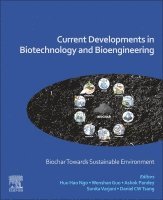
    Current Developments in Biotechnology and Bioengineering

    Biochar Towards Sustainable Environment

    AvHuu Hao Ngo,Wenshan Guo

    Häftad, Engelska, 2023

    2 250 kr

    Beställningsvara. Skickas inom 10-15 vardagar. Fri frakt över 249 kr.

    Beskrivning

    The primary concern of environmental sustainability is to: (i) reduce use of physical and depletable resources; (ii) recycle and use renewable resources; (iii) redesign the production process to eliminate the production of toxic materials and protect the environment. Biochar, as a renewable material, can be produced from various sustainable biomass feedstocks through pyrolysis technologies. Biochar Towards Sustainable Environment highlights the contribution of biochar to environmental sustainability. The book provides a detailed overview of the sustainable biomass wastes feedstocks and different technologies for biochar production, and its sustainable applications in various aspects.

    • Includes sustainable production and activation of biochar from various biowastes
    • Describes multiple applications of biochar for sustainable environment
    • Covers sustainable assessments of the biochar production and application

    Produktinformation

    • Utgivningsdatum:2023-01-10
    • Mått:191 x 235 x 29 mm
    • Vikt:450 g
    • Format:Häftad
    • Språk:Engelska
    • Antal sidor:496
    • Förlag:Elsevier Science
    • ISBN:9780323918732

    Utforska kategorier

    • Tillverkningsteknik inom Naturvetenskap och teknik

    Mer om författaren

    Prof. Ngo is currently a Professor of Environmental Engineering and serving as Deputy Director of Centre for Technology in Water and Wastewater, Co-Director of Joint Research Centre for Protective Infrastructure Technology and Environmental Green Bioprocess, School of Civil and Environmental Engineering, Faculty of Engineering and Information Technology, University of Technology Sydney. He has been duly elected as Fellow of International Water Association (FIWA) and Fellow and Lead Researcher of the International Bioprocessing Association (FIBA and LRIBA) while serving as IBA Council Member. Prof. Ngo is internationally well-known for his activities in the areas of advanced biological waste treatment technologies (e.g. membrane bioreactor, specific attached and/or suspended growth bioreactors, anaerobic digesters, wetland and bio-sorption) and membrane technologies. His expertise and practical experience also covers the areas of alternative resources, management and impacts assessment, and solid waste management. Currently, he is very active to work on the development of specific green bioprocessing technologies: resource recovery, water-waste- bioenergy nexus and greenhouse gas emission control. Prof. Ngo has been listed as Highly Cited Researcher 2019 in Cross Field Category, Clarivate Analytics, Web of Science; Elsevier - World Top 3 ranking researcher 2019 in Environmental Engineering; Lead Researcher in the field of Biotechnology in Australia. He ranks #2 in the world for number of scholarly outputs in the SciVal topic ‘membrane fouling; bioreactors; membrane bioreactors (SciVal, Feb 2020). He ranks #1 in Australia for number of scholarly outputs in the SciVal topic ‘biosorption; aqueous solution; bisorption capacity; ‘antibiotics; oxytetracycline; veterinary antibiotics’, (SciVal, Feb 2020). Prof. Ngo has published more than 500 SCI/ISI journal papers (citations >20,000), 7 books and 35 book chapters, a number of patents while receiving several highly recognized honours/awards. He has been invited to give numerous plenary/keynotes and invited talks, seminars and lecturers in the international conferences as well as the universities/research institutions. Prof. Ngo has appointed as Editor of Bioresource Technology, Elsevier, Associate Editor of Science of the Total Environment, Elsevier, Associate Editor of Water Process Engineering and Associate Editor of Heliyon Journal, Elsevier. He is also an editorial board member/guest editor of numerous international journals such as Bioresource Technology Reports, Elsevier; Environmental Nanotechnology, Monitoring and Management, Elsevier; Journal of Energy and Environmental Sustainability, IJSEES, Environmental Science and Ecotechnology, EHIT, Journal of Bioengineered, Taylor & Francis. Prof. Wenshan Guo is a Professor in School of Civil and Environmental Engineering, University of Technology Sydney (UTS). She is also a core member in Centre for Technology in Water and Wastewater (CTWW) at UTS and her research focuses on the innovative water and wastewater treatment and reuse technologies. Her expertise and practical experience cover the areas of water and wastewater engineering such as membrane bioreactor, advanced biological wastewater treatment technologies, physico-chemical separation technologies, solid waste management, environmental assessment and desalination. Her current research is in the areas of green technologies for resource and energy recovery, waste-to-energy, water-waste-energy nexus and climate change mitigation. She has authored 1 book, 19 book chapters, and more than 350 papers. She is currently serving as Editor of Bioresource Technology Report (Elsevier), Associate Editors of Journal of Hazardous, Toxic & Radioactive Waste (ASCE), and Academic Editor of Journal of Chemistry (Hindawi Publishing Corporation, USA). Prof. Ashok Pandey is currently Executive Director, Centre for Energy and Environmental Sustainability-India, Lucknow. His major research and technological development interests are industrial and environmental biotechnology and energy biosciences, focusing on biomass to biofuels and chemicals, waste to wealth and energy, etc.Dr. Sunita Varjani is Scientific Officer at Gujarat Pollution Control Board, Gandhinagar, Gujarat, India. Her major areas of research are Industrial and Environmental Microbiology/Biotechnology. She has worked as visiting scientist at EPFL, Lausanne, Switzerland. Dr. Varjani has authored more than 110 publications, including research and review papers, books and book chapters. She has won several awards, including Young Scientist Awards from Association of Microbiologists of India, International Society for Energy, Environment and Sustainability and AFRO-ASIAN Congress on Microbes for Human and Environmental Health, New Delhi; Top Reviewer Award - 2017, Bioresource Technology, Elsevier and Best Paper Awards in national and international conferences in 2008, 2012, 2013 and 2018. She is member of editorial board of Journal of Energy and Environmental Sustainability and has served as guest editor of special issues of Bioresource Technology, Environmental Science and Pollution Research, ASCE- Journal of Environmental Engineering and others. She is Management Council Member of the BRSI (www.brsi.in). Daniel C.W. Tsang is a Professor in the Department of Civil and Environmental Engineering at the Hong Kong University of Science and Technology and Pao Yue-Kong Chair Professor at the State Key Laboratory of Clean Energy Utilization of Zhejiang University in China. He was a Professor and MSc Programme Leader at the Hong Kong Polytechnic University, a Visiting Professor at the University of Queensland in Australia and Chulalongkorn University in Thailand, a Visiting Scholar at Stanford University in the US, an IMETE Scholar at Ghent University in Belgium, and a postdoctoral fellow at Imperial College London in the UK. With over 20 years of R&D experience, he has published more than 600 articles in top-tier journals and has been recognized among Stanford University’s Top 2% Scientists and Clarivate’s Highly Cited Researchers in the fields of Engineering and Environment & Ecology. His team is dedicated to developing green technologies for long-term decarbonization and promoting resource circularity and sustainable development. He serves as the Editor-in-Chief of npj Materials Sustainability (Springer Nature), Chairman of the Hong Kong Waste Management Association (2023-2025), and Chairman of the Waste Management Subcommittee of the Advisory Council on the Environment (2023 & 2024) of the Hong Kong SAR Government.

    Innehållsförteckning

    • 1. Sustainable biochar production technologies2. Sustainability of biochar production in biowaste management3. Biochar for sustainable construction4. Biochar for sustainable drainage systems5. Sustainable application of biochar for water purification6. Role of biochar in sustainable wastewater treatment7. Role of biochar in nutrients recovery from wastewater8. Application of Biochar for Improving Sewage Sludge Treatment9. Sustainable application of biochar for stormwater reuse10. Biochar for sustainable soil remediation11. Biochar for sustainable agriculture12. Sustainable application of biochar for energy storage and conversion13. Role of biochar in Polyaromatic Hydrocarbons Remediation and Environment Management14. Environmental sustainability-based comparison between biochar and hydrochar in respect of production, properties, applications and perspectives15. Sustainability assessment of the application of biochar16. Sustainability assessment of biochar for climate change mitigation