• Fri frakt över 249 kr
  • •
  • Snabba leveranser
  • •
  • Billiga böcker
Kundservice

Du är på sajten för privatpersoner.

Företag, bibliotek eller offentlig verksamhet?

Du handlar på classic.bokus.com, där alla dina funktioner finns intakta.
Till classic.bokus.com
Bokus logotyp. Gå till startsidan.
  • Erbjudanden
  • Nyheter
  • Student
  • Topplistor
  • Barn & ungdom
  • Bokus Play
  • E-böcker
  • Pocketböcker
  • Spel & pussel

10% rabatt på allt med kod NYSTART10 →

Sidfot

Mina sidor

    Hjälp

    • Kundservice
    • Vanliga frågor och svar
    • Frakt och leverans
    • Retur vid ångerrätt
    • Reklamera vara
    • Betalning
    • Köpvillkor
    • Allmänna villkor
    • Information om webbplatsens tillgänglighet

    Om Bokus

    • Om oss
    • Pressrum
    • För studenter
    • För företag
    • För bibliotek och offentlig verksamhet
    • För leverantörer
    • Hållbarhet

    Populärt

    • Aktuella erbjudanden
    • Presentkort
    • Studentlitteratur
    • Nya böcker
    • Topplistor
    • Signerade böcker
    • Engelska böcker

    Inspiration

    • Boktips
    • BookTok
    • Populära bokserier
    • Barnbokskaraktärer
    • Populära författare
    Logotyp för Bokus
    Följ oss på Facebook (extern länk)Följ oss på Instagram (extern länk)Följ oss på YouTube (extern länk)Följ oss på TikTok (extern länk)
    bokus @ CookiesAnpassa cookiesIntegritetspolicyKöpvillkor
    Till Citymail hemsida (extern länk)Till Budbee hemsida (extern länk)Till Postnord hemsida (extern länk)Till Schenker hemsida (extern länk)Till Early Bird hemsida (extern länk)Till Walleys hemsida (extern länk)
    1. Naturvetenskap och teknik
    2. Geovetenskap
    3. Geovetenskap
    4. Meteorologi och klimatologi

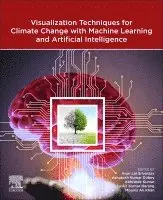
    Visualization Techniques for Climate Change with Machine Learning and Artificial Intelligence

    AvAshutosh Kumar Dubey,Abhishek Kumar

    Häftad, Engelska, 2022

    1 589 kr

    Beställningsvara. Skickas inom 10-15 vardagar. Fri frakt över 249 kr.

    Beskrivning

    Visualization Techniques for Climate Change with Machine Learning and Artificial Intelligence covers computer-aided artificial intelligence and machine learning technologies as related to the impacts of climate change and its potential to prevent/remediate the effects. As such, different types of algorithms, mathematical relations and software models may help us to understand our current reality, predict future weather events and create new products and services to minimize human impact, chances of improving and saving lives and creating a healthier world.

    This book covers different types of tools for the prediction of climate change and alternative systems which can reduce the levels of threats observed by climate change scientists. Moreover, the book will help to achieve at least one of 17 sustainable development goals i.e., climate action.


    • Includes case studies on the application of AI and machine learning for monitoring climate change effects and management
    • Features applications of software and algorithms for modeling and forecasting climate change
    • Shows how real-time monitoring of specific factors (temperature, level of greenhouse gases, rain fall patterns, etc.) are responsible for climate change and possible mitigation efforts to achieve environmental sustainability

    Produktinformation

    • Utgivningsdatum:2022-11-16
    • Mått:191 x 235 x 29 mm
    • Vikt:450 g
    • Format:Häftad
    • Språk:Engelska
    • Antal sidor:498
    • Förlag:Elsevier Science
    • ISBN:9780323997140

    Utforska kategorier

    • Meteorologi och klimatologi inom Naturvetenskap och teknik
    • Biologi inom Naturvetenskap och teknik

    Mer om författaren

    Ashutosh Kumar Dubey is an Associate Professor in the Department of Computer Science and Engineering at Chitkara University, Himachal Pradesh, India. He is also a Postdoctoral Fellow of the Ingenium Research Group Lab, Universidadde Castilla-La Mancha, Ciudad Real, Spain. Abhishek Kumar is Assistant Director and Professor in the Department of Computer Science and Engineering at Chandigarh University, Punjab, India. He holds a Ph.D. in Computer Science from the University of Madras and is currently a Post-Doctoral Fellow with the Ingenium Research Group, Universidad de Castilla-La Mancha, Ciudad Real, Spain. He received his M.Tech in Computer Science and Engineering and B.Tech in Information Technology from Rajasthan Technical University, Kota, India. He has over thirteen years of academic teaching experience. His research interests include artificial intelligence, computer vision, image processing, data mining, machine learning, and renewable energy systems. He has authored and edited several books with leading international publishers and serves as a reviewer for reputed journals. Sushil Kumar Narang is Dean and an Associate Professor in the Department of Computer Science & Engineering at Chitkara University, Rajpura, Punjab (India) since 2019. From 2006-2019, He was head of IT department at SAS Institute of IT & Research, Mohali, Punjab (India). From 1996-2006, He was Assistant Professor at Department of Computer Science & Applications, MLN College, Yamuna agar, Haryana (India).He has completed his Ph.D. at Panjab University, Chandigarh (India). His Research on “Feature Extraction and Neural Network Classifiers for Optical Character Recognition for Good quality hand written GurmukhiandDevnagariCharacters” focused on various image processing, machine as well as deep learning algorithms. His research interests lie in the area of programming languages, ranging from theory to design to implementation, Image Processing, Data Analytics and Machine Learning. He has collaborated actively with researchers in several other disciplines of computer science; particularly Machine Learning on real world use cases.He is a certified Deep Learning Engineer from Edureka. ​He possesses expertise in Object-Oriented Analysis & Design and Development using Java and Python programming using OpenCV in Image Processing and Neural Network construction. ​He has strong knowledge of C++ and Java with experience in component architecture of product interface. With Solid training and management skills, He has demonstrated proficiency in leading and mentoring individuals to maximize levels of productivity, while forming cohesive team environments. Moonis Ali Khan received his doctoral degree (Ph.D.) in Applied Chemistry from Aligarh Muslim University, Aligarh, India, in 2009. From 2009 to 2011, he worked as a Post-Doctoral Researcher at Yonsei University, South Korea and Universiti Putra Malaysia, Malaysia. In 2011, he joined the Chemistry Department at the King Saud University (KSU), Saudi Arabia as an Assistant Professor. Currently, he is working as an Associate Professor at KSU. He is an interfacial chemist and his research is focused on the synthesis and development of novel materials for environmental remediation applications. To date, he has guided two doctoral students for their respective degrees. He has published more than hundred (research and review) articles and has two U.S. patents to his credit. Dr. Arun Lal Srivastav is working as Professor and Associate Dean (Research), Tulas University, Dehradun, Uttarakhand, India. He received PhD from the Indian Institute of Technology (BHU), Varanasi. He has also done post-doctoral research at National Chung Hsing University, Taiwan. He is currently involved in the teaching of Environmental Science and Engineering, Disaster Management to the undergraduate engineering students. His research interests include water quality surveillance, climate change, water treatment, river ecosystem, soil health maintenance, engineering education, phytoremediation and waste management. Under his supervision, 3 PhD degrees have been awarded. He has published >150 research papers in various prestigious journals (Elsevier, Springer, IWA, Taylor & Francis etc.) including books, book chapters and conference publications. He has edited many books with Elsevier, Springer, NOVA, IGI global and Wiley. He worked on 04 Government sponsored projects (worth ~16 million INR) on phytoremediation, adsorption, capacity building, organic farming, leachate treatment, agro-waste management etc. He received the prestigious "Teachers Associateship for Research Excellence (TARE) Fellowship" followed by a research grant from the Science and Engineering Research Board (SERB), Govt. of India in 2022. He has also filed 31 patents on multidisciplinary topics and 14 out of which have been granted by the Government of India. He has also been recognized among the top 2% worldwide scientists of Earth and Environmental Sciences jointly by Stanford University and Elsevier in the year 2023, 2024 and 2025. Recently, his name has been included in top 0.05% scholars of the year 2025 by ScholarGPS in Environmental Sciences.

    Innehållsförteckning

    • 1. Climate uncertainties and biodiversity: An overviewRohit Kamboj2. Historical perspectives on climate change and its negative impacts on the natureShama E. Haque3. Impact of climate change on water quality and its assessmentSunita Verma4. Climate change impacts on water resources and adaptation strategiesSukanya raghavan5. Impact of Plastics in the Socio-economic disaster of Climate Change: The Roadblocks of SustainabilityArnab Banerjee6. Impression of Climatic Variation on Flora, Fauna and Human Being: A present State of ArtDipankar Ghosh7. Impact of air quality as a component of climate change on biodiversity-based ecosystem servicesSylvester Chibueze Izah8. Role of Climate Change in disasters occurrences: Forecasting and Management optionsAlok Pratap Singh9. Forecasting and management of disasters triggered by climate changeFatemeh Rajabi10. El-Niño Southern Oscillation and its EffectsSayantika Mukherjee11. Impact of socio-economic parameters on adoption of climate resilient technology under varying vulnerability conditions: Evidences from Himalayan RegionPardeep Singh12. Modelling and forecasting of climate change effects using artificial intelligence techniques Rajib Maity13. The role of artificial intelligence strategies to mitigate abiotic stress and climate change in crop productionRicha Saxena14. Application of Artificial Intelligence in Environmental Sustainability and Climate ChangeNeeta Kumari15. Machine learning approaches for climate change impact assessment in agriculture productionSwati Singh16. Benchmarking of traditional and advanced machine Learning modelling techniques for prediction of solarradiationDwijendra Nath Dwivedi17. Concept of climate smart villages using artificial intelligence/machine learningPurnima Mehta18. Significance of AI to develop mitigation strategies against climate change in accordance with sustainable development goal (climate action)Vijaya Ilango19. A cross-sectional study about the impacts of climate change on the flora, fauna and human society of Odisha, IndiaManojit Bhattacharya20. Development of mitigation strategies for the climate change using artificial intelligence to attain sustainabilityKartikey Sahil21. Role of artificial intelligence in environmental sustainability.Mohamed Habila