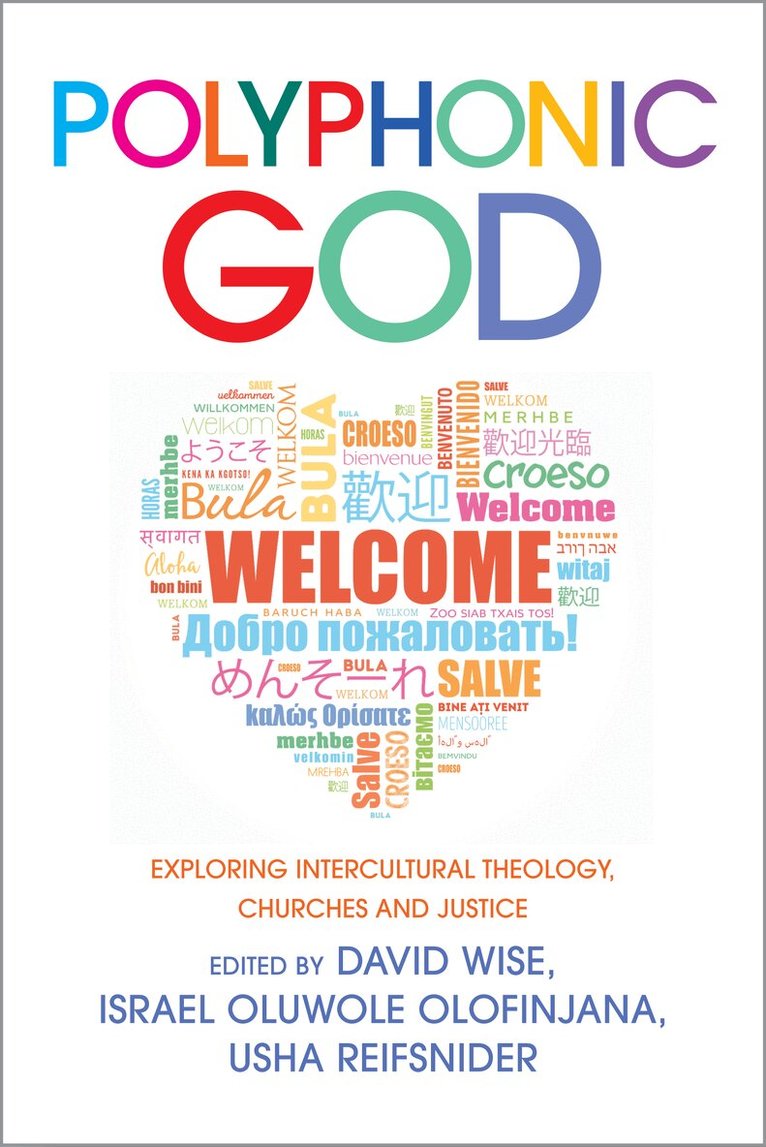
Polyphonic God
Exploring Intercultural Theology, Churches and Justice
AvUsha Reifsnider,Israel Oluwole Olofinjana
507 kr
Beställningsvara. Skickas inom 3-6 vardagar. Fri frakt över 249 kr.
Du är på sajten för privatpersoner.
AvUsha Reifsnider,Israel Oluwole Olofinjana
507 kr
Beställningsvara. Skickas inom 3-6 vardagar. Fri frakt över 249 kr.
Revd Dr Israel Oluwole Olofinjana is Director of the One People Commission of the Evangelical Alliance.Revd Dr David Wise is an accredited Baptist minister. He is a professional mentor and coach for Christian leaders and a speaker in local church and conference contexts.Dr Usha Reifsnider is Co-Regional Director of Lausanne Europe, as well as a cross cultural consultant, cultural anthropologist and missiologist.
Several features make Polyphonic God a significant contribution to the literature on ecclesial futures. First, the book is unapologetically grounded in the British context, with particular attention to the interplay between Black Majority Churches, historic denominations, and new intercultural congregations. This rootedness allows for thick description: the reader encounters specific places, leaders, and congregations rather than abstract models. At the same time, many of the dynamics explored – diaspora leadership, “reverse mission”, contested narratives of national identity – will resonate far beyond the UK.Second, the volume weaves together voices from different social locations and disciplines. Academics, denominational leaders, and local practitioners all contribute chapters, modelling the very polyphony it commends. This plurality is not merely about representation; it shapes the theological method. Missiology, political theology, practical theology, and leadership studies are brought into conversation in ways that resist easy systematization but mirror the complexity of lived intercultural church.Third, the editors insist that racial justice is not an optional “add-on” to intercultural ecclesiology but integral to it. Particularly in Part III, the book challenges any notion of “diverse” churches that leave underlying power structures untouched. The insistence that intercultural congregations must attend to histories of colonialism, whiteness, and structural racism gives the volume a prophetic edge.Polyphonic God is a rich and provocative resource for those concerned with the shape of the church in an era of migration, fragmentation, and renewed struggles for racial justice. It will be of particular value to practitioners and leaders who are already engaged in intercultural ministry and seeking theological language for what they intuitively sense on the ground, as well as to scholars exploring the intersections of ecclesiology, mission, and race. For readers of Ecclesial Futures, the volume offers both a window into emerging intercultural church movements in Britain and an invitation to imagine how a “polyphonic” vision of God and church might reconfigure their own contexts.
Du är på sajten för privatpersoner.
AvUsha Reifsnider,Israel Oluwole Olofinjana
507 kr
Beställningsvara. Skickas inom 3-6 vardagar. Fri frakt över 249 kr.
Revd Dr Israel Oluwole Olofinjana is Director of the One People Commission of the Evangelical Alliance.Revd Dr David Wise is an accredited Baptist minister. He is a professional mentor and coach for Christian leaders and a speaker in local church and conference contexts.Dr Usha Reifsnider is Co-Regional Director of Lausanne Europe, as well as a cross cultural consultant, cultural anthropologist and missiologist.
Several features make Polyphonic God a significant contribution to the literature on ecclesial futures. First, the book is unapologetically grounded in the British context, with particular attention to the interplay between Black Majority Churches, historic denominations, and new intercultural congregations. This rootedness allows for thick description: the reader encounters specific places, leaders, and congregations rather than abstract models. At the same time, many of the dynamics explored – diaspora leadership, “reverse mission”, contested narratives of national identity – will resonate far beyond the UK.Second, the volume weaves together voices from different social locations and disciplines. Academics, denominational leaders, and local practitioners all contribute chapters, modelling the very polyphony it commends. This plurality is not merely about representation; it shapes the theological method. Missiology, political theology, practical theology, and leadership studies are brought into conversation in ways that resist easy systematization but mirror the complexity of lived intercultural church.Third, the editors insist that racial justice is not an optional “add-on” to intercultural ecclesiology but integral to it. Particularly in Part III, the book challenges any notion of “diverse” churches that leave underlying power structures untouched. The insistence that intercultural congregations must attend to histories of colonialism, whiteness, and structural racism gives the volume a prophetic edge.Polyphonic God is a rich and provocative resource for those concerned with the shape of the church in an era of migration, fragmentation, and renewed struggles for racial justice. It will be of particular value to practitioners and leaders who are already engaged in intercultural ministry and seeking theological language for what they intuitively sense on the ground, as well as to scholars exploring the intersections of ecclesiology, mission, and race. For readers of Ecclesial Futures, the volume offers both a window into emerging intercultural church movements in Britain and an invitation to imagine how a “polyphonic” vision of God and church might reconfigure their own contexts.