• Fri frakt över 249 kr
  • •
  • Snabba leveranser
  • •
  • Billiga böcker
Kundservice

Du är på sajten för privatpersoner.

Företag, bibliotek eller offentlig verksamhet?

Du handlar på classic.bokus.com, där alla dina funktioner finns intakta.
Till classic.bokus.com
Bokus logotyp. Gå till startsidan.
  • Erbjudanden
  • Nyheter
  • Student
  • Topplistor
  • Barn & ungdom
  • Bokus Play
  • E-böcker
  • Pocketböcker
  • Spel & pussel

10% rabatt på allt med kod NYSTART10 →

Sidfot

Mina sidor

    Hjälp

    • Kundservice
    • Vanliga frågor och svar
    • Frakt och leverans
    • Retur vid ångerrätt
    • Reklamera vara
    • Betalning
    • Köpvillkor
    • Allmänna villkor
    • Information om webbplatsens tillgänglighet

    Om Bokus

    • Om oss
    • Pressrum
    • För studenter
    • För företag
    • För bibliotek och offentlig verksamhet
    • För leverantörer
    • Hållbarhet

    Populärt

    • Aktuella erbjudanden
    • Presentkort
    • Studentlitteratur
    • Nya böcker
    • Topplistor
    • Signerade böcker
    • Engelska böcker

    Inspiration

    • Boktips
    • BookTok
    • Populära bokserier
    • Barnbokskaraktärer
    • Populära författare
    Logotyp för Bokus
    Följ oss på Facebook (extern länk)Följ oss på Instagram (extern länk)Följ oss på YouTube (extern länk)Följ oss på TikTok (extern länk)
    bokus @ CookiesAnpassa cookiesIntegritetspolicyKöpvillkor
    Till Citymail hemsida (extern länk)Till Budbee hemsida (extern länk)Till Postnord hemsida (extern länk)Till Schenker hemsida (extern länk)Till Early Bird hemsida (extern länk)Till Walleys hemsida (extern länk)
    1. Samhälle och politik
    2. Samhälle och kultur
    3. Kultur och medier
    4. Referensverk och tvärvetenskap

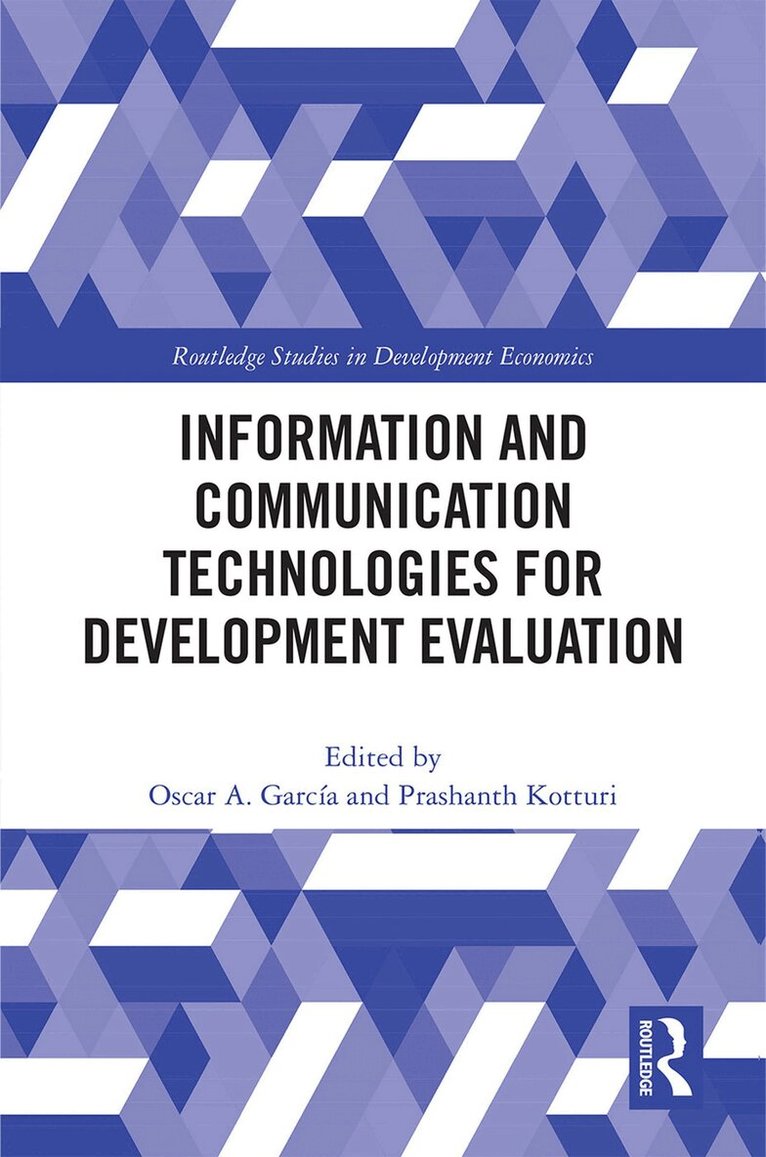
    Information and Communication Technologies for Development Evaluation

    AvOscar A. García,Prashanth Kotturi

    Inbunden, Engelska, 2019

    Del i serien Routledge Studies in Development Economics

    2 495 kr

    Beställningsvara. Skickas inom 10-15 vardagar. Fri frakt över 249 kr.

    Beskrivning

    Written by a team of expert practitioners at the Independent Office of Evaluation of International Fund for Agricultural Development (IFAD), this book gives an insight into the implications of new and emerging technologies in development evaluation.Growing technologies such as big data analytics, machine learning and remote sensing present new opportunities for development practitioners and development evaluators, particularly when measuring indicators of the Sustainable Development Goals. The volume provides an overview of information and communication technologies (ICTs) in the context of evaluation, looking at the theory and practice, and discussing how the landscape may unfold. It also considers concerns about privacy, ethics and inclusion, which are crucial issues for development practitioners and evaluators working in the interests of vulnerable populations across the globe. Among the contributions are case studies of seven organizations using various technologies for data collection, analysis, dissemination and learning.This valuable insight into practice will be of interest to researchers, practitioners and policymakers in development economics, development policy and ICT.

    Produktinformation

    • Utgivningsdatum:2019-07-10
    • Mått:156 x 234 x 14 mm
    • Vikt:385 g
    • Format:Inbunden
    • Språk:Engelska
    • Serie:Routledge Studies in Development Economics
    • Antal sidor:172
    • Förlag:Taylor & Francis Ltd
    • ISBN:9780367137144

    Utforska kategorier

    • Referensverk och tvärvetenskap inom Samhälle och politik
    • Internationell ekonomi inom Ekonomi och Ledarskap
    • Tillämpad datateknik inom Data och IT

    Mer om författaren

    Oscar A. García is the Director of the Independent Office of Evaluation (IOE) of the International Fund for Agricultural Development (IFAD). Before joining IFAD, Oscar served as the head of the advisory services at UNEP – Technology, Industry and Economics Division, Paris, providing guidance to the Partnership for Action on Green Economy. He was senior evaluation advisor for the United Nations Development Programme UNDP Evaluation Office overseeing programmatic evaluations in Africa, Asia and Latin America and the Caribbean. Mr. Garcia has more than 25 years of professional experience, combining operational and managerial practice with results-based management, strategic planning and evaluation expertise. Prashanth Kotturi joined the IOE in October 2012 and is currently working as an Evaluation Analyst. Since then, he has worked in lead and support roles on a wide range of evaluations ranging from project evaluations, country portfolio evaluations to corporate-level evaluations and evaluation synthesis. Before IOE, Prashanth has worked in the financial services industry and with microfinance institutions in his home country, India.

    Innehållsförteckning

    • 1 Introductions Oscar A. García and Prashanth Kotturi 2 Evaluation and the Sustainable Development Goals: Opportunities and Constraints Marco Segone 3 Information and Communication Technologies for Evaluation (ICT4Eval): Theory and Practice Oscar A. García, Jyrki Pulkkinenand and Prashanth Kotturi A Data collection: Faster, cheaper, more accurate B Data analysis: The machine learning revolution C Dissemination and learning: Reaching a global audience D Case studies: Geospatial analysis in environmental evaluation Juha Ilari Uitto, Anupam Anand and Geeta Batra; Simulated field visits in fragile and conflict environments: Reaching the most insecure areas of Somalia virtually Monica Zikusooka; Analysing stories of change: engaging beneficiaries to make sense of data Michael Carbon and Hamdi Ahmedou; Is there a role for machine learning in the systematic review of evidence? Edoardo Masset; Using machine learning to improve impact evaluations Paul Jasper; Using geospatial data to produce fine-scale humanitarian maps Gaurav Singhal, Lorenzo Riches and Jean-Baptiste Pasquier; Using and sharing real-time data during fieldwork Simone Lombardini and Emily Tomkys E ICTs in practice – the case for cautious optimism F Evaluation 2.0; turning dilemmas to dividends? 4 Big data analytics and development evaluation: Optimism and caution, Michael Bamberger A Some themes from the big data literature B Demystifying big data C Where is the big data revolution headed?D Does big data apply to development evaluation? Should evaluators care about it? E The great potential for integrating big data into development evaluation F Big data and development evaluation: the need for caution G Overcoming barriers to big data use in evaluation 5 Technology, Biases and Ethics: Exploring the Soft Sides of Information and Communication Technologies for Evaluation (ICT4Eval), Linda Raftree A Factors affecting information technology access and use among the most vulnerable B Data and technology alone cannot ensure inclusion C Inclusiveness of access and use affect the representativeness of big data D Bias in big data, artificial intelligence and machine learning E Protecting data subjects’ rights in tech-enabled, data-led exercises F Improving data privacy and protection in the development sector 6 Technology and its implications for nations and development partners Oscar A. García and Prashanth KotturiA Structural transition and pathways for economic development B Who has technology affected the most? C A Luddite’s nightmare or a passing phenomenon? D Implications for sustainable rural development E Dealing with disruptions and moving forward F Implications for development partners 7 Conclusions Oscar A. García and Prashanth Kotturi