• Fri frakt över 249 kr
  • •
  • Snabba leveranser
  • •
  • Billiga böcker
Kundservice

Du är på sajten för privatpersoner.

Företag, bibliotek eller offentlig verksamhet?

Du handlar på classic.bokus.com, där alla dina funktioner finns intakta.
Till classic.bokus.com
Bokus logotyp. Gå till startsidan.
  • Erbjudanden
  • Nyheter
  • Student
  • Topplistor
  • Barn & ungdom
  • Bokus Play
  • E-böcker
  • Pocketböcker
  • Spel & pussel

10% rabatt på allt med kod NYSTART10 →

Sidfot

Mina sidor

    Hjälp

    • Kundservice
    • Vanliga frågor och svar
    • Frakt och leverans
    • Retur vid ångerrätt
    • Reklamera vara
    • Betalning
    • Köpvillkor
    • Allmänna villkor
    • Information om webbplatsens tillgänglighet

    Om Bokus

    • Om oss
    • Pressrum
    • För studenter
    • För företag
    • För bibliotek och offentlig verksamhet
    • För leverantörer
    • Hållbarhet

    Populärt

    • Aktuella erbjudanden
    • Presentkort
    • Studentlitteratur
    • Nya böcker
    • Topplistor
    • Signerade böcker
    • Engelska böcker

    Inspiration

    • Boktips
    • BookTok
    • Populära bokserier
    • Barnbokskaraktärer
    • Populära författare
    Logotyp för Bokus
    Följ oss på Facebook (extern länk)Följ oss på Instagram (extern länk)Följ oss på YouTube (extern länk)Följ oss på TikTok (extern länk)
    bokus @ CookiesAnpassa cookiesIntegritetspolicyKöpvillkor
    Till Citymail hemsida (extern länk)Till Budbee hemsida (extern länk)Till Postnord hemsida (extern länk)Till Schenker hemsida (extern länk)Till Early Bird hemsida (extern länk)Till Walleys hemsida (extern länk)
    1. Språk och ordböcker
    2. Språkundervisning och språkinlärning

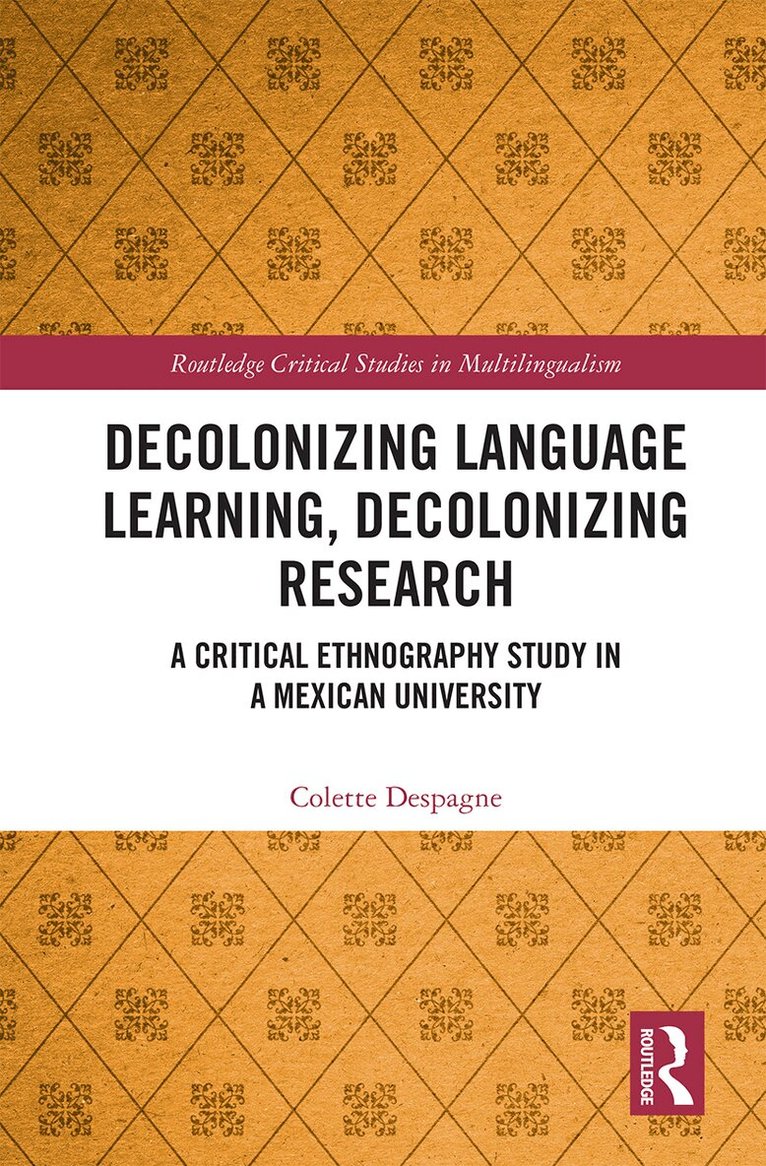
    Decolonizing Language Learning, Decolonizing Research

    A Critical Ethnography Study in a Mexican University

    AvColette Despagne

    Inbunden, Engelska, 2020

    Del i serien Routledge Critical Studies in Multilingualism

    2 495 kr

    Beställningsvara. Skickas inom 10-15 vardagar. Fri frakt över 249 kr.

    Fler format och utgåvor

    Häftad

    701 kr

    E-bok

    829 kr

    E-bok

    829 kr

    Beskrivning

    This volume explores the socio-political dynamics, historical forces, and unequal power relationships which mediate language ideologies in Mexican higher education settings, shedding light on the processes by which minority students learn new languages in postcolonial contexts. Drawing on data from a critical ethnographic case study of a Mexican university over several years, the book turns a critical lens on language learning autonomy and the use of the Common European Framework of Reference for Languages (CEFR) in postcolonial higher education settings, and advocates for an approach to the language learning and teaching process which takes into account minority language learners’ cultural heritage and localized knowledge. Despagne also showcases this approach in the unique research methodology which underpins the data, integrating participatory methods such as Interpretative Focus Groups in an attempt to decolonize research by engaging and involving participants in the analysis of data. Highlighting the importance of critical approaches in encouraging the equitable treatment of diverse cultures and languages and the development of agency in minority language learners, this book will be key reading for researchers in sociolinguistics, educational linguistics, applied linguistics, ethnography of communication, and linguistic anthropology.

    Produktinformation

    • Utgivningsdatum:2020-10-28
    • Mått:152 x 229 x 16 mm
    • Vikt:371 g
    • Format:Inbunden
    • Språk:Engelska
    • Serie:Routledge Critical Studies in Multilingualism
    • Antal sidor:168
    • Förlag:Taylor & Francis Ltd
    • ISBN:9780367143534

    Utforska kategorier

    • Språkundervisning och språkinlärning inom Språk och ordböcker
    • Språkvetenskap och lingvistik inom Språk och ordböcker

    Mer om författaren

    Colette Despagne is a transnational scholar working at the Benemérita Universidad Autónoma de Puebla, Mexico. Her main research focus is on language, power and identity in the Mexican context. She has published in several international journals.

    Innehållsförteckning

    • IndexChapter 1: Introduction * Presentation of the study *Positioning *So, what is being Indigenous in Mexico? *Content of the book *Chapter 2: Identity, power and agency *Identity, power and agency in language education *Mainstream approaches to language learning autonomy *Alternative approaches to language autonomy *Critical pedagogies in language learning and teaching in Latin America *Identity, power and agency in post-colonial contexts *Cultural studies, subaltern theories and post-colonialism *The Latin American reformulation of post-colonialism: modernity and coloniality *Globalization, glocalization and hybridization *Chapter 3: A critical ethnographic case study in Mexico, embedded in a particular postcolonial context *The particular postcolonial macro and micro contexts *Brief historical background *English, Spanish and Indigenous languages in the Mexican context *The university’s micro context *Language teaching methodologies in EFL at the university *The decolonizing critical ethnographic case study in Mexico *Research participants *Data collection methods *Data analysis and criteria for interpreting the findings *Ethics *Chapter 4: University students learning English. Perceptions and subjectivities. *Students’ perceptions of English: colonial legacies and language ideologies *Modernity: "English and modernity are the same" *Coloniality: "If I spoke English, people in my community would recognize me as someone knowledgeable" *The symbolic power of WF participants’ languages *The symbolic power of Indigenous languages *The symbolic power of Spanish *The symbolic power of English *"Nosotros y los demás": participants’ subjective experiences *Framework shift in the EFL curriculum *Discrimination *Impacts of discrimination on students’ subjectivities *Chapter 5: "I would like to make English my own". Students’ agency and investment. *The power of imagined communities *Imagined communities *Local imagined communities *The Power of participants’ language learning strategies *Plurilingual learning strategies *Pluricultural learning strategies *The power of participants’ approach to interculturality *Assimilation vs. hybridization *The ownership of English *Chapter 6: Concluding comments. Implications for language education in postcolonial contexts. *The importance of understanding students’ context *The significance of students’ context *The significance of students’ agency *The need to develop critical reflexive learning opportunities and an integrated policy of language and education *The importance and challenges to decolonize research *The framing: Indigenous vs. non-Indigenous *Use of Interpretative Focus Group *Positive results of Interpretative Focus Groups *Final recommendations and questions for future research *Recommendations for language teaching in post-colonial and heterogeneous Western contexts *Recommendations for the use of Interpretative Focus Group *Remaining questions and further research *References *