• Fri frakt över 249 kr
  • •
  • Snabba leveranser
  • •
  • Billiga böcker
Kundservice

Du är på sajten för privatpersoner.

Företag, bibliotek eller offentlig verksamhet?

Du handlar på classic.bokus.com, där alla dina funktioner finns intakta.
Till classic.bokus.com
Bokus logotyp. Gå till startsidan.
  • Erbjudanden
  • Nyheter
  • Student
  • Topplistor
  • Barn & ungdom
  • Bokus Play
  • E-böcker
  • Pocketböcker
  • Spel & pussel

10% rabatt på allt med kod NYSTART10 →

Sidfot

Mina sidor

    Hjälp

    • Kundservice
    • Vanliga frågor och svar
    • Frakt och leverans
    • Retur vid ångerrätt
    • Reklamera vara
    • Betalning
    • Köpvillkor
    • Allmänna villkor
    • Information om webbplatsens tillgänglighet

    Om Bokus

    • Om oss
    • Pressrum
    • För studenter
    • För företag
    • För bibliotek och offentlig verksamhet
    • För leverantörer
    • Hållbarhet

    Populärt

    • Aktuella erbjudanden
    • Presentkort
    • Studentlitteratur
    • Nya böcker
    • Topplistor
    • Signerade böcker
    • Engelska böcker

    Inspiration

    • Boktips
    • BookTok
    • Populära bokserier
    • Barnbokskaraktärer
    • Populära författare
    Logotyp för Bokus
    Följ oss på Facebook (extern länk)Följ oss på Instagram (extern länk)Följ oss på YouTube (extern länk)Följ oss på TikTok (extern länk)
    bokus @ CookiesAnpassa cookiesIntegritetspolicyKöpvillkor
    Till Citymail hemsida (extern länk)Till Budbee hemsida (extern länk)Till Postnord hemsida (extern länk)Till Schenker hemsida (extern länk)Till Early Bird hemsida (extern länk)Till Walleys hemsida (extern länk)
    1. Samhälle och politik
    2. Samhälle och kultur
    3. Kultur och medier
    4. Referensverk och tvärvetenskap

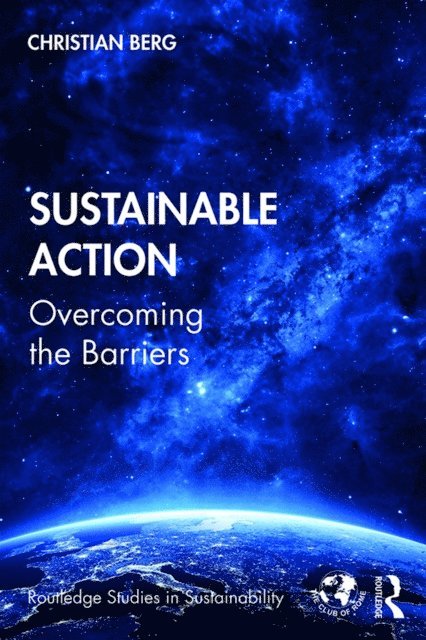
    Sustainable Action

    Overcoming the Barriers

    AvChristian Berg

    Inbunden, Engelska, 2019

    Del i serien Routledge Studies in Sustainability

    2 422 kr

    Beställningsvara. Skickas inom 10-15 vardagar. Fri frakt över 249 kr.

    Fler format och utgåvor

    Häftad

    695 kr

    E-bok

    822 kr

    E-bok

    822 kr

    Beskrivning

    In this timely exploration of sustainable actions, Christian Berg unpacks the complexity in understanding the barriers we face in moving towards a sustainable future, providing solution perspectives for every level, from individuals to governments and supra-national organizations offering a lucid vision of a long-term and achievable goal for sustainability. While the 2030 Agenda has already set ambitious targets for humanity, it offers little guidance for concrete actions. Although much is already being done, progress seems slow and some actions aiming at sustainability may be counterproductive. Different disciplines, societal actors, governmental departments and NGOs attribute the slow progress to a number of different causes, from the corruption of politicians to the wrong incentive structures.Sustainable Action surveys all the fields involved in sustainability to provide action principles which speak to actors of different kinds, not just those professionally mandated with such changes. It offers a road map to all those who might not constantly think about systems change but who are concerned and want to contribute to a sustainable future in a meaningful way.This book will be of great interest to students and scholars of sustainability issues, as well as those looking for a framework for how to change their systems at work to impact the quadruple bottom line: environment, economy, society, and future generations.

    Produktinformation

    • Utgivningsdatum:2019-11-29
    • Mått:156 x 234 x 22 mm
    • Vikt:750 g
    • Format:Inbunden
    • Språk:Engelska
    • Serie:Routledge Studies in Sustainability
    • Antal sidor:318
    • Förlag:Taylor & Francis Ltd
    • ISBN:9780367183202

    Utforska kategorier

    • Referensverk och tvärvetenskap inom Samhälle och politik
    • Miljöekonomi inom Ekonomi och Ledarskap
    • Miljöteknik inom Naturvetenskap och teknik

    Mer om författaren

    Christian Berg lectures on sustainability at different German universities (TU Clausthal, Saarland University, Kiel University). He has worked in business for more than a decade, among others as Chief Sustainability Architect at SAP. He has published several books on sustainability-related topics and has led the task force on Sustainable Economic Activity and Growth within German Chancellor Angela Merkel’s Future Dialogue. He holds degrees in physics (Dipl.-Phys.), philosophy (MA), theology (Mag. Theol. and Dr Theol.), and engineering (Dr-Ing.). For further information, visit his website at www.christianberg.net.

    Recensioner i media

    "Clearly our present approaches to achieving ‘sustainability’ are failing. And we are rapidly running out of time. This book offers a realistic, optimistic way forward based on complex systems thinking – multi-level approaches, reducing barriers, empowering actors through societies – all aimed at achieving the global societal tipping point that is required."Will Steffen, Emeritus Professor, The Australian National University, Senior Fellow, Stockholm Resilience Centre"After several years of passionate talking, here comes a book by Christian Berg grounded in ethical reasoning and critical concern for the common good, fair trade and justice for all. He convincingly gives practical and measurable steps which remove man-made barriers, lack of political will, citizens' inaction for sustainable development with the aim that no one will be left behind."Monsignor Prof Obiora Ike, Executive Director, Globethics.net; President, Club of Rome, Nigeria Chapter"An important contribution at a critical time. People stand up for the future everywhere. A transition towards sustainability needs, however, an integrated approach towards its barriers and concrete guidance. This book is made so valuable due to its discussion of both factors."Professor Dr. Uwe Schneidewind, President and Chief Research Executive, Wuppertal Institute

    Innehållsförteckning

    • Acknowledgements Preface Abbreviations Illustrations 1 Introduction: Sustainability – A Utopian Ideal? 1.1 Sustainability – an 'exhausted' concept? 1.2 Phase transition towards sustainability 1.3 Understanding the barriers towards sustainability 1.4 Developing Action principles for Sustainability 1.5 Concept of sustainability 1.6 Structure of the book 1.7 Methodological approach 1.8 Summary Part 1: Barriers Intrinsic Barriers 2 Barriers related to physical reality 2.1 The Problem of ERoEI, Resources, and Pollution 2.2 Complexity 3 Barriers related to human condition 3.1 Cognitive Limitations: Linear and unconnected thinking 3.2 Moral Limitations – Greed, Selfishness and Ignorance 3.3 Value-action gap 3.4 Trade-offs 4 Barriers related to social reality 4.1 System inertness and path dependencies 4.2 "Meeting the needs of the present…" 4.2.1 Demand for sustainability starts with the present needs 4.2.2 Poverty as multidimensional phenomenon 4.2.3 The poor suffer most – environmental injustice 4.2.4 High Ecological Footprint or High Development – is there no alternative? 4.3 Populism and Fundamentalism 4.4 Inequalities 4.5 Conflicting Interests 4.5.1 No framework for resolving conflicting interests on international level 4.5.2 Conflicting interests are not always visible 4.5.3 Inequalities imply uneven negotiation powers and impede settlements 4.5.4 Leadership and Power Structures Extrinsic Barriers 1 – Institutional Deficiencies 5 Economy: Faulty Market System 5.1 Market Failure 5.1.1 Public goods and the tragedy of the commons 5.1.2 Free-Riding 5.1.3 Externalization societies: Shift costs to the weak, to nature, and to the future 5.2 Pervasiveness of economic thinking 6 Politics: Lack of effective governance for global issues 6.1 Challenges of IGOs and multilateral international treaties 6.2 Geopolitics and the struggle of establishing a world order 7 Law: Legal difficulties related to sustainability 7.1 Sustainability concerns not institutionalized 7.2 Limiting of individual liberties for the sake of the common good? 7.2.1 Betterment of individual rights compared to public goods 7.2.2 Challenges to the concept of the common good 8 Technology: Mismatch Between Impact and Governance 9 Structural silos: Fragmentation of knowledge, Administration, and Responsibility9.1 Fragmentation of Knowledge 9.2 Fragmentation of Administration 9.3 Fragmentation of Responsibility Extrinsic Barriers 2 – Zeitgeist-dependent Barriers 10 Short-Term orientation and acceleration 11 Consumerism Part 2 – Action Principles 12 Why Action Principles? 12.1 A change in perspective – Take the actor’s view 12.2 Why principles for sustainable action? 12.3 Types of principles 13 Nature-related principles 13.1 Decarbonize 13.2 Reduce Environmental Impact by Efficiency, Sufficiency, and Compatibility 13.3 Be "net-positive" – build up environmental and societal capital! 13.4 Prefer Local, Seasonal, Plant-based, and Labour-intensive 13.5 Polluter pays principle 13.6 Precautionary principle 13.7 Appreciate and Celebrate the Beauty of Nature 14 Personal principles 14.1 Why personal principles matter 14.2 Practice Praxis and Contemplation 14.3 Be not too certain – and apply policies cautiously 14.4 Celebrate Frugality 15 Society-related principles 15.1 Grant the least privileged the greatest support 15.2 Seek mutual understanding, trust and multiple-wins 15.3 Be Tolerant 15.4 Strengthen social cohesion and collaboration 15.5 Engage the Stakeholders 15.6 Foster education – share knowledge and collaborate 16 System-related principles 16.1 Apply systems thinking 16.1.1 Think holistically 16.1.2 Think long-term and decelerate 16.1.3 Think global – promote local 16.2 Foster Diversity 16.3 Increase Transparency of the Publicly Relevant 16.4 Maintain or Increase Option Diversity 17 Conclusion: Sustainable action principles trigger phase transition 17.1 Summary: Overcoming the Barriers 17.2 The Goal: Future of terra and humanity – Futeranity 17.2.1 Three challenges to the SDG process 17.2.2 The Utopian Ideal of Sustainability is Futeranity 17.2.3 Sustainable action principles facilitate Futeranity 17.2.4 The critical role of the actors for a transition towards sustainability 17.3 Outlook: Change is coming