• Fri frakt över 249 kr
  • •
  • Snabba leveranser
  • •
  • Billiga böcker
Kundservice

Du är på sajten för privatpersoner.

Företag, bibliotek eller offentlig verksamhet?

Du handlar på classic.bokus.com, där alla dina funktioner finns intakta.
Till classic.bokus.com
Bokus logotyp. Gå till startsidan.
  • Erbjudanden
  • Nyheter
  • Student
  • Topplistor
  • Barn & ungdom
  • Bokus Play
  • E-böcker
  • Pocketböcker
  • Spel & pussel

10% rabatt på allt med kod: NYSTART10 →

Sidfot

Mina sidor

    Hjälp

    • Kundservice
    • Vanliga frågor och svar
    • Frakt och leverans
    • Retur vid ångerrätt
    • Reklamera vara
    • Betalning
    • Köpvillkor
    • Allmänna villkor
    • Information om webbplatsens tillgänglighet

    Om Bokus

    • Om oss
    • Pressrum
    • För studenter
    • För företag
    • För bibliotek och offentlig verksamhet
    • För leverantörer
    • Hållbarhet

    Populärt

    • Aktuella erbjudanden
    • Presentkort
    • Studentlitteratur
    • Nya böcker
    • Topplistor
    • Signerade böcker
    • Engelska böcker

    Inspiration

    • Boktips
    • BookTok
    • Populära bokserier
    • Barnbokskaraktärer
    • Populära författare
    Logotyp för Bokus
    Följ oss på Facebook (extern länk)Följ oss på Instagram (extern länk)Följ oss på YouTube (extern länk)Följ oss på TikTok (extern länk)
    bokus @ CookiesAnpassa cookiesIntegritetspolicyKöpvillkor
    Till Citymail hemsida (extern länk)Till Budbee hemsida (extern länk)Till Postnord hemsida (extern länk)Till Schenker hemsida (extern länk)Till Early Bird hemsida (extern länk)Till Walleys hemsida (extern länk)
    1. Historia och arkeologi
    2. Historia
    3. Europas historia

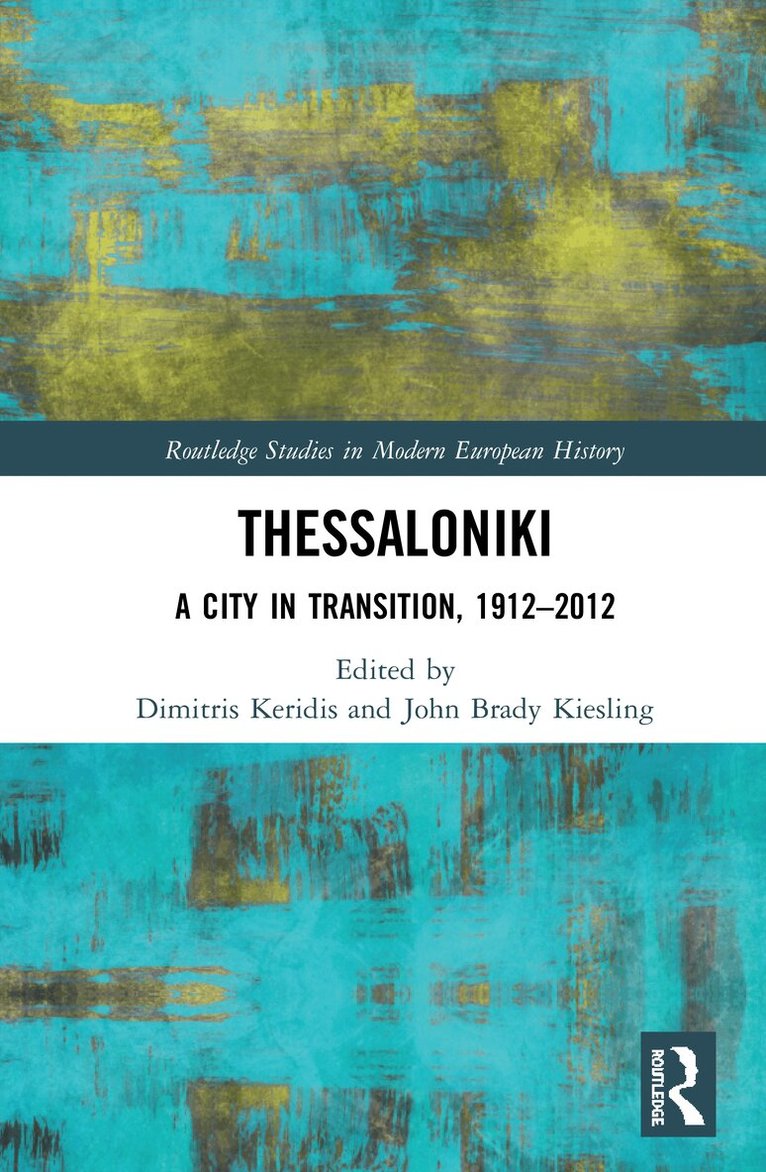
    Thessaloniki

    A City in Transition, 1912–2012

    AvDimitris Keridis,John Kiesling

    Inbunden, Engelska, 2020

    Del i serien Routledge Studies in Modern European History

    2 493 kr

    Beställningsvara. Skickas inom 10-15 vardagar. Fri frakt över 249 kr.

    Beskrivning

    This book shares the conclusions of a remarkable conference marking the centennial of Thessaloniki’s incorporation into the Greek state in 1912. Like its Roman and Byzantine predecessors, Ottoman Salonica was the metropolis of a huge, multi-ethnic Balkan hinterland, a center of modernization/westernization, and the de facto capital of Sephardic Judaism. The powerful attraction it exerted on competing local nationalisms, including the Young Turks, gave it a paradigmatic role in the transition from imperial to national rule in southeastern Europe.Twenty-three articles cover the multicultural physiognomy of a ‘Levantine’ city. They describe the mechanisms for cultivating national consciousness (including education, journalism, the arts, archaeology, and urban planning), the relationship between national identity, religious identity, and an evolving socialist labor movement, anti-Semitism, and the practical issues of governing and assimilating diverse non-Greek populations after Greece’s military victory in 1912. Analysis of this transformation extends chronologically through the arrival of Greek refugees from Turkey and the Black Sea in 1923, the Holocaust, the Greek civil war, and the new waves of migration after 1990. These processes are analyzed on multiple levels, including civil administration, land use planning, and the treatment of Thessaloniki’s historic monuments.This work underscores the importance of cities and their local histories in shaping the key national narratives that drove development in southeastern Europe. Those lessons are highly relevant today, as Europe reacts to renewed migratory pressures and the rise of new nationalist movements, and draws lessons, valid or otherwise, from the nation-building experiments of the previous century.

    Produktinformation

    • Utgivningsdatum:2020-03-31
    • Mått:156 x 234 x 30 mm
    • Vikt:760 g
    • Format:Inbunden
    • Språk:Engelska
    • Serie:Routledge Studies in Modern European History
    • Antal sidor:390
    • Förlag:Taylor & Francis Ltd
    • ISBN:9780367192822

    Utforska kategorier

    • Europas historia inom Historia och arkeologi
    • Andra världskriget inom Historia och arkeologi
    • Förintelsen inom Historia och arkeologi

    Mer om författaren

    Dimitris Keridis is Professor of International Relations at the Panteion University in Athens, Greece, and has been a member of the Greek Parliament since 2019. He has written widely on foreign policy, particularly on the Balkans and on modern Greek history.John Brady Kiesling is an archaeologist and former U.S. diplomat, whose work includes Greek Urban Warriors (2014), Diplomacy Lessons (2007), the ToposText application, and various edited works on Greek history.

    Innehållsförteckning

    • Introduction; Part 1: Searching for Identity; 1. Towards a History of Thessaloniki’s Future; 2. Thessaloniki and the Cities of the Enlightenment; 3. Was Salonica a Levantine City?; 4. The Place of Thessaloniki In Greek National Awareness: From Greek Independence to 1912 and beyond; 5. Salonica through Bulgarian Eyes; 6. The Municipality of Salonica between Old Regime, Ottoman Reforms and the Transition from Empire To Nation State; 7. Amateur and Professional Theater in Ottoman Thessaloniki: Multicultural Identity and Its Implications; 8. A New Look at an Ancient City: Thessaloniki in Ottoman Archaeology, 1832–1912; 9. Urban Transformation and the Revolution: Salonica and the Young Turks, 1908–1912; 10. Bulgarian Newspapers in Thessaloniki, 1869–1913; Part 2: A City in Transition; 11. The Boundaries of Hellenism: Language and Loyalty Among Salonican Jewry, 1917–1933; 12. In the Aftermath of the Balkan Wars: The Incorporation of Thessaloniki in the Greek State; 13. Refugee Resettlement 1922–24. A Watershed in the Ethnic, Social and Economic Transformation of Thessaloniki; 14. Integration through the Past: Jewish Scholars Write History in Inter-War Salonica; 15. Destruction and Reconstruction of Thessaloniki’s Class Structure, 1912–1940; 16. From the Call Of the Muezzin To the Silence of the Museum: Salonica Soundscapes in Transition; Part 3: Mapping the Future of Thessaloniki; 17. The Muslims of Thessaloniki (1912–2012): A Discontinuous and Uncomfortable Presence; 18.Urban Change and the Persistence of Memory in Modern Thessaloniki; 19. French Interests and Salonika’s Port, 1872–1912: Entrepreneurial and Architectural Innovation; 20. The Post-War Transformation of the Thessaloniki Periphery: Urbanization and Landscape; 21. Land Policy in Thessaloniki and the Transition to a Contemporary Metropolitan Area, 1922–1967; 22. The Care of Monuments in Modern Thessaloniki: Perceptions and Practices; 23. A Past for Every Possible Future: Concluding Remarks