• Fri frakt över 249 kr
  • •
  • Snabba leveranser
  • •
  • Billiga böcker
Kundservice

Du är på sajten för privatpersoner.

Företag, bibliotek eller offentlig verksamhet?

Du handlar på classic.bokus.com, där alla dina funktioner finns intakta.
Till classic.bokus.com
Bokus logotyp. Gå till startsidan.
  • Erbjudanden
  • Nyheter
  • Student
  • Topplistor
  • Barn & ungdom
  • Bokus Play
  • E-böcker
  • Pocketböcker
  • Spel & pussel

Må bättre, för mindre! Upp till 50% rabatt på hälsoböcker

Sidfot

Mina sidor

    Hjälp

    • Kundservice
    • Vanliga frågor och svar
    • Frakt och leverans
    • Retur vid ångerrätt
    • Reklamera vara
    • Betalning
    • Köpvillkor
    • Allmänna villkor
    • Information om webbplatsens tillgänglighet

    Om Bokus

    • Om oss
    • Pressrum
    • För studenter
    • För företag
    • För bibliotek och offentlig verksamhet
    • För leverantörer
    • Hållbarhet

    Populärt

    • Aktuella erbjudanden
    • Presentkort
    • Studentlitteratur
    • Nya böcker
    • Topplistor
    • Signerade böcker
    • Engelska böcker

    Inspiration

    • Boktips
    • BookTok
    • Populära bokserier
    • Barnbokskaraktärer
    • Populära författare
    Logotyp för Bokus
    Följ oss på Facebook (extern länk)Följ oss på Instagram (extern länk)Följ oss på YouTube (extern länk)Följ oss på TikTok (extern länk)
    bokus @ CookiesAnpassa cookiesIntegritetspolicyKöpvillkor
    Till Citymail hemsida (extern länk)Till Budbee hemsida (extern länk)Till Postnord hemsida (extern länk)Till Schenker hemsida (extern länk)Till Early Bird hemsida (extern länk)Till Walleys hemsida (extern länk)
    1. Kultur
    2. Konstböcker
    3. Konsthistoria

    Binding the Absent Body in Medieval and Modern Art

    Abject, virtual, and alternate bodies

    AvEmily Kelley,Elizabeth Richards Rivenbark

    Häftad, Engelska, 2019

    701 kr

    Beställningsvara. Skickas inom 10-15 vardagar. Fri frakt över 249 kr.

    Beskrivning

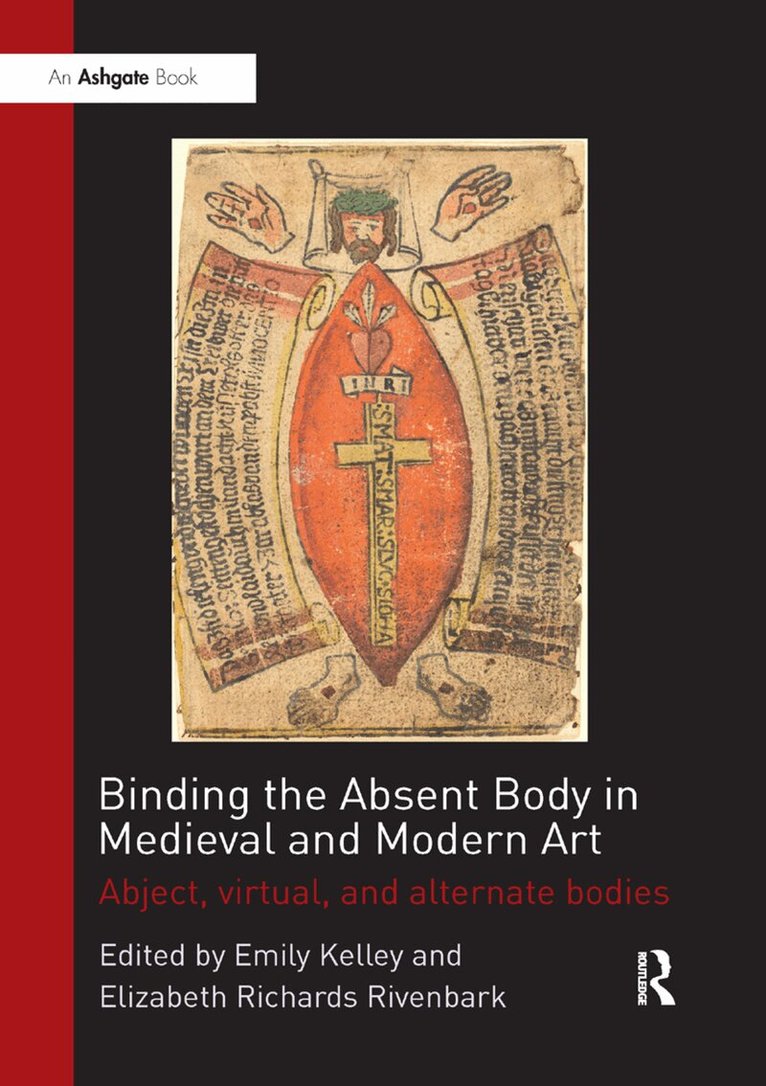
    This collection of essays considers artistic works that deal with the body without a visual representation. It explores a range of ways to represent this absence of the figure: from abject elements such as bodily fluids and waste to surrogate forms including reliquaries, manuscripts, and cloth. The collection focuses on two eras, medieval and modern, when images referencing the absent body have been far more prolific in the history of art. In medieval times, works of art became direct references to the absent corporal essence of a divine being, like Christ, or were used as devotional aids. By contrast, in the modern era artists often reject depictions of the physical body in order to distance themselves from the history of the idealized human form. Through these essays, it becomes apparent, even when the body is not visible in a work of art, it is often still present tangentially. Though the essays in this volume bridge two historical periods, they have coherent thematic links dealing with abjection, embodiment, and phenomenology. Whether figurative or abstract, sacred or secular, medieval or modern, the body maintains a presence in these works even when it is not at first apparent.

    Produktinformation

    • Utgivningsdatum:2019-05-23
    • Mått:174 x 246 x 16 mm
    • Vikt:420 g
    • Format:Häftad
    • Språk:Engelska
    • Antal sidor:200
    • Förlag:Taylor & Francis Ltd
    • ISBN:9780367200169

    Utforska kategorier

    • Konsthistoria inom Kultur

    Mer om författaren

    Emily Kelley is Associate Professor of Art History at Saginaw Valley State University. Her research examines mercantile patronage in late medieval Spain. She has published in the Journal of Medieval Iberian Studies and the Hispanic Research Journal. She is co-editor of Mendicants and Merchants in the Medieval Mediterranean (Brill, 2013). Elizabeth Richards Rivenbark is Associate Professor of Art History at the University of South Alabama. She has published essays on American art in the nineteenth through twenty-first centuries with special interests in gender studies, war imagery, and the body. Her essays appear in Artibus et Historiae, the Women’s Art Journal, and The SECAC Review.

    Innehållsförteckning

    • Table of Contents List of Figures List of Tables Notes on Contributors Introduction Emily Kelley and Elizabeth Richards Rivenbark The Abject Body Chapter 1: Blood, Sweat, Tears, and Milk: ‘Fluid’ Veneration in Medieval Devotional Art Vibeke Olson Chapter 2: No Living Presence: Human Absence in the Early Work of Jasper Johns and Robert Rauschenberg Rebekah Scoggins The Virtual Body Chapter 3: Maria Ecclesia: The Aachen Marienschrein as an Alternate Body for the Virgin Mary Lisa Ciresi Chapter 4: Drawn to Scale: The Medieval Monastic’s Virtual Pilgrimage through Sacred Measurement Natalie Mandziuk Chapter 5: Cloth as a Sign of the Absent Body in American Sculpture from the 1960s Elizabeth Richards Rivenbark The Alternate Body Chapter 6: Imagining the Sorrows of Death and Pains of Hell in the Hours of Catherine of Cleves Jennifer Feltman Chapter 7: The Absent Body as Divine Reflection in Parmigianino’s Self-Portrait in a Convex Mirror Margaret Morse Chapter 8: A Clear Preoccupation with Death: The Absent Body in Mark Rothko’s Mature Style Michael R. Smith, Jr. Bibliography Index