• Fri frakt över 249 kr
  • •
  • Snabba leveranser
  • •
  • Billiga böcker
Kundservice

Du är på sajten för privatpersoner.

Företag, bibliotek eller offentlig verksamhet?

Du handlar på classic.bokus.com, där alla dina funktioner finns intakta.
Till classic.bokus.com
Bokus logotyp. Gå till startsidan.
  • Erbjudanden
  • Nyheter
  • Student
  • Topplistor
  • Barn & ungdom
  • Bokus Play
  • E-böcker
  • Pocketböcker
  • Spel & pussel

Må bättre, för mindre! Upp till 50% rabatt på hälsoböcker

Sidfot

Mina sidor

    Hjälp

    • Kundservice
    • Vanliga frågor och svar
    • Frakt och leverans
    • Retur vid ångerrätt
    • Reklamera vara
    • Betalning
    • Köpvillkor
    • Allmänna villkor
    • Information om webbplatsens tillgänglighet

    Om Bokus

    • Om oss
    • Pressrum
    • För studenter
    • För företag
    • För bibliotek och offentlig verksamhet
    • För leverantörer
    • Hållbarhet

    Populärt

    • Aktuella erbjudanden
    • Presentkort
    • Studentlitteratur
    • Nya böcker
    • Topplistor
    • Signerade böcker
    • Engelska böcker

    Inspiration

    • Boktips
    • BookTok
    • Populära bokserier
    • Barnbokskaraktärer
    • Populära författare
    Logotyp för Bokus
    Följ oss på Facebook (extern länk)Följ oss på Instagram (extern länk)Följ oss på YouTube (extern länk)Följ oss på TikTok (extern länk)
    bokus @ CookiesAnpassa cookiesIntegritetspolicyKöpvillkor
    Till Citymail hemsida (extern länk)Till Budbee hemsida (extern länk)Till Postnord hemsida (extern länk)Till Schenker hemsida (extern länk)Till Early Bird hemsida (extern länk)Till Walleys hemsida (extern länk)
    1. Naturvetenskap och teknik
    2. Geovetenskap
    3. Miljövetenskap och miljöpolitik

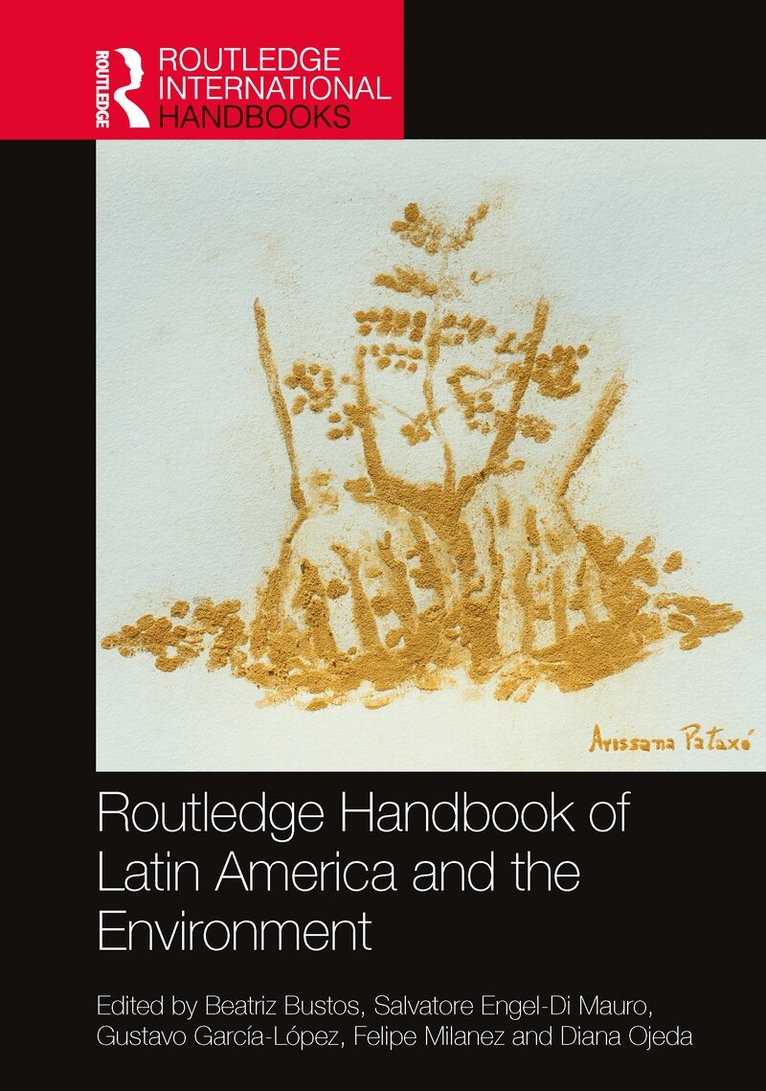
    Routledge Handbook of Latin America and the Environment

    AvBeatriz Bustos,Salvatore Engel-Di Mauro

    Inbunden, Engelska, 2023

    Del i serien Routledge International Handbooks

    3 382 kr

    Beställningsvara. Skickas inom 10-15 vardagar. Fri frakt över 249 kr.

    Beskrivning

    The Routledge Handbook of Latin America and the Environment provides an in-depth and accessible analysis and theorization of environmental issues in the region. It will help readers make connections between Latin American and other regions’ perspectives, experiences, and environmental concerns.Latin America has seen an acceleration of environmental degradation due to the expansion of resource extraction and urban areas. This Handbook addresses Latin America not only as an object of study, but also as a region with a long and profound history of critical thinking on these themes. Furthermore, the Handbook departs from most treatments on the topic by studying the environment as a social issue inextricably linked to politics, economy, and culture. The Handbook will be an invaluable resource for those wanting not only to understand the issues, but also to engage with ideas about environmental politics and social-ecological transformation. The Handbook covers a broad range of topics organized according to three areas: physical geography, ecology, and crucial environmental problems of the region. These are key theoretical and methodological issues used to understand Latin America’s ecosocial contexts, and institutional and grassroots practices related to more just and ecologically sustainable worlds.The Handbook will set a research agenda for the near future and provide comprehensive research on most subregions relative to environmental transformations, challenges, struggles and political processes. It stands as a fresh and much needed state of the art introduction for researchers, scholars, post-graduates and academic audiences on Latin American contributions to theorization, empirical research and environmental practices.

    Produktinformation

    • Utgivningsdatum:2023-05-31
    • Mått:174 x 246 x 32 mm
    • Vikt:993 g
    • Format:Inbunden
    • Språk:Engelska
    • Serie:Routledge International Handbooks
    • Antal sidor:468
    • Förlag:Taylor & Francis Ltd
    • ISBN:9780367361860

    Utforska kategorier

    • Miljövetenskap och miljöpolitik inom Naturvetenskap och teknik
    • Geografi inom Naturvetenskap och teknik

    Mer om författaren

    Beatriz Bustos is an associate professor in the Department of Geography at the University of Chile. Her research focuses on resources geography and the sociopolitical transformations that exploitation of natural resources produces in rural communities. Her work ranges from examining the geography of commodities such as salmon, copper, wine, agro-industries, coal, lithium and green hydrogen, to rural livelihoods under neoliberal extractive economies. More recently she is researching ideas of rural citizenship.Salvatore Engel-Di Mauro is Professor at the Department of Geography and Environmental Studies of SUNY New Paltz (US), teaching courses on physical and people–environment geography as well as on socialism. He is Senior Editor for Capitalism Nature Socialism and Reviews Editor for Human Geography. He has recently published Socialist States and Environment and, with George Martin, Urban Food Production for Ecosocialism. His research areas include soil contamination and acidification, urban food production, and socialism and the environment.Gustavo García-López is an engaged researcher, educator, and apprentice organizer, from the islands of Puerto Rico. He has experience in transdisciplinary social-environmental studies. His work is situated at the intersection of ecology and the political, postcolonial/decolonial, and Latin American and Caribbean studies. He engages with commons and commoning, autogestion, and environmental and climate justice issues. He is part of the JunteGente collective in Puerto Rico, the Post-Extractive Futures initiative, the Climate Justice Network and the Undisciplined Environments blog. He lives uprooted from his lands but finding home and guiding stars in his daughter Maia. He is held in life by broad networks of care and nourishment, of people, spirits, memories, and ecologies.Felipe Milanez is Assistant Professor at the Institute for Humanities, Arts and Sciences Profesor Milton Santos, at the Federal University of Bahia, Brazil. Author of Memórias Sertanistas: Cem Anos de Indigenismo no Brasil and Guerras da Conquista, with Fabrício Lyro, his work and activism focus on the violence against environmental defenders, the genocide of indigenous peoples and ecocide. More recently, his research dedicates to learn with indigenous art, anti-colonial epistemologies and political ecologies from Abya Yala.Diana Ojeda is Associate Professor at Cider (Center for Interdisciplinary Development Studies) at Universidad de los Andes in Bogotá, Colombia. Her work analyses processes of "green grabbing", dispossession, and state formation from a perspective that combines feminist political ecology and critical agrarian studies. More recently, her research has focused on pesticide use in Colombia.

    Innehållsförteckning

    • Part I IntroductionChapter 1. Suturing the Open Veins of Latin America, Building Epistemic Bridges: Latin-American Environmentalism for the 21st CenturyPart II Biophysical Processes and Environmental HistoriesChapter 2. Latin American ecosystems vulnerability in a climate change scenarioChapter 3. Soil degradation and land cover change in Latin AmericaChapter 4. Climate Change Impacts on Caribbean Coastal Ecosystems: Emergent Ecological and Environmental Geography ChallengesChapter 5. An Environmental History of the ‘Second Conquest’: Agricultural Export Boom and Landscape-Making in Latin America, ca.1850-1930Chapter 6. Extractivism: The Port-a-cathed Veins of GuatemalaChapter 7. Environmental Colonialism and Neocolonialism in Latin AmericaChapter 8. Water scarcity in Latin AmericaPart III Latin American Environmental Issues in Political-Economic ContextChapter 9. The Political Economy of the Environment in Latin AmericaChapter 10. Ecological debt and extractivismChapter 11. Trajectories of adaptation to climate change in Latin American cities: Climate justice blind spotsChapter 12. Environmental disasters and critical politicsChapter 13. Latin America in the Chemical Vortex of Agrarian CapitalismChapter 14. Resource RadicalismsChapter 15. The fruits of labor or the fruits of nature? Towards a political ecology of labor in Central AmericaChapter 16. Transnationals, Dependent Development and the Environment in Latin America in the 21st CenturyChapter 17. Challenging the logic of ‘the open veins’? The geography of resource rents distribution in Peru and BoliviaPart IV: Environmental Struggles and ResistanceChapter 18. Resistance of women from "sacrifice zones" to extractivism in Chile. A framework for rethinking a feminist political ecologyChapter 19. Environmental conflicts and violence in Latin America: Experiences from PeruChapter 20. Quilombos and the Fight Against Racism in the Context of the COVID-19 PandemicChapter 21. The "Greening" by Sustainable Development: Stretching BiopiracyChapter 22. Territorialization through the Milpa: Zapatismo and Indigenous AutonomyChapter 23. Indigenous Autonomies as Alternative Horizons in Latin America: Societal movements and other territorialities in Bolivia and MexicoChapter 24. Land occupations and land reform in BrazilChapter 25. From Chico Mendes to Berta Cáceres: responses to the murders of environmental defendersPart V: Environmental Disputes and PoliciesChapter 26. Latin America's Approach in the International Environmental Debate. From Stockholm 72 to Rio + 20. Between "eco-development" and "sustainable development"Chapter 27. Degrowth and Buen Vivir: perspectives for a great transformationChapter 28. Social Cartographies in Latin AmericaChapter 29. Rights of Nature and Specialization in Jurisprudence: Moving Forward to Better Protect Our Environment?Chapter 30. How tenure reform processes can lead to community-based resource management? Experiences from Latin AmericaChapter 31. Environmental Policy and Institutional Change: The Consequences of MobilizationPart VI: Toward Oppression-Free FuturesChapter 32. Feminist thought and environmental defense in Latin AmericaChapter 33. Decolonising time through communalising spatial practicesChapter 34. Environmental Thought in Movement: Territory, Ecologisms, and Liberation in Latin AmericaChapter 35. Agroecology and Food Sovereignty in the Caribbean: Insights from Cuba, Puerto Rico, and Sint MaartenChapter 36. Re-existance struggles and socio-ecological alternatives for reproduction of dignified and sustainable life in territories affected by the extractivist offensive in Latin AmericaChapter 37. The Dimensions of Life: Environment, Subject, and Amerindian ThoughtChapter 38. Environmental Justice Movements as Movements for Life and Decolonization: Experiences from Puerto RicoChapter 39. Community Contributions to a Just Energy TransitionIndex