• Fri frakt över 249 kr
  • •
  • Snabba leveranser
  • •
  • Billiga böcker
Kundservice

Du är på sajten för privatpersoner.

Företag, bibliotek eller offentlig verksamhet?

Du handlar på classic.bokus.com, där alla dina funktioner finns intakta.
Till classic.bokus.com
Bokus logotyp. Gå till startsidan.
  • Erbjudanden
  • Nyheter
  • Student
  • Topplistor
  • Barn & ungdom
  • Bokus Play
  • E-böcker
  • Pocketböcker
  • Spel & pussel

10% rabatt på allt med kod: NYSTART10 →

Sidfot

Mina sidor

    Hjälp

    • Kundservice
    • Vanliga frågor och svar
    • Frakt och leverans
    • Retur vid ångerrätt
    • Reklamera vara
    • Betalning
    • Köpvillkor
    • Allmänna villkor
    • Information om webbplatsens tillgänglighet

    Om Bokus

    • Om oss
    • Pressrum
    • För studenter
    • För företag
    • För bibliotek och offentlig verksamhet
    • För leverantörer
    • Hållbarhet

    Populärt

    • Aktuella erbjudanden
    • Presentkort
    • Studentlitteratur
    • Nya böcker
    • Topplistor
    • Signerade böcker
    • Engelska böcker

    Inspiration

    • Boktips
    • BookTok
    • Populära bokserier
    • Barnbokskaraktärer
    • Populära författare
    Logotyp för Bokus
    Följ oss på Facebook (extern länk)Följ oss på Instagram (extern länk)Följ oss på YouTube (extern länk)Följ oss på TikTok (extern länk)
    bokus @ CookiesAnpassa cookiesIntegritetspolicyKöpvillkor
    Till Citymail hemsida (extern länk)Till Budbee hemsida (extern länk)Till Postnord hemsida (extern länk)Till Schenker hemsida (extern länk)Till Early Bird hemsida (extern länk)Till Walleys hemsida (extern länk)
    1. Samhälle och politik
    2. Samhälle och kultur
    3. Sociala grupper och identitet
    4. Genusvetenskap

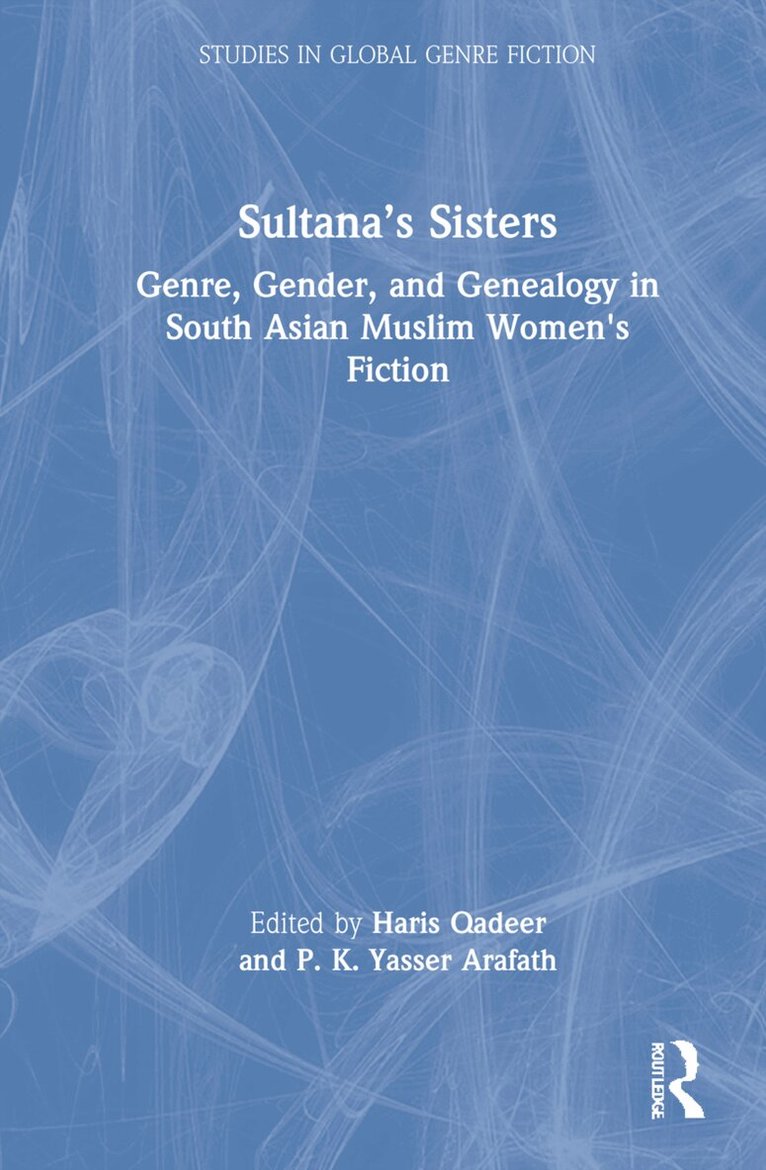
    Sultana’s Sisters

    Genre, Gender, and Genealogy in South Asian Muslim Women's Fiction

    AvHaris Qadeer,P. K. Yasser Arafath

    Inbunden, Engelska, 2021

    Del i serien Studies in Global Genre Fiction

    2 786 kr

    Beställningsvara. Skickas inom 10-15 vardagar. Fri frakt över 249 kr.

    Beskrivning

    This book traces the genealogy of ‘women’s fiction’ in South Asia and looks at the interesting and fascinating world of fiction by Muslim women. It explores how Muslim women have contributed to the growth and development of genre fiction in South Asia and brings into focus diverse genres, including speculative, horror, campus fiction, romance, graphic, dystopian amongst others, from the early 20th century to the present.The book debunks myths about stereotypical representations of South Asian Muslim women and critically explores how they have located their sensibilities, body, religious/secular identities, emotions, and history, and have created a space of their own. It discusses works by authors such as Rokeya Sakhawat Hossain, Hijab Imtiaz Ali, Mrs. Abdul Qadir, Muhammadi Begum, Abbasi Begum, Khadija Mastur, Qurratulain Hyder, Wajida Tabbasum, Attia Hosain, Mumtaz Shah Nawaz, Selina Hossain, Shaheen Akhtar, Bilquis Sheikh, Gulshan Esther, Maha Khan Phillips, Zahida Zaidi, Bina Shah, Andaleeb Wajid, and Ayesha Tariq.A volume full of remarkable discoveries for the field of genre fiction, both in South Asia and for the wider world, this book, in the Studies in Global Genre Fiction series, will be useful for scholars and researchers of English literary studies, South Asian literature, cultural studies, history, Islamic feminism, religious studies, gender and sexuality, sociology, translation studies, and comparative literatures.

    Produktinformation

    • Utgivningsdatum:2021-09-28
    • Mått:156 x 234 x 19 mm
    • Vikt:453 g
    • Format:Inbunden
    • Språk:Engelska
    • Serie:Studies in Global Genre Fiction
    • Antal sidor:248
    • Förlag:Taylor & Francis Ltd
    • ISBN:9780367430856

    Utforska kategorier

    • Genusvetenskap inom Samhälle och politik
    • Geografi inom Naturvetenskap och teknik
    • Litteraturvetenskap inom Skönlitteratur

    Mer om författaren

    Haris Qadeer is Assistant Professor at the Department of English, University of Delhi, India. He was visiting faculty at the Department of English, Potsdam University, Germany (2019). His research interests include literatures and cultures of South Asian Muslims, refugee narratives, post-colonial studies, translations, and South Asian writings in English. He has coedited a special issue on postcolonial world literature, Thesis Eleven. He has translated writings by Joginder Paul, Rokeya Sakhawat Hossain, Manto, Zafar Ali, Anis Rafi, Krishn Chandra, and Taranum Riyaz. His forthcoming works are The Silence that Speaks: Short Fiction by Indian Muslim Women and Medical Maladies: Doctors, Patients, and Hospitals in Indian Short Fiction.P. K. Yasser Arafath is Assistant Professor at the Department of History, University of Delhi, India. He was Dr. L. M. Singhvi Fellow at the Centre of South Asian Studies, Cambridge University, UK (2017). His research papers and articles have been published in major journals, including Economic and Political Weekly, Social Scientists, Medieval History Journal, IESHR, and Journal of the Royal Asiatic Society. Currently, he is completing a book manuscript, titled Malabarnama: Intimate Texts and Lyrical Resistance in the Age of Disorder (c. 1500–1875). He has a PhD degree in History from Hyderabad Central University (HCU), India.

    Recensioner i media

    "This rich collection of essays counters the enduring vision of South Asian Muslim women as mute, passive and docile by tracing their fiction from the ‘new women’ of the early twentieth century to today’s ‘future girls’. Rokeya Sakhawat Hossain’s utopian Sultana’s Dream (1905) provides a starting point from which to explore the contributions of Muslim female authors to fiction’s convoluted genealogy in South Asia through their participation in multiple and often overlapping genres. New and established international scholars take a fresh approach to a fascinating array of fictional works in Urdu, Bengali, and English by celebrated and less renowned authors. This exciting literary journey takes the reader from horror, romanticism, fantasy, erotica, and dystopia to partition fiction and graphic novels."Siobhan Lambert-Hurley, Professor of Global History, University of Sheffield, UK."In bringing together a set of brilliant new studies of Muslim women writers in modern South Asia, Sultana's Sisters makes a timely and important intervention in the literary history of the region. Linking genre, gender, and the genealogy of forms, the essays cover both established and little-known authors, multiple languages, and a plurality of genres from utopian fable to romance, horror, historical realism, and speculative fantasy. The editor is to be congratulated on this fascinating and critically nuanced venture, filling a gap in current scholarship by revealing the imaginative and creative range of Muslim women's fiction."Supriya Chaudhuri, Professor Emerita, Jadavpur University, India. "An incisive and pioneering collection of critical essays, which traces the development, expansion and cross-fertilization of sub-continental Muslim women’s fiction, across different genres in the sub-continent from the early twentieth century to the present day. The informative introduction gives this further context with a discussion of Muslim women’s writing since Mughal times and also engages with the nineteenth century reformist literary movements in Urdu, including new women’s journals which gave Muslim women a public platform and a new voice. This is a truly remarkable collection which makes a major contributions to sub-continental women’s literature and illuminates it with new insights."Muneeza Shamsie, Author of Hybrid Tapestries: The Development of Pakistani Literature in English."Sultana’s Sisters is one of the most significant publications on Muslim women’s writing in South Asia in perhaps a decade and will be critical reading for scholars from a range of fields. The book brilliantly opens out new approaches to the study of South Asian fiction while remaining alert to the multiple trajectories and complex subjectivities of the authors it studies. Moving quickly beyond the core canon of Muslim women’s literature, Sultana’s Sisters acquaints readers with authors from an impressive range of linguistic traditions and social backgrounds, thus introducing fresh nuance to key questions about what it meant to write and publish as a woman in Islamicate South Asia."Daniel Majchrowicz, South Asian Literature and Culture, Northwestern University, USA.

    Innehållsförteckning

    • IntroductionSection IGenres and Early Fiction1. Fruits of Freedom: Rokeya Sakhawat Hossain’s Writings as GenreFiction Barnita Bagchi2. Locating Romance and Women Writers in Urdu Literature: Hijab Imtiaz Ali’s Genre Fiction Shweta Sachdeva Jha3. “I’m nobody! Who are you?” Mrs. Abdul Qādir’s Horror Fiction and the Non-AuthorialJaideep Pandey4. Gendering the Urdu Novel: Muhammadi Begum, Abbasi Begum, and the Women Question Mohammed AfzalSection IIGenres and Modernity5. Women Who Wielded Pens: Khadija MasturMehr Afshan Farooqi6. “Studies in [ ] Dying Culture[s]”: Qurratulain Hyder and Urdu Fantasy Fiction in Self-translationFatima Rizvi7. “The Forbidden City”: An Exploration of Wajida Tabassum’s Fiction Wafa Hamid8. ‘1971 Novels’ in Bangladesh: Women’s Writing between the Popular and the Literary Mosarrap Hossain Khan9. Sunlight on a Broken Column and The Heart Divided as Autobiographically-InspiredRealist Texts: Navigating Gendered Socio-political Identities in Genre FictionMobeen HussainSection IIIPostcolonial Genres10. “Obedient daughters" and the Deployment of Graphic Stereotypes Christel Devadawson11 Contemporary Politics and Prehistoric Past through Popular Genres: Maha KhanPhillips’ NovelsMohammad Asim Siddiqui12. Occupying Educational and Intellectual Space: Woman as Radical Flâneuse in Zahida Zaidi’s Campus Novel Inqilab Ka Ek DinAysha Munira Rasheed13. Making Sense of Conversion to Christianity in Twentieth-Century Pakistan: Two Women’s Co-Authored Autobiographies as Crafted Accounts Madeline Clements14. Feminist Futures in the Speculative Fictions of Andaleeb Wajid and Bina ShahUmme Al-wazedi