• Fri frakt över 249 kr
  • •
  • Snabba leveranser
  • •
  • Billiga böcker
Kundservice

Du är på sajten för privatpersoner.

Företag, bibliotek eller offentlig verksamhet?

Du handlar på classic.bokus.com, där alla dina funktioner finns intakta.
Till classic.bokus.com
Bokus logotyp. Gå till startsidan.
  • Erbjudanden
  • Nyheter
  • Student
  • Topplistor
  • Barn & ungdom
  • Bokus Play
  • E-böcker
  • Pocketböcker
  • Spel & pussel

10% rabatt på allt med kod: NYSTART10 →

Sidfot

Mina sidor

    Hjälp

    • Kundservice
    • Vanliga frågor och svar
    • Frakt och leverans
    • Retur vid ångerrätt
    • Reklamera vara
    • Betalning
    • Köpvillkor
    • Allmänna villkor
    • Information om webbplatsens tillgänglighet

    Om Bokus

    • Om oss
    • Pressrum
    • För studenter
    • För företag
    • För bibliotek och offentlig verksamhet
    • För leverantörer
    • Hållbarhet

    Populärt

    • Aktuella erbjudanden
    • Presentkort
    • Studentlitteratur
    • Nya böcker
    • Topplistor
    • Signerade böcker
    • Engelska böcker

    Inspiration

    • Boktips
    • BookTok
    • Populära bokserier
    • Barnbokskaraktärer
    • Populära författare
    Logotyp för Bokus
    Följ oss på Facebook (extern länk)Följ oss på Instagram (extern länk)Följ oss på YouTube (extern länk)Följ oss på TikTok (extern länk)
    bokus @ CookiesAnpassa cookiesIntegritetspolicyKöpvillkor
    Till Citymail hemsida (extern länk)Till Budbee hemsida (extern länk)Till Postnord hemsida (extern länk)Till Schenker hemsida (extern länk)Till Early Bird hemsida (extern länk)Till Walleys hemsida (extern länk)
    1. Filosofi och religion
    2. Religion och tro
    3. Islam

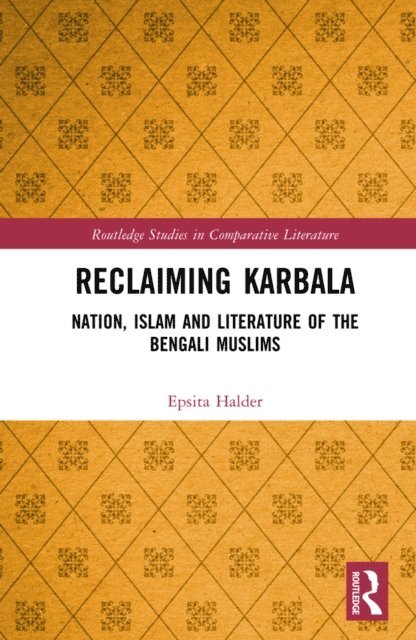
    Reclaiming Karbala

    Nation, Islam and Literature of the Bengali Muslims

    AvEpsita Halder

    Inbunden, Engelska, 2023

    Del i serien Routledge Studies in Comparative Literature

    2 784 kr

    Beställningsvara. Skickas inom 10-15 vardagar. Fri frakt över 249 kr.

    Fler format och utgåvor

    E-bok

    926 kr

    E-bok

    926 kr

    Häftad

    783 kr

    Beskrivning

    Analysing an extensive range of texts and publications across multiple genres, formats and literary lineages, Reclaiming Karbala studies the emergence and formation of a viable Muslim identity in Bengal over the late-19th century through the 1940s. Beginning with an explanation of the tenets of the battle of Karbala, this multi-layered study explores what it means to be Muslim, as well as the nuanced relationship between religion, linguistic identity and literary modernity that marks both Bengaliness and Muslimness in the region.This book is an intervention into the literature on regional Islam in Bengal, offering a complex perspective on the polemic on religion and language in the formation of a jatiya Bengali Muslim identity in a multilingual context. This book, by placing this polemic in the context of intra-Islamic reformist conflict, shows how all these rival reformist groups unanimously negated the Karbala-centric commemorative ritual of Muharram and Shī‘ī intercessory piety to secure a pro-Caliphate sensibility as the core value of the Bengali Muslim public sphere.

    Produktinformation

    • Utgivningsdatum:2023-05-18
    • Mått:152 x 229 x 23 mm
    • Vikt:620 g
    • Format:Inbunden
    • Språk:Engelska
    • Serie:Routledge Studies in Comparative Literature
    • Antal sidor:322
    • Förlag:Taylor & Francis Ltd
    • ISBN:9780367459703

    Utforska kategorier

    • Islam inom Filosofi och religion
    • Litteraturvetenskap inom Skönlitteratur

    Mer om författaren

    Epsita Halder is Associate Professor of Comparative Literature, Jadavpur University, India. She was Visiting Fellow at Max-Weber Kollege, University of Erfurt, Germany, and at the School of Oriental and African Studies, University of London, UK.

    Recensioner i media

    This magnificent book sheds completely new light on the literary production and language choices of Bengal Muslims over three centuries, considering a vast array of texts in manuscript and printed form against the backdrop of successive waves of religious reform. Reclaiming Karbala shows how shifts in vocabulary, register and narrative focus need to be understood in the light of theological, political and aesthetic positions and debates. The book greatly adds to our understanding of the articulations of Muslim modernity, but also of Bengali literary modernity. The Bengal Renaissance will never look the same again.-Prof Francesca Orsini, Professor emerita of Hindi and South Asian Literature, SOAS, University of London, UKThe struggle of Muslims in Bengal to create an identity-based literature is generally lost in nationalist historiography of the nineteenth and twentieth centuries; here Epsita Halder has painstakingly peeled away the complex layers of this engagement by focusing on the central role of the Karbala narrative. The Shi‘i insistence on martyrdom and Muharram ritual enactments faced a Sunni reaction that sought to suppress practice while appropriating the trope, emphasizing the place of Hasan and Husayn in Muhammad’s family, ahl al-Bayt. Identity mediated through story ignited vigorous debates over the role of Urdu, and the utility of Persian- and Urdu-inflected dobhāṣī Bangla versus the formal standards of Sanskritic sādhu bhāṣā, including for the translation of the Qur’ān. This is a must read to understand the spirited literary legacy that still shapes contemporary sensibilities of what it means to be both Bengali and Muslim.-Prof Tony K. Stewart, Gertrude Conaway Vanderbilt Chair in Humanities, Emeritus, Vanderbilt University, USA

    Innehållsförteckning

    • List of Figures Acknowledgements A Note on Transliteration and Other Conventions List of Abbreviations Introduction: Situating Karbala in Bengal Chapter 1: Mapping Karbala from orality to print Prologue1.1 Creative application of Islamic ideas in early modern Bengal 1.1.1 Karbala in the Bengal region1.1.2 Translation/rewriting as intertextuality, narrative as speech act 1.2 Dobhāshī: The language of the popular 1.2.1 From recitation to reading: At the threshold 1.2.2 How cheap, how scriptural: The internal ambivalence of Dobhāshī 1.3 Oral forms, scripted format: Whatever happened to the performative? 1.4 Writing as sacred ritual: Turning pain from body to book Conclusion Chapter 2: Print and Husayn-Centric Piety Prologue2.1 New sober Islam and the new authors 2.1.1 Sunna and maẓhab: Two elements of reformist sensibilities 2.1.2 From pir-centric piety to Prophet-centric piety: Muhammad as the moral template 2.2 The Caliphate and the ahl ul-bayt: Two legacies of Muhammad and his intercession 2.2.3 Namaz and the ahl ul-bayt: Muhammad’s twin treasures 2.3 Fatima, the mother of the martyrs: The template of Sabr Conclusion Chapter 3: The Rhetoric of Loss and Recovery: The Moment of Muslim jātīyatā Prologue 3.1 The beginning of jātīẏatā: Bengaliness and Muslimness 3.1.1 The jātīẏa between Syed Ameer Ali and Jamāluddīn al-Afghānī 3.1.2 Anjumans, periodicals and the new print network: Affiliation, alliance and antagonism 3.2 Talking back to the Evangelists and Orientalists: Jesus versus Muhammad 3.3 The Bangla-Urdu divide: Bengali Muslims between region and nation 3.4 Literariness of jātīẏa sāhitya Conclusion Chapter 4: The Recovery of the Past: History and Biography Prologue4.1 A Hindu nationalist script and the Muslim jātīẏa 4.1.1 The search for jātīẏa: Territorial expansion and authentication 4.1.2 Writing the history of the sacred: Between Medina and Mymensingh 4.2 Jībanī/Carit as a modern genre: The contributions of Girishchandra Sen 4.3 Writing jātīẏa Itihās and jībanī as modern literature: Between the rational and the miraculous 4.4 Other histories and other biographies: Between the pan-Islamic and the province 4.5 Ummah, succession and the Karbala in jātīẏa sahitya Conclusion Chapter 5: Literature, Modernity, Multilinguality Prologue5.1 Miśra Bangla: Linguistic identity-in-difference 5.1.1 Reformist Islam and the claims over Bangla language: Āhle Hādis, Islām Darśan, Baṇgīẏa Mussalmān Sāhitya Patrikā 5.1.2 Bangla as miśra bhāshā in Muslim multilingualism 5.1.3 Redefining literary modernity: Recovery of puthis, discovery of folk 5.2 Karbala: Intra-literary reception and rejection 5.2.1 Narrative as argumentative discourse: Mohārram Kānda 5.2.2 From Mahāśmaśān Kābya to Maharam Śarīph bā Ātma-bisarjan Kābya: Kaykobad and Karbala 5.3 Poetry as Kaiphiẏat: Kārbālā Kābya and Maharam Śariph Conclusion Afterword: 300 Karbalas and Beyond Bibliography Index