• Fri frakt över 249 kr
  • •
  • Snabba leveranser
  • •
  • Billiga böcker
Kundservice

Du är på sajten för privatpersoner.

Företag, bibliotek eller offentlig verksamhet?

Du handlar på classic.bokus.com, där alla dina funktioner finns intakta.
Till classic.bokus.com
Bokus logotyp. Gå till startsidan.
  • Erbjudanden
  • Nyheter
  • Student
  • Topplistor
  • Barn & ungdom
  • Bokus Play
  • E-böcker
  • Pocketböcker
  • Spel & pussel

10% studentrabatt med kod TERM26

Sidfot

Mina sidor

    Hjälp

    • Kundservice
    • Vanliga frågor och svar
    • Frakt och leverans
    • Retur vid ångerrätt
    • Reklamera vara
    • Betalning
    • Köpvillkor
    • Allmänna villkor
    • Information om webbplatsens tillgänglighet

    Om Bokus

    • Om oss
    • Pressrum
    • För studenter
    • För företag
    • För bibliotek och offentlig verksamhet
    • För leverantörer
    • Hållbarhet

    Populärt

    • Aktuella erbjudanden
    • Presentkort
    • Studentlitteratur
    • Nya böcker
    • Topplistor
    • Signerade böcker
    • Engelska böcker

    Inspiration

    • Boktips
    • BookTok
    • Populära bokserier
    • Barnbokskaraktärer
    • Populära författare
    Logotyp för Bokus
    Följ oss på Facebook (extern länk)Följ oss på Instagram (extern länk)Följ oss på YouTube (extern länk)Följ oss på TikTok (extern länk)
    bokus @ CookiesAnpassa cookiesIntegritetspolicyKöpvillkor
    Till Citymail hemsida (extern länk)Till Budbee hemsida (extern länk)Till Postnord hemsida (extern länk)Till Schenker hemsida (extern länk)Till Early Bird hemsida (extern länk)Till Walleys hemsida (extern länk)
    1. Historia och arkeologi
    2. Historia
    3. Historia: särskilda händelser och ämnen
    4. Socialhistoria och kulturhistoria

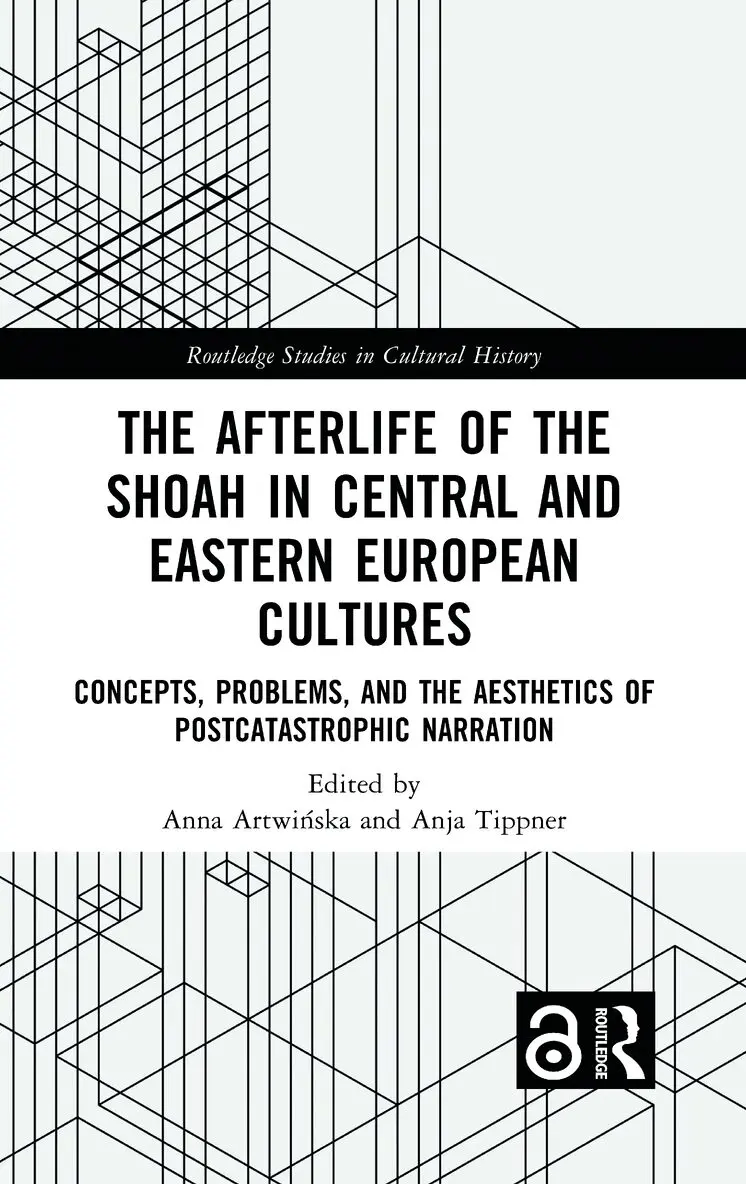
    Afterlife of the Shoah in Central and Eastern European Cultures

    Concepts, Problems, and the Aesthetics of Postcatastrophic Narration

    AvAnna Artwinska,Anja Tippner

    Inbunden, Engelska, 2021

    Del i serien Routledge Studies in Cultural History

    2 506 kr

    Beställningsvara. Skickas inom 10-15 vardagar. Fri frakt över 249 kr.

    Beskrivning

    The Afterlife of the Shoah in Central and Eastern European Cultures is a collection of essays by literary scholars from Germany, the US, and Central Eastern Europe offering insight into the specific ways of representing the Shoah and its aftereffects as well as its entanglement with other catastrophic events in the region. Introducing the conceptual frame of postcatastrophe, the collected essays explore the discursive and artistic space the Shoah occupies in the countries between Moscow and Berlin. Postcatastrophe is informed by the knowledge of other concepts of "post" and shares their insight into forms of transmission and latency; in contrast to them, explores the after-effects of extreme events on a collective, aesthetic, and political rather than a personal level. The articles use the concept of postcatastrophe as a key to understanding the entangled and conflicted cultures of remembrance in postsocialist literatures and the arts dealing with events, phenomena, and developments that refuse to remain in the past and still continue to shape perceptions of today’s societies in Eastern Europe. As a contribution to memory studies as well as to literary criticism with a special focus on Shoah remembrance after socialism, this book is of great interest to students and scholars of European history, and those interested in historical memory more broadly.

    Produktinformation

    • Utgivningsdatum:2021-11-09
    • Mått:152 x 229 x 30 mm
    • Vikt:453 g
    • Format:Inbunden
    • Språk:Engelska
    • Serie:Routledge Studies in Cultural History
    • Antal sidor:360
    • Förlag:Taylor & Francis Ltd
    • ISBN:9780367506209

    Utforska kategorier

    • Socialhistoria och kulturhistoria inom Historia och arkeologi

    Mer om författaren

    Anna Artwińska is a Professor of Slavic Literature and Culture Studies and Chair of the Center for Women’s and Gender Studies at the University of Leipzig, Germany. Her main research interests are the memory of communism, postcatastrophic representation of the Shoah, the concept of generation, auto/biographical writing and gender, and postcolonial studies.Anja Tippner is a Full Professor of Slavic Literatures at Hamburg University. She works on concepts of documentation and life-writing as well as representations of the Shoah and extreme experiences in Russian, Polish, and Czech literature. Her current research focuses on documentary and (collaborative) life-writing after socialism.

    Innehållsförteckning

    • Introduction: Living and Writing in Postcatastrophic Times; 1 Postcatastrophic Aesthetics - ANNA ARTWIŃSKA AND ANJA TIPPNER; 2 Grasping for the Past: Postcatastrophic Writing of Catastrophic Biographies - IRENA GRUDZIŃSKA-GROSS; PART I The Afterlife of Holocaust Objects and Spaces; 3 Small Acts of Repair: The Unclaimed Legacy of the Romanian Holocaust - MARIANNE HIRSCH AND LEO SPITZER; 4 The Post-Jewish Today. Tracing Material Culture in the Postcatastrophic Polish Poetry - ANNA ARTWIŃSKA; 5 Libeskind and History - MICHAEL MENG; 6 Globalization, Universalization, and Forensic Turn: Postcatastrophic Memorial Museums - LJILJANA RADONIĆ; 7 The Smellscape of Jewish Lublin—and its Afterlife - STEPHANIE WEISMANN; PART II Contested and Entangled Memories; 8 Addressing the Void: The Absence of Documents and the Difficulties of Representing the Shoah in Postcatastrophic Russian Jewish Literature - ANJA TIPPNER; 9 After the Catastrophe. Polish Reactions to the Holocaust in the 1940s and after 2010. Illustrated by the Examples of Kazimierz Wyka, Marcin Zaremba, and Andrzej Leder - KATARZYNA CHMIELEWSKA; 10 Commemorating the Shoah in the GDR’s (Post-)Perpetrator Society - ALEXANDER WALTHER; 11 Explaining German Expulsions through the Lens of Postcatastrophe: New Discussions Concerning the Shoah and the Expulsions - JOHN C. SWANSON; 12 The Silence Cartel. Representations of the Genocide of Roma in Yugoslav and Post-Yugoslav Literature - DAVOR BEGANOVIĆ; PART III Postcatastrophic Aesthetics and Re-Readings; 13 Lost and Saved in Translation: Katja Petrowskaja’s Maybe Esther. A Family Story - BARBARA BREYSACH; 14 "There’s No Such Thing as an Innocent Eye": Acts of Seeing and Ethical Aspects in Postmemorial Aesthetic - MAGDALENA MARSZAŁEK; 15 Who’s Afraid of Walter Benjamin? Dealing with the Problem of "Universalization" of Shoah Narration in Czech Literature - AGATA FIRLEJ; 16 Postcatastrophic Approaches to the Shoah in Contemporary Czech Poetry: Radek Malý’s Collection Little Darkness - REINHARD IBLER; PART IV Re-Mediating Catastrophes in Contemporary (Pop-)Culture; 17 Holocaust Topoi, or "How Long Can We Punish Ourselves for a Grandfather Holding a Match?": Jedwabne and the Pop-Cultural Afterlife of the Catastrophe - MARTA TOMCZOK AND PAWEŁ WOLSKI; 18 The Visuality of the Holocaust in the Digital Environment: Examining the Case of Pinterest - KAMIL ČINÁTL AND ČENĚK PÝCHA; 19 Art, Trauma, and the Shoah: Postcatastrophic Narration and Contemporary Art from Hungary - JAN ELANTKOWSKI; 20 The Image of People Jumping from Windows in the Warsaw Ghetto: Photographs of The Stroop Report in the Context of Polish Holocaust Remembrance - ARIKO KATO