• Fri frakt över 249 kr
  • •
  • Snabba leveranser
  • •
  • Billiga böcker
Kundservice

Du är på sajten för privatpersoner.

Företag, bibliotek eller offentlig verksamhet?

Du handlar på classic.bokus.com, där alla dina funktioner finns intakta.
Till classic.bokus.com
Bokus logotyp. Gå till startsidan.
  • Erbjudanden
  • Nyheter
  • Student
  • Topplistor
  • Barn & ungdom
  • Bokus Play
  • E-böcker
  • Pocketböcker
  • Spel & pussel

10% rabatt på allt med kod NYSTART10 →

Sidfot

Mina sidor

    Hjälp

    • Kundservice
    • Vanliga frågor och svar
    • Frakt och leverans
    • Retur vid ångerrätt
    • Reklamera vara
    • Betalning
    • Köpvillkor
    • Allmänna villkor
    • Information om webbplatsens tillgänglighet

    Om Bokus

    • Om oss
    • Pressrum
    • För studenter
    • För företag
    • För bibliotek och offentlig verksamhet
    • För leverantörer
    • Hållbarhet

    Populärt

    • Aktuella erbjudanden
    • Presentkort
    • Studentlitteratur
    • Nya böcker
    • Topplistor
    • Signerade böcker
    • Engelska böcker

    Inspiration

    • Boktips
    • BookTok
    • Populära bokserier
    • Barnbokskaraktärer
    • Populära författare
    Logotyp för Bokus
    Följ oss på Facebook (extern länk)Följ oss på Instagram (extern länk)Följ oss på YouTube (extern länk)Följ oss på TikTok (extern länk)
    bokus @ CookiesAnpassa cookiesIntegritetspolicyKöpvillkor
    Till Citymail hemsida (extern länk)Till Budbee hemsida (extern länk)Till Postnord hemsida (extern länk)Till Schenker hemsida (extern länk)Till Early Bird hemsida (extern länk)Till Walleys hemsida (extern länk)
    1. Historia och arkeologi
    2. Arkeologi
    3. Arkeologiska perioder och områden
    4. Arkeologiska platser

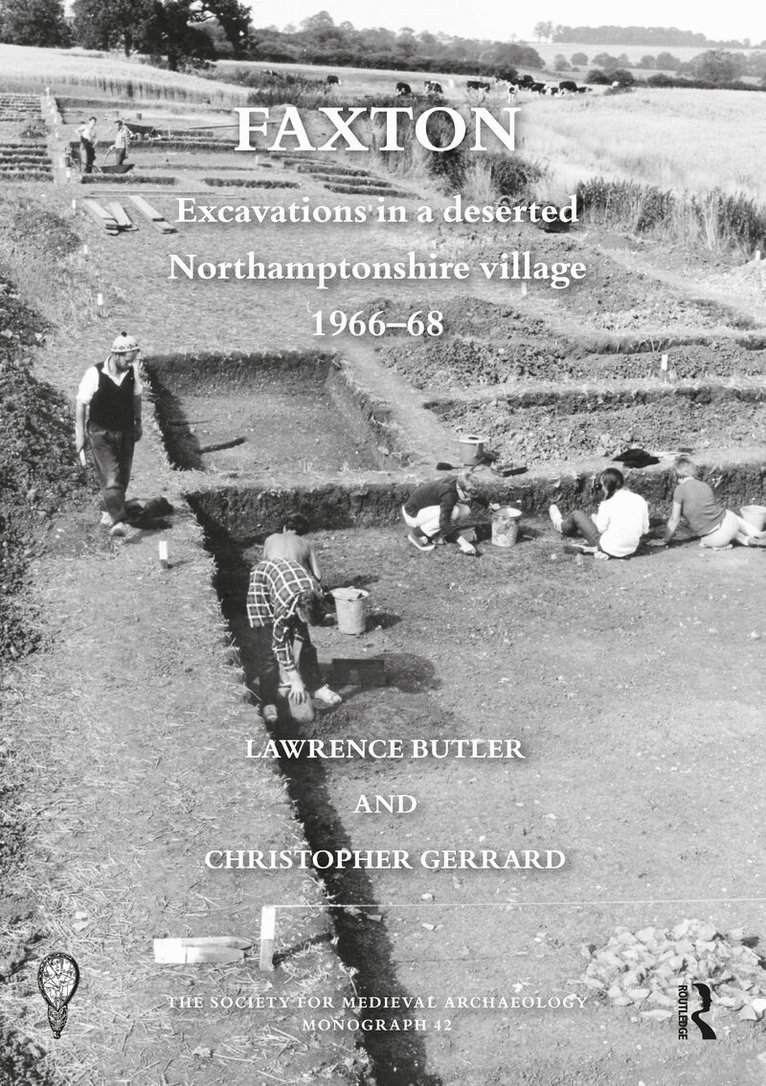
    Faxton

    Excavations in a deserted Northamptonshire village 1966–68

    AvLawrence Butler,Christopher Gerrard

    Häftad, Engelska, 2020

    Del i serien Society for Medieval Archaeology Monographs

    644 kr

    Beställningsvara. Skickas inom 10-15 vardagar. Fri frakt över 249 kr.

    Beskrivning

    The village of Faxton in Northamptonshire was only finally deserted in the second half of the 20th century. Shortly afterwards, between 1966 and 1968, its medieval crofts were investigated under the direction of archaeologist Lawrence Butler. At the time this was one of the most ambitious excavations of a deserted medieval settlement to have been conducted and, although the results were only published as interim reports and summaries, Butler’s observations at Faxton were to have significant influence on the growing academic and popular literature about village origins and desertion and the nature of medieval peasant crofts and buildings. In contrast to regions with abundant building stone, Faxton revealed archaeological evidence of a long tradition of earthen architecture in which so-called ‘mud-walling’ was successfully combined with other structural materials. The ‘rescue’ excavations at Faxton were originally promoted by the Deserted Medieval Village Research Group and funded by the Ministry of Public Buildings and Works after the extensive earthworks at the site came under threat from agriculture. Three areas were excavated covering seven crofts. In 1966 Croft 29 at the south-east corner of the village green revealed a single croft in detail with its barns, yards and corn driers; in 1967 four crofts were examined together in the north-west corner of the village in an area badly damaged by recent ploughing and, finally, an area immediately east of the church was opened up in 1968. In all, some 4000m2 were investigated in 140 days over three seasons. The post-excavation process for Faxton was beset by delay. Of the 12 chapters presented in this monograph, only two were substantially complete at the time of the director’s death in 2014. The others have had to be pieced together from interim summaries, partial manuscripts, sound recordings, handwritten notes and on-site records. Building on this evidence, a new team of scholars have re-considered the findings in order to set the excavations at Faxton into the wider context of modern research. Their texts reflect on the settlement’s disputed pre-Conquest origins, probable later re-planning and expansion, the reasons behind the decline and abandonment of the village, the extraordinary story behind the destruction of its church, the development of the open fields and the enclosure process, as well as new evidence about Faxton’s buildings and the finds discovered there. Once lauded, then forgotten, the excavations at Faxton now make a new contribution to our knowledge of medieval life and landscape in the East Midlands.

    Produktinformation

    • Utgivningsdatum:2020-09-08
    • Mått:210 x 297 x 35 mm
    • Vikt:660 g
    • Format:Häftad
    • Språk:Engelska
    • Serie:Society for Medieval Archaeology Monographs
    • Antal sidor:302
    • Förlag:Taylor & Francis Ltd
    • ISBN:9780367517717

    Utforska kategorier

    • Arkeologiska platser inom Historia och arkeologi

    Mer om författaren

    Lawrence Butler joined Leeds University as a lecturer in medieval archaeology in 1965 and later moved to the department at York. His major excavation projects included Sandal Castle in Yorkshire and Dolforwyn in Wales but his interests also spanned churches, cathedrals and monasteries. He died in December 2014.Christopher Gerrard is a Professor of Archaeology at Durham University, UK. He researches later medieval and post-medieval archaeology in Europe and has undertaken many fieldwork projects in England, Portugal and Spain, including the settlement and landscape study at Shapwick in Somerset. He is a co-editor of the de Gruyter series Historical Disaster Studies.

    Innehållsförteckning

    • 1 Purpose and past; 2 Place and landscape; 3 Field survey, standing buildings and the church at Faxton; 4 Excavations in the south-east of the village in 1966 (Croft 29); 5 Excavations at the north-west of the village in 1967 (Crofts 6–9); 6 Excavations south of the village green in 1968 (Croft 52–53); 7 The pottery; 8 Artefacts; 9 Building materials; 10 Environmental evidence and metallurgical residues; 11 The buildings and their plots; 12 Faxton then and now; Appendices