• Fri frakt över 249 kr
  • •
  • Snabba leveranser
  • •
  • Billiga böcker
Kundservice

Du är på sajten för privatpersoner.

Företag, bibliotek eller offentlig verksamhet?

Du handlar på classic.bokus.com, där alla dina funktioner finns intakta.
Till classic.bokus.com
Bokus logotyp. Gå till startsidan.
  • Erbjudanden
  • Nyheter
  • Student
  • Topplistor
  • Barn & ungdom
  • Bokus Play
  • E-böcker
  • Pocketböcker
  • Spel & pussel

10% rabatt på allt med kod: NYSTART10 →

Sidfot

Mina sidor

    Hjälp

    • Kundservice
    • Vanliga frågor och svar
    • Frakt och leverans
    • Retur vid ångerrätt
    • Reklamera vara
    • Betalning
    • Köpvillkor
    • Allmänna villkor
    • Information om webbplatsens tillgänglighet

    Om Bokus

    • Om oss
    • Pressrum
    • För studenter
    • För företag
    • För bibliotek och offentlig verksamhet
    • För leverantörer
    • Hållbarhet

    Populärt

    • Aktuella erbjudanden
    • Presentkort
    • Studentlitteratur
    • Nya böcker
    • Topplistor
    • Signerade böcker
    • Engelska böcker

    Inspiration

    • Boktips
    • BookTok
    • Populära bokserier
    • Barnbokskaraktärer
    • Populära författare
    Logotyp för Bokus
    Följ oss på Facebook (extern länk)Följ oss på Instagram (extern länk)Följ oss på YouTube (extern länk)Följ oss på TikTok (extern länk)
    bokus @ CookiesAnpassa cookiesIntegritetspolicyKöpvillkor
    Till Citymail hemsida (extern länk)Till Budbee hemsida (extern länk)Till Postnord hemsida (extern länk)Till Schenker hemsida (extern länk)Till Early Bird hemsida (extern länk)Till Walleys hemsida (extern länk)
    1. Samhälle och politik
    2. Politik och statsskick
    3. Centralt styre och förvaltning

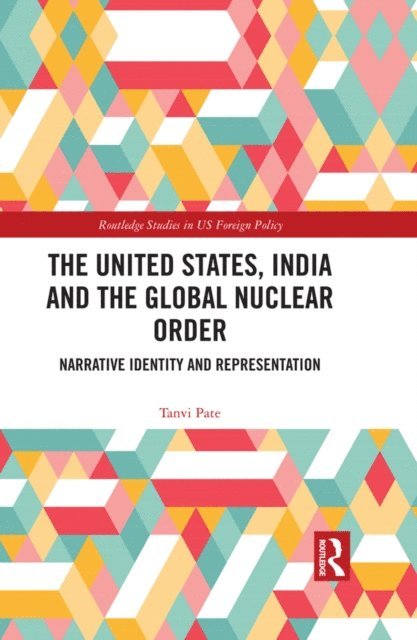
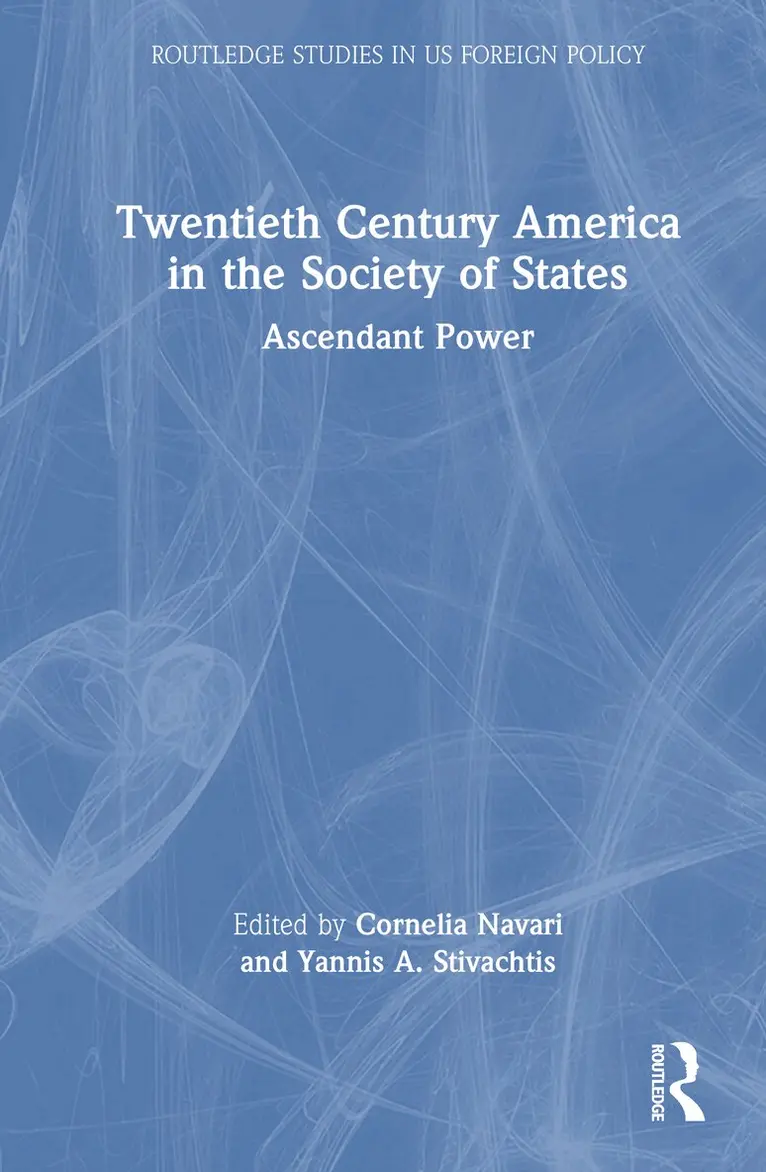
    United States, India and the Global Nuclear Order

    Narrative Identity and Representation

    AvTanvi Pate

    Häftad, Engelska, 2020

    Del i serien Routledge Studies in US Foreign Policy

    667 kr

    Beställningsvara. Skickas inom 10-15 vardagar. Fri frakt över 249 kr.

    Fler format och utgåvor

    Inbunden

    2 421 kr

    E-bok

    790 kr

    E-bok

    788 kr

    Beskrivning

    In the Post-Cold War era, US nuclear foreign policies towards India witnessed a major turnaround as a demand for ‘cap, reduce, eliminate’ under the Clinton administration was replaced by the implementation of the historic ‘civil nuclear deal’ in 2008 by Bush, a policy which continued under Obama’s administration. This book addresses the change in US nuclear foreign policy by focusing on three core categories of identity, inequality, and great power narratives. Building upon the theoretical paradigm of critical constructivism, the concept of the ‘state’ is problematised by focusing on identity-related questions arguing that the ‘state’ becomes a constructed entity standing as valid only within relations of identity and difference. Focusing on postcolonial principles, Pate argues that imperialism as an organising principle of identity/difference enables us to understand how difference was maintained in unequal terms through US nuclear foreign policy. This manifested in five great power narratives constructed around peace and justice; India-Pakistan deterrence; democracy; economic progress; and scientific development. Identities of ‘race’, ‘political economy’, and ‘gender’, in terms of ‘radical otherness’ and ‘otherness’ were recurrently utilised through these narratives to maintain a difference enabling the respective administrations to maintain ‘US’ identity as a progressive and developed western nation, intrinsically justifying the US role as an arbiter of the global nuclear order.A useful work for scholars researching identity construction and US foreign and security policies, US-India bilateral nuclear relations, South Asian nuclear politics, critical security, and postcolonial studies.

    Produktinformation

    • Utgivningsdatum:2020-04-28
    • Mått:156 x 234 x 15 mm
    • Vikt:453 g
    • Format:Häftad
    • Språk:Engelska
    • Serie:Routledge Studies in US Foreign Policy
    • Antal sidor:254
    • Förlag:Taylor & Francis Ltd
    • ISBN:9780367524579

    Utforska kategorier

    • Centralt styre och förvaltning inom Samhälle och politik
    • Referensverk och tvärvetenskap inom Samhälle och politik
    • Kärnvapen inom Samhälle och politik

    Mer om författaren

    Tanvi Pate is a Lecturer in Security and Intelligence Studies at the Centre for Security and Intelligence Studies (BUCSIS), University of Buckingham. She is also associated with the Institute of Continuing Education (ICE), University of Cambridge, as a Panel Tutor in International Relations (IR). Her research interests encompass the discipline of IR with a focus on critical geopolitics, specifically concerning great power-rising power encounters in the context of India and the global order, India’s bilateral relations, and the politics of the Indo-Pacific.

    Recensioner i media

    "Tanvi Pate succeeds in convincing the reader about the importance of narrative. For example, she shows that we cannot understand the US nuclear foreign aid programme, which was dubbed ‘Atoms for Peace’, without placing it in the context of tropes about assisting democracies to achieve economic progress and global stability...Pate’s book has several thought-provoking and novel insights, such as the link between the Christian identity of the United States and the narrative of peace…". - Karthika Sasikumar, San Jose State University, San Jose, USA"The poststructuralist perspective employed in The United States, India and the Global Nuclear Order stresses the need to study narratives alongside counter-narratives, which highlights that great power narratives are organised around relations of race, political economy, and gender, through which inequalities are routinely reproduced in order to create difference." - Alicja Prochniak and Christian Nitoiu, Loughborough University, UK

    Innehållsförteckning

    • Introduction. 1 Reconceptualising Theory and Methodology of Foreign Policy: Narrative, State Identity and Action from a Critical Constructivist-Postcolonial Viewpoint 2 Creating American Nuclear Subjectivity: ‘Atoms for Peace’ in the Campaign for a New Global Nuclear Order 3 Is India a Capable Nuclear Power? The Changing Characteristics of India as the ‘Other’ (1947-1992) 4 Establishing a Post-Cold War Global Nuclear Order: The Bill Clinton Administration’s Conflicting Images of India as the ‘Other’ (1993-2001) 5 Nuclear America in a Post-9/11 World: India as the ‘Other’ in the Narratives of George W. Bush Administration (2001-2009) 6 America as the Leader of Non-Proliferation: The Continuation of US-India Nuclear Partnership during Barack Obama Administration (2009-2017) 7 Understanding the Complexity of Identity/Difference: Analysing Great Power Narratives of Bill Clinton, George W. Bush and Barack Obama Administrations from a Postcolonial Viewpoint. Conclusion