• Fri frakt över 249 kr
  • •
  • Snabba leveranser
  • •
  • Billiga böcker
Kundservice

Du är på sajten för privatpersoner.

Företag, bibliotek eller offentlig verksamhet?

Du handlar på classic.bokus.com, där alla dina funktioner finns intakta.
Till classic.bokus.com
Bokus logotyp. Gå till startsidan.
  • Erbjudanden
  • Nyheter
  • Student
  • Topplistor
  • Barn & ungdom
  • Bokus Play
  • E-böcker
  • Pocketböcker
  • Spel & pussel

10% rabatt på allt med kod: NYSTART10 →

Sidfot

Mina sidor

    Hjälp

    • Kundservice
    • Vanliga frågor och svar
    • Frakt och leverans
    • Retur vid ångerrätt
    • Reklamera vara
    • Betalning
    • Köpvillkor
    • Allmänna villkor
    • Information om webbplatsens tillgänglighet

    Om Bokus

    • Om oss
    • Pressrum
    • För studenter
    • För företag
    • För bibliotek och offentlig verksamhet
    • För leverantörer
    • Hållbarhet

    Populärt

    • Aktuella erbjudanden
    • Presentkort
    • Studentlitteratur
    • Nya böcker
    • Topplistor
    • Signerade böcker
    • Engelska böcker

    Inspiration

    • Boktips
    • BookTok
    • Populära bokserier
    • Barnbokskaraktärer
    • Populära författare
    Logotyp för Bokus
    Följ oss på Facebook (extern länk)Följ oss på Instagram (extern länk)Följ oss på YouTube (extern länk)Följ oss på TikTok (extern länk)
    bokus @ CookiesAnpassa cookiesIntegritetspolicyKöpvillkor
    Till Citymail hemsida (extern länk)Till Budbee hemsida (extern länk)Till Postnord hemsida (extern länk)Till Schenker hemsida (extern länk)Till Early Bird hemsida (extern länk)Till Walleys hemsida (extern länk)
    1. Samhälle och politik
    2. Sociologi och antropologi
    3. Sociologi

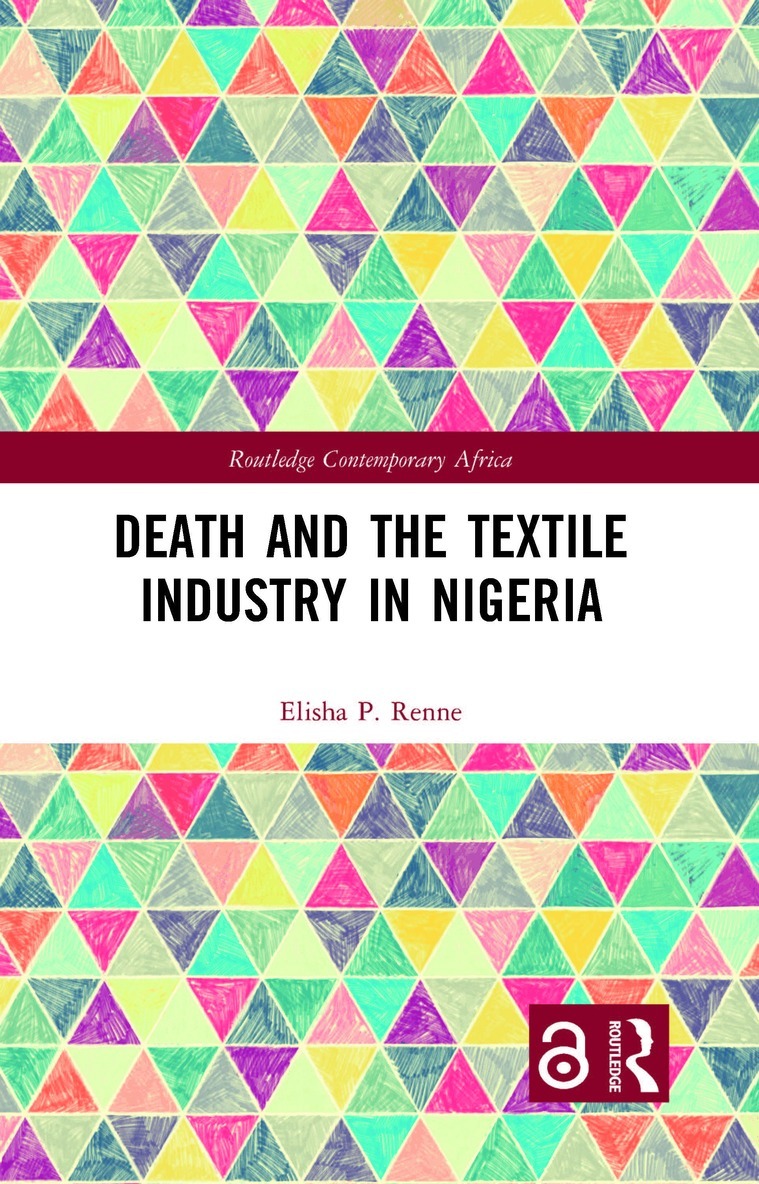
    Death and the Textile Industry in Nigeria

    AvElisha P Renne

    Häftad, Engelska, 2023

    Del i serien Routledge Contemporary Africa

    667 kr

    Beställningsvara. Skickas inom 10-15 vardagar. Fri frakt över 249 kr.

    Fler format och utgåvor

    Inbunden

    2 421 kr

    E-bok

    777 kr

    E-bok

    777 kr

    Beskrivning

    This book draws upon thinking about the work of the dead in the context of deindustrialization—specifically, the decline of the textile industry in Kaduna, Nigeria—and its consequences for deceased workers’ families.The author shows how the dead work in various ways for Christians and Muslims who worked in KTL mill in Kaduna, not only for their families who still hope to receive termination remittances, but also as connections to extended family members in other parts of Nigeria and as claims to land and houses in Kaduna. Building upon their actions as a way of thinking about the ways that the dead work for the living, the author focuses on three major themes. The first considers the growth of the city of Kaduna as a colonial construct which, as the capital of the Protectorate of Northern Nigeria, was organized by neighborhoods, by public cemeteries, and by industrial areas. The second theme examines the establishment of textile mills in the industrial area and new ways of thinking about work and labor organization, time regimens, and health, particularly occupational ailments documented in mill clinic records. The third theme discusses the consequences of KTL mill workers’ deaths for the lives of their widows and children. This book will be of interest to scholars of African studies, development studies, anthropology of work, and the history of industrialization.The Introduction, Chapter 2 and the Conclusion of this book is freely available as a downloadable Open Access PDF under a Creative Commons Attribution-Non Commercial-No Derivatives 4.0 license available at http://www.taylorfrancis.com/books/e/9781003058137

    Produktinformation

    • Utgivningsdatum:2023-05-31
    • Mått:156 x 234 x undefined mm
    • Vikt:300 g
    • Format:Häftad
    • Språk:Engelska
    • Serie:Routledge Contemporary Africa
    • Antal sidor:160
    • Förlag:Taylor & Francis Ltd
    • ISBN:9780367524906

    Utforska kategorier

    • Sociologi inom Samhälle och politik
    • Geografi inom Naturvetenskap och teknik
    • Politik och statsskick inom Samhälle och politik

    Mer om författaren

    Elisha P. Renne is Professor Emerita in the Departments of Anthropology and of Afroamerican and African Studies, University of Michigan–Ann Arbor, USA.

    Recensioner i media

    "In Death and the Textile Industry in Nigeria, Renne (emer., anthropology and Afroamerican and African studies, Univ. of Michigan) provides a close, intimate examination of the ramifications of the demise of the textile industry in Kaduna, Nigeria. The book looks at the rise of the city of Kaduna as an industrial center, then traces its decline and the closing of its major textile mill. The author includes richly detailed interview excerpts from women who lost their husbands and focuses on how they conceptualize health and ailments in the context of life in Kaduna. One of this volume's unique features is an intriguing chapter titled “Interlude,” which includes beautiful full-color portraits of six Kaduna women with whom the author worked. Translations of Renne's interviews with the women about their lives accompany the photos. This book is very narrowly focused and rich with interviews, photographs, and narratives of life within this community. It will be of most interest to students and scholars of Nigeria and West Africa and to anthropologists and others who are interested in practices surrounding death and dying and in industrialization and deindustrialization."E. E. Stiles, University of Nevada, Reno

    Innehållsförteckning

    • Introduction: The Work of the Dead and the Coalition of Unpaid Textile Workers of Nigeria Chapter 1. The City of Kaduna as Colonial Construct Chapter 2. New Work-time Regimes: The Rise and Fall of Kaduna Textiles Ltd (KTL) Chapter 3. Workers’ Health and Deaths after the Closure of Kaduna Textiles Ltd Chapter 4. Burying the Dead: Hometowns, Houses, and Cemeteries Chapter 5. Widows' Dilemmas and Experiences of Hardship Chapter 6. Consequences for Children, Problems for Families Conclusion: Death, Deindustrialization, and Time