• Fri frakt över 249 kr
  • •
  • Snabba leveranser
  • •
  • Billiga böcker
Kundservice

Du är på sajten för privatpersoner.

Företag, bibliotek eller offentlig verksamhet?

Du handlar på classic.bokus.com, där alla dina funktioner finns intakta.
Till classic.bokus.com
Bokus logotyp. Gå till startsidan.
  • Erbjudanden
  • Nyheter
  • Student
  • Topplistor
  • Barn & ungdom
  • Bokus Play
  • E-böcker
  • Pocketböcker
  • Spel & pussel

10% studentrabatt med kod TERM26

Sidfot

Mina sidor

    Hjälp

    • Kundservice
    • Vanliga frågor och svar
    • Frakt och leverans
    • Retur vid ångerrätt
    • Reklamera vara
    • Betalning
    • Köpvillkor
    • Allmänna villkor
    • Information om webbplatsens tillgänglighet

    Om Bokus

    • Om oss
    • Pressrum
    • För studenter
    • För företag
    • För bibliotek och offentlig verksamhet
    • För leverantörer
    • Hållbarhet

    Populärt

    • Aktuella erbjudanden
    • Presentkort
    • Studentlitteratur
    • Nya böcker
    • Topplistor
    • Signerade böcker
    • Engelska böcker

    Inspiration

    • Boktips
    • BookTok
    • Populära bokserier
    • Barnbokskaraktärer
    • Populära författare
    Logotyp för Bokus
    Följ oss på Facebook (extern länk)Följ oss på Instagram (extern länk)Följ oss på YouTube (extern länk)Följ oss på TikTok (extern länk)
    bokus @ CookiesAnpassa cookiesIntegritetspolicyKöpvillkor
    Till Citymail hemsida (extern länk)Till Budbee hemsida (extern länk)Till Postnord hemsida (extern länk)Till Schenker hemsida (extern länk)Till Early Bird hemsida (extern länk)Till Walleys hemsida (extern länk)
    1. Kultur
    2. Arkitektur

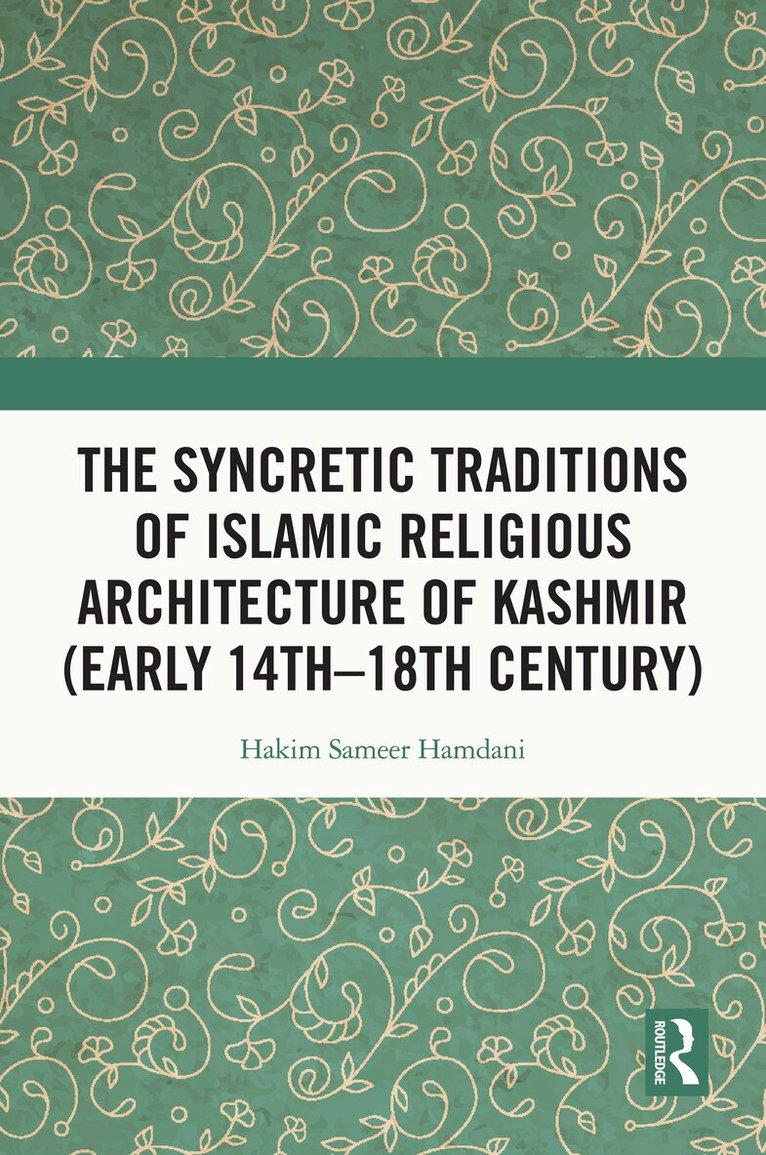
    Syncretic Traditions of Islamic Religious Architecture of Kashmir (Early 14th –18th Century)

    AvHakim Sameer Hamdani

    Inbunden, Engelska, 2021

    2 434 kr

    Beställningsvara. Skickas inom 10-15 vardagar. Fri frakt över 249 kr.

    Fler format och utgåvor

    Häftad

    670 kr

    E-bok

    788 kr

    E-bok

    788 kr

    Beskrivning

    This book traces the historical identity of Kashmir within the context of Islamic religious architecture between early fourteenth and mid-eighteenth century. It presents a framework of syncretism within which the understanding of this architectural tradition acquires new dimensions and possibilities in the region. In a first, the volume provides a detailed overview of the origin and development of Islamic sacred architecture while contextualizing it within the history of Islam in Kashmir. Covering the entirety of Muslim rule in the region, the book throws light on Islamic religious architecture introduced with the establishment of the Muslim Sultanate in the early fourteenth century, and focuses on both monumental and vernacular architecture. It examines the establishment of new styles in architecture, including ideas, materials and crafts introduced by non-Kashmiri missionaries in the late-fourteenth to fifteenth century. Further, it discusses how the Mughals viewed Kashmir and embellished the land with their architectural undertakings, coupled with encounters between Kashmir’s native culture, with its identity and influences introduced by Sufis arriving from the medieval Persianate world. The book also highlights the transition of the traditional architecture to a pan-Islamic image in the post-Independence period. With its rich illustrations, photographs and drawings, this book will interest students, researchers, and professionals in architecture studies, cultural and heritage studies, visual and art history, religion, Islamic studies and South Asian studies. It will also be useful to professional architecture institutes, public libraries, museums, cultural and heritage bodies as well as the general reader interested in the architectural and cultural history of South Asia.

    Produktinformation

    • Utgivningsdatum:2021-03-30
    • Mått:156 x 234 x 19 mm
    • Vikt:440 g
    • Format:Inbunden
    • Språk:Engelska
    • Antal sidor:240
    • Förlag:Taylor & Francis Ltd
    • ISBN:9780367550097

    Utforska kategorier

    • Arkitektur inom Kultur
    • Arkitekturhistoria inom Kultur
    • Islam inom Filosofi och religion

    Mer om författaren

    Hakim Sameer Hamdani is Design Director, Indian National Trust for Art and Cultural Heritage (INTACH), Kashmir Chapter, Srinagar, Kashmir, India. With his primary research focused on Islamic architecture, he has published his work in various journals and book chapters. Among his major conservation projects are the Reconstruction of 18th-century Wooden Shrine of Peer Dastgeer Saheb (2020–12) and Conservation of Aali Masjid at Eidgah, Srinagar (2007) — both of which were longlisted for the Aga Khan Award for Architecture. Others include the Conservation of the Khanqah-I Shah Hamdan, Srinagar (2018); Restoration of Mughal Monument of Thag Baba Saheb at Srinagar (2011); and Conservation of Historic Mughal Gardens of Kashmir (2007–10).

    Recensioner i media

    ‘An up-to-date and comprehensive survey of Kashmir’s rich tradition of Islamic architecture, connecting the region’s built environment with its political and cultural history. This book intelligently explores the dialogue — and the tensions — between aesthetic elements rooted in the valley’s medieval and pre-Muslim past, and Persianate elements subsequently brought in from outside.’Richard M. Eaton, Professor, Department of History, University of Arizona, USA‘Hakim Sameer Hamdani’s volume is the best available survey of the Islamic architecture of Kashmir, spanning the entirety of Muslim rule in the Valley, from its inception in the fourteenth century to the middle of the eighteenth century. It brings together a corpus of buildings, many of them little known and so far unrecorded, which are documented with exact measured drawings as well as textual references that anchor the buildings chronologically and contextually in their time. The book highlights the syncretistic distinctiveness of Kashmiri architecture expressed in its mosques, shrines and tombs, and will be an indispensable reference work for any reader interested in Islamic or Indian architecture.’Ebba Koch, Professor, Department of Art History, University of Vienna, Austria‘Dr Hakim Sameer Hamdani’s volume fills important gaps in the history of Kashmir’s Islamic architectural heritage, broadly defined to encompass Sufi khanaqahs, Rishi shrines, and garden complexes, as well as detailed analyses of mosque architecture. The book considers multiple historiographical perspectives on Islamic architecture in Kashmir, and it addresses the dynamic historical geographic context of architectural development of five major periods from the 14th century onwards. This combination of historical, cultural, and formal approaches supports the book’s argument for, and reflections upon, syncretic traditions of Kashmiri architecture.’James L. Wescoat Jr., Aga Khan Professor Emeritus of Landscape Architecture and Geography, Department of Architecture, Massachusetts Institute of Technology, USA

    Innehållsförteckning

    • 1. Introduction 2. The Formative Period: 1320–1389 CE 3. Establishment of a Style: 1389–1586 CE 4. The Mughal Interlude: 1586–1752 CE 5. Resurgence of the Local Idiom: 1752–1847 CE 6. Conclusion: Transition to a Pan-Islamic Image in Post-Independence Period. Appendix: The Origin of Major Sufi Orders in Kashmir. Glossary. Bibliography