• Fri frakt över 249 kr
  • •
  • Snabba leveranser
  • •
  • Billiga böcker
Kundservice

Du är på sajten för privatpersoner.

Företag, bibliotek eller offentlig verksamhet?

Du handlar på classic.bokus.com, där alla dina funktioner finns intakta.
Till classic.bokus.com
Bokus logotyp. Gå till startsidan.
  • Erbjudanden
  • Nyheter
  • Student
  • Topplistor
  • Barn & ungdom
  • Bokus Play
  • E-böcker
  • Pocketböcker
  • Spel & pussel

Må bättre, för mindre! Upp till 50% rabatt på hälsoböcker

Sidfot

Mina sidor

    Hjälp

    • Kundservice
    • Vanliga frågor och svar
    • Frakt och leverans
    • Retur vid ångerrätt
    • Reklamera vara
    • Betalning
    • Köpvillkor
    • Allmänna villkor
    • Information om webbplatsens tillgänglighet

    Om Bokus

    • Om oss
    • Pressrum
    • För studenter
    • För företag
    • För bibliotek och offentlig verksamhet
    • För leverantörer
    • Hållbarhet

    Populärt

    • Aktuella erbjudanden
    • Presentkort
    • Studentlitteratur
    • Nya böcker
    • Topplistor
    • Signerade böcker
    • Engelska böcker

    Inspiration

    • Boktips
    • BookTok
    • Populära bokserier
    • Barnbokskaraktärer
    • Populära författare
    Logotyp för Bokus
    Följ oss på Facebook (extern länk)Följ oss på Instagram (extern länk)Följ oss på YouTube (extern länk)Följ oss på TikTok (extern länk)
    bokus @ CookiesAnpassa cookiesIntegritetspolicyKöpvillkor
    Till Citymail hemsida (extern länk)Till Budbee hemsida (extern länk)Till Postnord hemsida (extern länk)Till Schenker hemsida (extern länk)Till Early Bird hemsida (extern länk)Till Walleys hemsida (extern länk)
    1. Djur och Natur
    2. Djurböcker

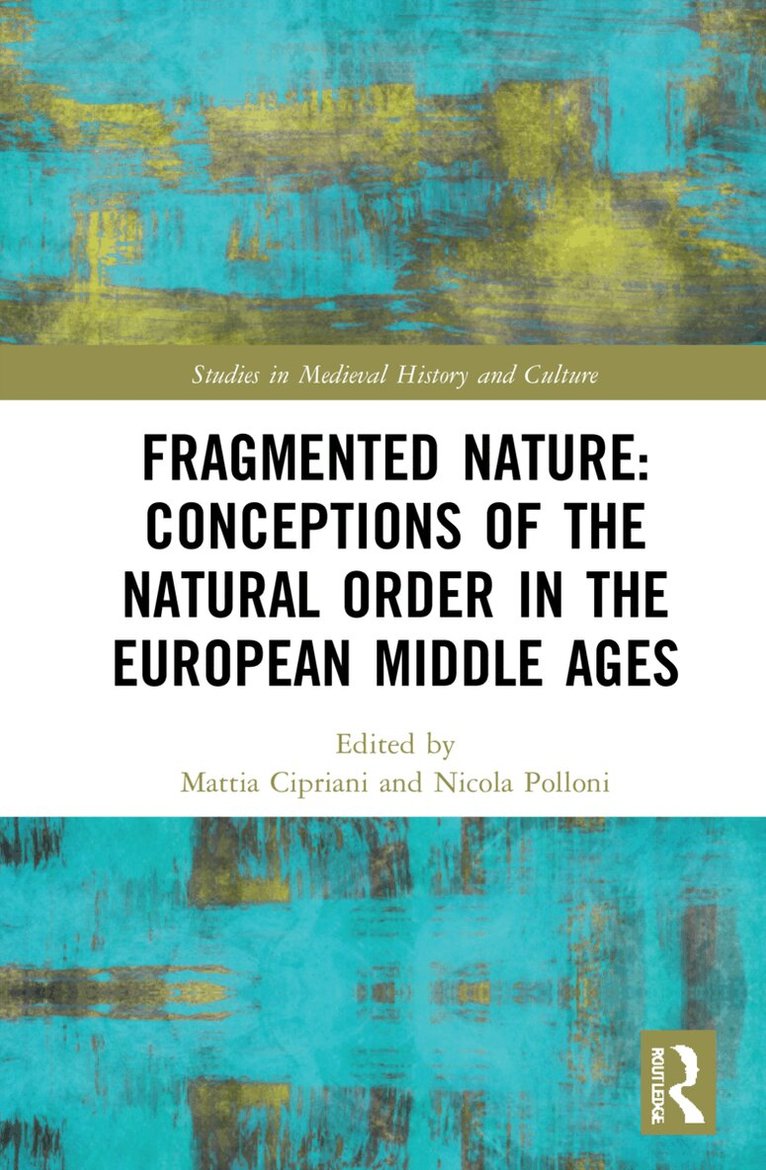
    Fragmented Nature: Medieval Latinate Reasoning on the Natural World and Its Order

    AvMattia Cipriani,Nicola Polloni

    Häftad, Engelska, 2024

    Del i serien Studies in Medieval History and Culture

    663 kr

    Beställningsvara. Skickas inom 10-15 vardagar. Fri frakt över 249 kr.

    Beskrivning

    The Latin Middle Ages were characterised by a vast array of different representations of nature. These conceptualisations of the natural world were developed according to the specific requirements of many different disciplines, with the consequent result of producing a fragmentation of images of nature. Despite this plurality, two main tendencies emerged. On the one hand, the natural world was seen as a reflection of God’s perfection, teleologically ordered and structurally harmonious. On the other, it was also considered as a degraded version of the spiritual realm – a world of impeccable ideas, separate substances, and celestial movers. This book focuses on this tension between order and randomness, and idealisation and reality of nature in the Middle Ages. It provides a cutting-edge profile of the doctrinal and semantic richness of the medieval idea of nature, and also illustrates the structural interconnection among learned and scientific disciplines in the medieval period, stressing the fundamental bond linking together science and philosophy, on the one hand, and philosophy and theology, on the other.This book will appeal to scholars and students alike interested in Medieval European History, Theology, Philosophy, and Science.

    Produktinformation

    • Utgivningsdatum:2024-01-29
    • Mått:156 x 234 x 19 mm
    • Vikt:352 g
    • Format:Häftad
    • Språk:Engelska
    • Serie:Studies in Medieval History and Culture
    • Antal sidor:220
    • Förlag:Taylor & Francis Ltd
    • ISBN:9780367557041

    Utforska kategorier

    • Djurböcker inom Djur och Natur

    Mer om författaren

    Mattia Cipriani currently holds an Alexander von Humboldt Research Fellowship at the Freie Universität Berlin, Germany. His research focuses on Thomas of Cantimpré’s Liber de natura rerum, on medieval encyclopaedism, and on the transmission of naturalistic ideas and texts. Nicola Polloni has worked at the universities of Pavia, Durham, and Berlin. Since 2020, he is FWO Senior Research Fellow at KU Leuven, Belgium. His research expands cross-disciplinarily on medieval hylomorphism and theories of matter.

    Innehållsförteckning

    • Chapter 1 Zoological Inconsistency and Confusion in the Physiologus latinus / Chapter 2 Gerald of Wales and Saint Brigid’s Falcon: The Chaste Beast in Medieval and Early Modern Irish Natural History / Chapter 3 Medieval Universes in Disorder: Primeval Chaos and Its Authoritative Coordinates / Chapter 4 Animals under an Encyclopedic Lens: Zoological Misinterpretation in Thomas of Cantimpré’s Liber de Natura Rerum / Chapter 5 Learning from Bees, Wasps, and Ants: Communal Norms, Social Practices, and Contingencies of Nature in Medieval Insect Allegories / Chapter 6 Defining and Picturing Elements and Humours in Medieval Medicine: Text and Images in Bartholomew the Englishman’s De Proprietatibus Rerum / Chapter 7 Why Do Animals Have Parts? Organs and Organisation in Thirteenth- and Fourteenth-century Latin Commentaries on Aristotle’s De animalibus / Chapter 8 La reproduction imparfaite: les "gusanes" et l’état larvaire des insectes chez Albert le Grand / Chapter 9 Elixir as Means of Contrasting with Nature in Albert the Great’s Alchemy / Chapter 10 From Prime Matter to Chaos in Ramon Llull