• Fri frakt över 249 kr
  • •
  • Snabba leveranser
  • •
  • Billiga böcker
Kundservice

Du är på sajten för privatpersoner.

Företag, bibliotek eller offentlig verksamhet?

Du handlar på classic.bokus.com, där alla dina funktioner finns intakta.
Till classic.bokus.com
Bokus logotyp. Gå till startsidan.
  • Erbjudanden
  • Nyheter
  • Student
  • Topplistor
  • Barn & ungdom
  • Bokus Play
  • E-böcker
  • Pocketböcker
  • Spel & pussel

10% rabatt på allt med kod: NYSTART10 →

Sidfot

Mina sidor

    Hjälp

    • Kundservice
    • Vanliga frågor och svar
    • Frakt och leverans
    • Retur vid ångerrätt
    • Reklamera vara
    • Betalning
    • Köpvillkor
    • Allmänna villkor
    • Information om webbplatsens tillgänglighet

    Om Bokus

    • Om oss
    • Pressrum
    • För studenter
    • För företag
    • För bibliotek och offentlig verksamhet
    • För leverantörer
    • Hållbarhet

    Populärt

    • Aktuella erbjudanden
    • Presentkort
    • Studentlitteratur
    • Nya böcker
    • Topplistor
    • Signerade böcker
    • Engelska böcker

    Inspiration

    • Boktips
    • BookTok
    • Populära bokserier
    • Barnbokskaraktärer
    • Populära författare
    Logotyp för Bokus
    Följ oss på Facebook (extern länk)Följ oss på Instagram (extern länk)Följ oss på YouTube (extern länk)Följ oss på TikTok (extern länk)
    bokus @ CookiesAnpassa cookiesIntegritetspolicyKöpvillkor
    Till Citymail hemsida (extern länk)Till Budbee hemsida (extern länk)Till Postnord hemsida (extern länk)Till Schenker hemsida (extern länk)Till Early Bird hemsida (extern länk)Till Walleys hemsida (extern länk)
    1. Samhälle och politik
    2. Samhälle och kultur
    3. Kultur och medier
    4. Referensverk och tvärvetenskap

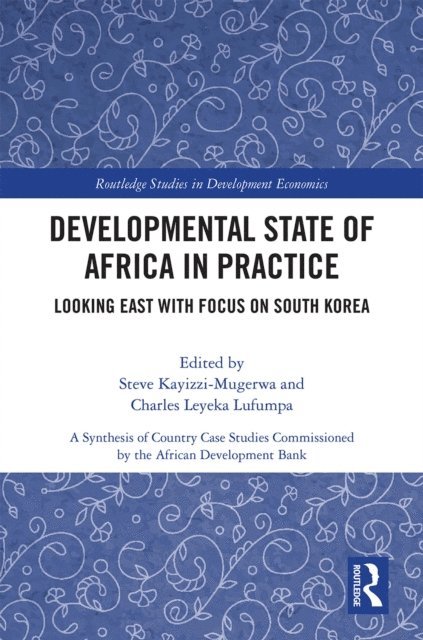
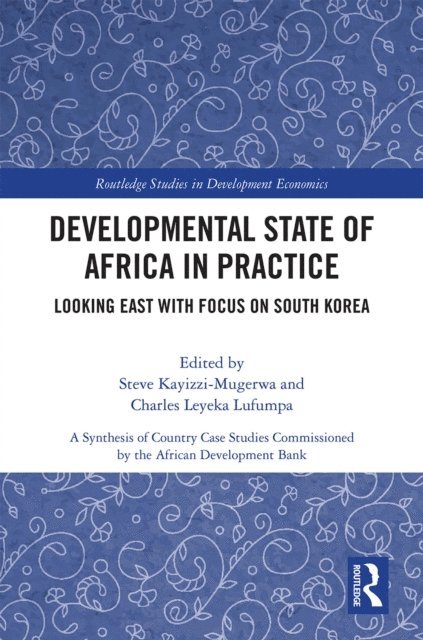
    Developmental State of Africa in Practice

    Looking East with Focus on South Korea

    AvSteve Kayizzi-Mugerwa,Charles Leyeka Lufumpa

    Häftad, Engelska, 2022

    Del i serien Routledge Studies in Development Economics

    686 kr

    Beställningsvara. Skickas inom 10-15 vardagar. Fri frakt över 249 kr.

    Beskrivning

    This book is the product of research undertaken at the African Development Bank (AfDB) on the lessons that the continent of Africa can draw from the role of the state in Asia’s rapid economic development in the last 50 years. The book applies a cross-national comparative framework to analyse Africa’s performance drawing broadly on the developmental states of Asia (i.e. Japan, China, India, Vietnam, etc.) with focus on South Korea. The book argues that for Africa to replicate Asia’s developmental success, it may require more than just tweaking the public sector machinery. Dedicated institutions and a citizenry capable of demanding accountability from governments must become key ingredients of the development strategy. The book also provides insight into the learning experiences of Asia, in addressing key national policy challenges i.e. land reform and quality of public administration at the federal and local levels, enhancing technical skills, boosting capabilities for sciences, engineering and mathematics, and industrialization.

    Produktinformation

    • Utgivningsdatum:2022-05-30
    • Mått:156 x 234 x 17 mm
    • Vikt:335 g
    • Format:Häftad
    • Språk:Engelska
    • Serie:Routledge Studies in Development Economics
    • Antal sidor:230
    • Förlag:Taylor & Francis Ltd
    • ISBN:9780367619343

    Utforska kategorier

    • Referensverk och tvärvetenskap inom Samhälle och politik
    • Internationell ekonomi inom Ekonomi och Ledarskap

    Mer om författaren

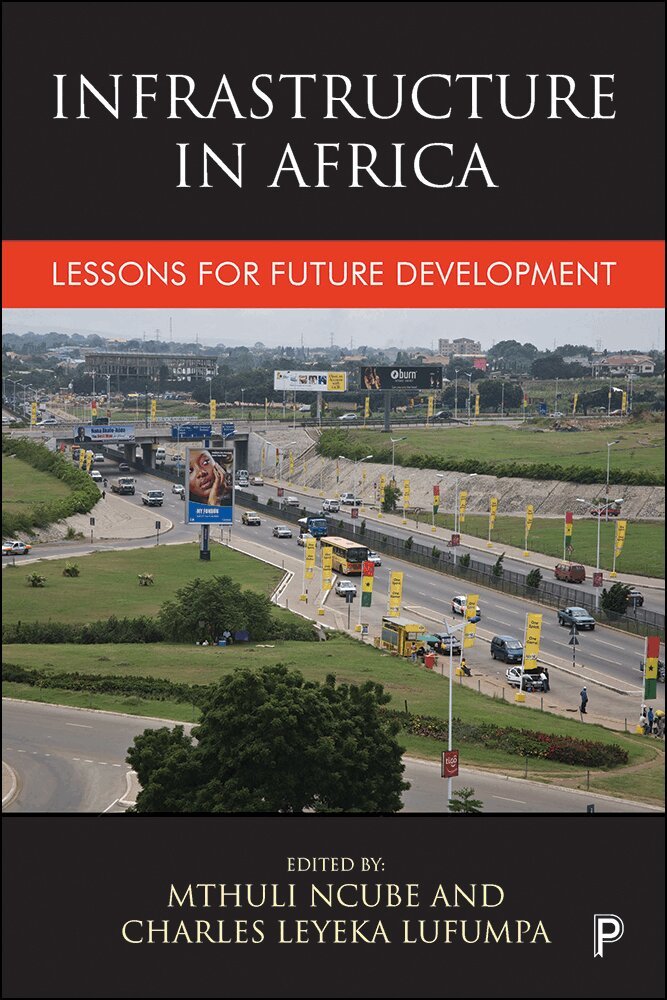
    Steve Kayizzi-Mugerwa was recently Economic Governance Advisor, Prime Minister’s Office, Kingdom of Eswatini (2019) and Advisor at the Independent Evaluation Office, IMF (2018). At the African Development Bank, he was, successively, Lead Economist, Director (Strategy and Policy; Country Operations; Development Research) and Acting Chief Economist and Vice President. He holds a PhD from the University of Gothenburg, with a dissertation on economic adjustment in Zambia, and became an Associate Professor there in 1994. He has worked or undertaken research at the following universities: Makerere, Zambia, Nairobi, Cape Town (Adjunct Professor, 2015–2020), Stockholm, Lund, Helsinki, New York (Visiting Scholar at Africa House), and Cornell (Visiting Fellow at the Institute for African Development) and published widely. He was also Senior Economist at the IMF and Fellow and Project Director at the World Institute of Development Economics Research of the United Nations University, based in Helsinki. Charles Leyeka Lufumpa is Acting Vice President and Chief Economist for Economic Governance and Knowledge and Director of Statistics at the African Development Bank Group. He has led several Bank initiatives, in collaboration with the UN and the African Union, for the collection, management, and use of social and economic statistics to enhance Africa’s statistical agenda. Notably, an African Statistical Portal, hosted by the AfDB, was developed to which all African national statistical offices have real-time access. Following his BA in economics and statistics at the University of Zambia, he proceeded to Iowa State University, where he completed MSc (1989) and PhD degrees (1991) in agricultural economics and forest resource economics and statistics, respectively. His research interests are in statistics, poverty analysis, infrastructure development, agricultural innovation, and environmental economics. Dr. Lufumpa has co-edited (with Professor Mthuli Ncube) two volumes of research work in the recent past: The Emerging Middle Class in Africa, Routledge, 2014, and Infrastructure in Africa: Lessons for Future Development, Bristol Policy Press, 2017.

    Innehållsförteckning

    • 1.Africa Looking East: An Introduction. PART I: Debate, Relevance, and Context 2. Developmental State and Relevance for Africa: An Overview 3. Country Case Study Context: South Korea, Cameroon, Côte d’Ivoire, Nigeria, South Africa, and Zambia 4. Governance, Transparency and Avoiding Elite Capture PART II: Implementation and Impact 5. National Planning, Decentralization, and Rural Development 6. Service Delivery, Employment, and Poverty Reduction 7. Industrialization Imperative 8. Discussion and Conclusion