• Fri frakt över 249 kr
  • •
  • Snabba leveranser
  • •
  • Billiga böcker
Kundservice

Du är på sajten för privatpersoner.

Företag, bibliotek eller offentlig verksamhet?

Du handlar på classic.bokus.com, där alla dina funktioner finns intakta.
Till classic.bokus.com
Bokus logotyp. Gå till startsidan.
  • Erbjudanden
  • Student
  • Topplistor
  • Barn & ungdom
  • Bokus Play
  • E-böcker
  • Ljudböcker
  • Pocketböcker
  • Spel och pussel

Pocketfynda! Hundratals böcker för 49 kr/st →

Sidfot

Mina sidor

    Hjälp

    • Kundservice
    • Vanliga frågor och svar
    • Frakt och leverans
    • Retur vid ångerrätt
    • Reklamera vara
    • Betalning
    • Köpvillkor
    • Allmänna villkor
    • Information om webbplatsens tillgänglighet

    Om Bokus

    • Om oss
    • Pressrum
    • För studenter
    • För företag
    • För bibliotek och offentlig verksamhet
    • För leverantörer
    • Hållbarhet

    Populärt

    • Aktuella erbjudanden
    • Presentkort
    • Studentlitteratur
    • Nya böcker
    • Topplistor
    • Signerade böcker
    • Engelska böcker

    Inspiration

    • Boktips
    • BookTok
    • Barnbokskaraktärer
    • Populära författare
    Logotyp för Bokus
    Följ oss på Facebook (extern länk)Följ oss på Instagram (extern länk)Följ oss på YouTube (extern länk)Följ oss på TikTok (extern länk)
    bokus @ CookiesAnpassa cookiesIntegritetspolicyKöpvillkor
    Till Citymail hemsida (extern länk)Till Budbee hemsida (extern länk)Till Postnord hemsida (extern länk)Till Schenker hemsida (extern länk)Till Early Bird hemsida (extern länk)Till Walleys hemsida (extern länk)
    1. Biografier
    2. Sanna berättelser

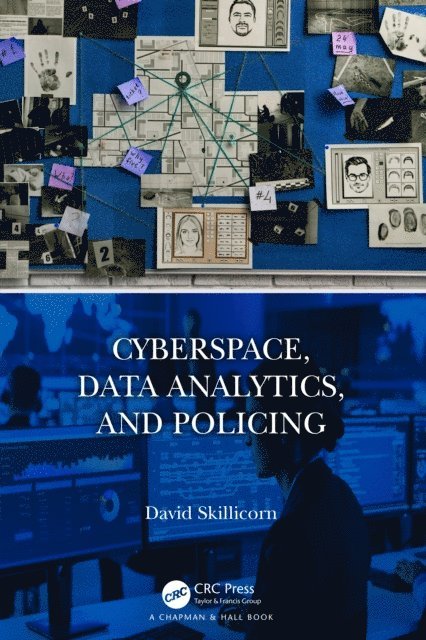
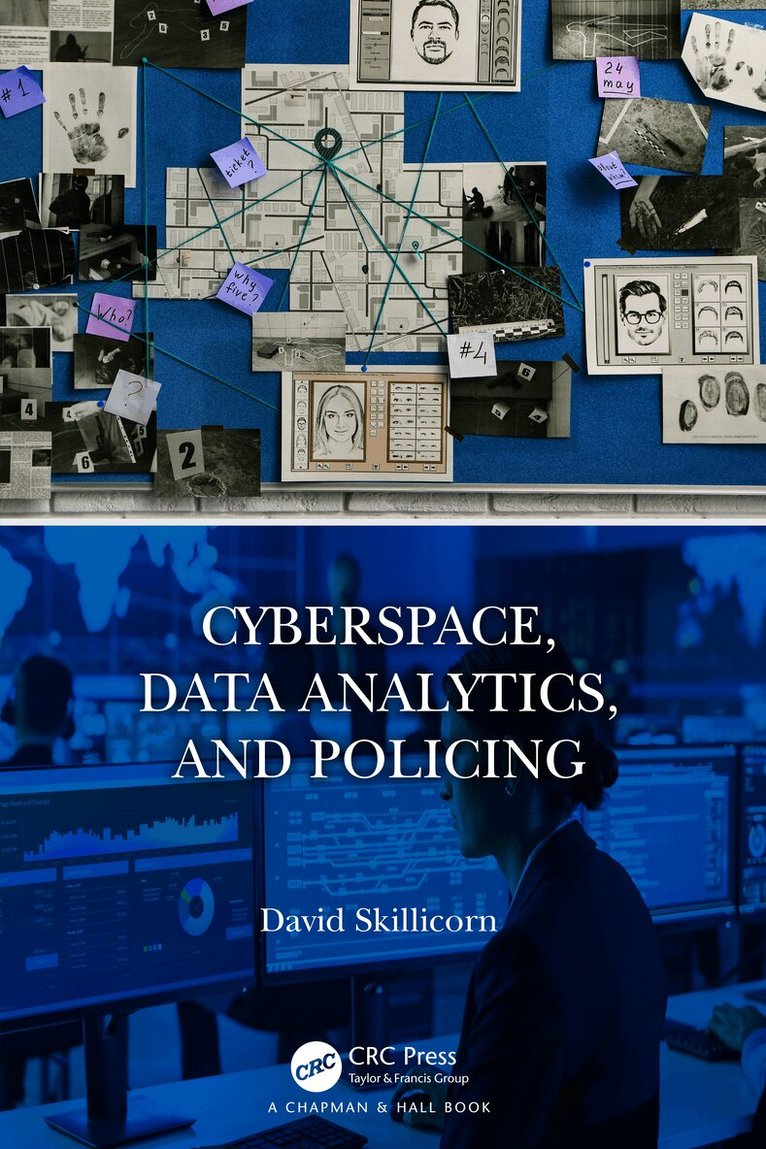
    Cyberspace, Data Analytics, and Policing

    AvDavid Skillicorn

    Häftad, Engelska, 2024

    764 kr

    Beställningsvara. Skickas inom 10-15 vardagar. Fri frakt över 249 kr.

    Fler format och utgåvor

    Inbunden

    1 216 kr

    E-bok

    858 kr

    E-bok

    855 kr

    Beskrivning

    Cyberspace is changing the face of crime. For criminals it has become a place for rich collaboration and learning, not just within one country; and a place where new kinds of crimes can be carried out, and a vehicle for committing conventional crimes with unprecedented range, scale, and speed. Law enforcement faces a challenge in keeping up and dealing with this new environment. The news is not all bad – collecting and analyzing data about criminals and their activities can provide new levels of insight into what they are doing and how they are doing it. However, using data analytics requires a change of process and new skills that (so far) many law enforcement organizations have had difficulty leveraging. Cyberspace, Data Analytics, and Policing surveys the changes that cyberspace has brought to criminality and to policing with enough technical content to expose the issues and suggest ways in which law enforcement organizations can adapt.Key Features:Provides a non-technical but robust overview of how cyberspace enables new kinds of crime and changes existing crimes.Describes how criminals exploit the ability to communicate globally to learn, form groups, and acquire cybertools.Describes how law enforcement can use the ability to collect data and apply analytics to better protect society and to discover and prosecute criminals.Provides examples from open-source data of how hot spot and intelligence-led policing can benefit law enforcement.Describes how law enforcement can exploit the ability to communicate globally to collaborate in dealing with trans-national crime.

    Produktinformation

    • Utgivningsdatum:2024-01-29
    • Mått:152 x 229 x 18 mm
    • Vikt:540 g
    • Format:Häftad
    • Språk:Engelska
    • Antal sidor:258
    • Förlag:Taylor & Francis Ltd
    • ISBN:9780367647766

    Utforska kategorier

    • Sanna berättelser inom Biografier
    • True crime inom Samhälle och politik

    Mer om författaren

    David B. Skillicorn is a professor at the School of Computing, Queen's University, Canada.

    Innehållsförteckning

    • Preface List of Figures List of Tables Introduction Cyberspace2.1 What is cyberspace? 2.2 The impact of cyberspace 2.3 Identity and authentication 2.4 Encryption 2.5 Crime is changing2.6 Policing is changing New opportunities for criminality 3.1 Unprecedented access to information 3.2 Crimes directed against cyberspace 3.2.1 Malware 3.2.2 Crimes of destruction 3.2.3 Monetized cybercrimes 3.2.4 Data theft crimes 3.2.5 Secondary markets 3.3 Crimes that rely on cyberspace 3.3.1 Spam, scams, and cons 3.3.2 Financial crime 3.3.3 Online shopping 3.3.4 Crimes against children 3.4 Crimes done differently because of cyberspace 3.4.1 Disseminating hatred 3.4.2 Selling drugs 3.4.3 Stalking and crime preparation 3.4.4 Digital vigilantes 3.5 Money laundering3.5.1 Cash 3.5.2 The financial system 3.5.3 International money laundering 3.5.4 Cryptocurrencies 3.6 Overlap with violent extremism New ways for criminals to interact 4.1 Criminal collaboration 4.2 Planning together 4.3 Information sharing 4.3.1 Sharing techniques4.3.2 Sharing resources 4.3.3 Sharing vulnerabilities 4.4 International interactionsData analytics makes criminals easier to find5.1 Understanding by deduction 5.2 Understanding by induction 5.3 Subverting data analytics5.4 Intelligence-led policing 5.5 Hot spot policing 5.5.1 Place 5.5.2 Time 5.5.3 Weather 5.5.4 People involved 5.5.5 Social network position 5.6 Exploiting skewed distributions Data collection6.1 Ways to collect data 6.2 Types of data collected 6.2.1 Focused data 6.2.2 Large volume data 6.2.3 Incident data 6.2.4 Spatial data 6.2.5 Temporal data 6.2.6 Non-crime data 6.2.7 Data fusion 6.2.8 Protecting data collected by law enforcement6.3 Issues around data collection 6.3.1 Suspicion 6.3.2 Wholesale data collection 6.3.3 Privacy 6.3.4 Racism and other -isms 6.3.5 Errors 6.3.6 Bias 6.3.7 Sabotaging data collection 6.3.8 Getting better data by sharingTechniques for data analytics 7.1 Clustering 7.2 Prediction 7.3 Meta issues in prediction 7.3.1 Classification versus regression 7.3.2 Problems with the data 7.3.3 Why did the model make this prediction? 7.3.4 How good is this model?7.3.5 Selecting attributes7.3.6 Making predictions in stages 7.3.7 Bagging and boosting 7.3.8 Anomaly detection7.3.9 Ranking7.3.10 Should I make a prediction at all? 7.4 Prediction techniques 7.4.1 Counting techniques 7.4.2 Optimization techniques 7.4.3 Other ensembles7.5 Social network analysis 7.6 Natural language analytics 7.7 Making data analytics available 7.8 Demonstrating compliance Case studies8.1 Predicting crime rates 8.2 Clustering RMS data 8.3 Geographical distribution patterns 8.4 Risk of gun violence 8.5 Copresence networks 8.6 Criminal networks with a purpose 8.7 Analyzing online posts 8.7.1 Detecting abusive language 8.7.2 Detecting intent 8.7.3 Deception 8.7.4 Detecting fraud in text 8.7.5 Detecting sellers in dark-web marketplaces 8.8 Behavior – detecting fraud from mouse movements 8.9 Understanding drug trafficking pathways Law enforcement can use interaction too9.1 Structured interaction through transnational organizations 9.2 Divisions within countries 9.3 Sharing of information about crimes 9.4 Sharing of data 9.5 Sharing models 9.6 International issues SummaryIndex