• Fri frakt över 249 kr
  • •
  • Snabba leveranser
  • •
  • Billiga böcker
Kundservice

Du är på sajten för privatpersoner.

Företag, bibliotek eller offentlig verksamhet?

Du handlar på classic.bokus.com, där alla dina funktioner finns intakta.
Till classic.bokus.com
Bokus logotyp. Gå till startsidan.
  • Erbjudanden
  • Nyheter
  • Student
  • Topplistor
  • Barn & ungdom
  • Bokus Play
  • E-böcker
  • Pocketböcker
  • Spel & pussel

10% studentrabatt med kod TERM26

Sidfot

Mina sidor

    Hjälp

    • Kundservice
    • Vanliga frågor och svar
    • Frakt och leverans
    • Retur vid ångerrätt
    • Reklamera vara
    • Betalning
    • Köpvillkor
    • Allmänna villkor
    • Information om webbplatsens tillgänglighet

    Om Bokus

    • Om oss
    • Pressrum
    • För studenter
    • För företag
    • För bibliotek och offentlig verksamhet
    • För leverantörer
    • Hållbarhet

    Populärt

    • Aktuella erbjudanden
    • Presentkort
    • Studentlitteratur
    • Nya böcker
    • Topplistor
    • Signerade böcker
    • Engelska böcker

    Inspiration

    • Boktips
    • BookTok
    • Populära bokserier
    • Barnbokskaraktärer
    • Populära författare
    Logotyp för Bokus
    Följ oss på Facebook (extern länk)Följ oss på Instagram (extern länk)Följ oss på YouTube (extern länk)Följ oss på TikTok (extern länk)
    bokus @ CookiesAnpassa cookiesIntegritetspolicyKöpvillkor
    Till Citymail hemsida (extern länk)Till Budbee hemsida (extern länk)Till Postnord hemsida (extern länk)Till Schenker hemsida (extern länk)Till Early Bird hemsida (extern länk)Till Walleys hemsida (extern länk)
    1. Historia och arkeologi
    2. Arkeologi
    3. Arkeologiska perioder och områden

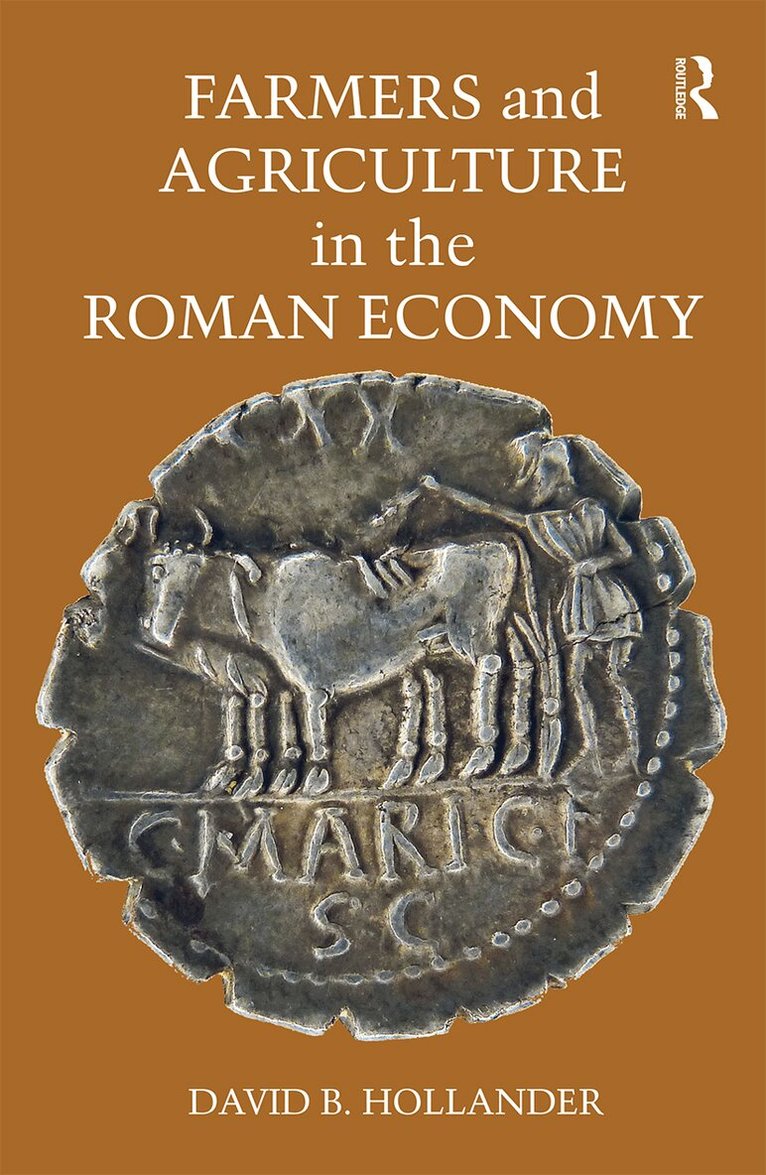
    Farmers and Agriculture in the Roman Economy

    AvDavid B. Hollander

    Häftad, Engelska, 2020

    705 kr

    Beställningsvara. Skickas inom 10-15 vardagar. Fri frakt över 249 kr.

    Fler format och utgåvor

    Inbunden

    2 506 kr

    E-bok

    831 kr

    E-bok

    829 kr

    Beskrivning

    Often viewed as self-sufficient, Roman farmers actually depended on markets to supply them with a wide range of goods and services, from metal tools to medical expertise. However, the nature, extent, and implications of their market interactions remain unclear. This monograph uses literary and archaeological evidence to examine how farmers – from smallholders to the owners of large estates – bought and sold, lent and borrowed, and cooperated as well as competed in the Roman economy. A clearer picture of the relationship between farmers and markets allows us to gauge their collective impact on, and exposure to, macroeconomic phenomena such as monetization and changes in the level and nature of demand for goods and labor. After considering the demographic and environmental context of Italian agriculture, the author explores three interrelated questions: what goods and services did farmers purchase; how did farmers acquire the money with which to make those purchases; and what factors drove farmers’ economic decisions? This book provides a portrait of the economic world of the Roman farmer in late Republican and early Imperial Italy.

    Produktinformation

    • Utgivningsdatum:2020-09-30
    • Mått:156 x 234 x 14 mm
    • Vikt:180 g
    • Format:Häftad
    • Språk:Engelska
    • Antal sidor:142
    • Förlag:Taylor & Francis Ltd
    • ISBN:9780367666224

    Utforska kategorier

    • Arkeologiska perioder och områden inom Historia och arkeologi
    • Ekonomisk historia inom Ekonomi och Ledarskap
    • Forntidens historia inom Historia och arkeologi

    Mer om författaren

    David B. Hollander earned a PhD in Ancient History from Columbia University (2002). He published his monograph Money in the Late Roman Republic in 2007 and served as the economy editor for The Encyclopedia of Ancient History (2012). He is an associate professor in the History Department at Iowa State University, USA.

    Recensioner i media

    "The merit of this book is to propose a global vision, over a large period of time, of the economic behaviour of these almost "mute" people that the Roman peasants are for us today."- Maëlys Blandenet, ENS de Lyon, France, Bryn Mawr Classical Review 2019

    Innehållsförteckning

    • Contents;Acknowledgements;1. Problems and Sources;1.1 Introduction;;1.2 The Problem with Self-Sufficiency;1.3 Sources for Roman Agriculture;1.3.1 Cato’s De agri cultura;1.3.2 Varro’s De re rustica;1.3.3 Columella’s De re rustica;1.3.4 Pliny the Elder’s Natural History;1.3.5 Archaeology;1.3.6 Art;1.4 Conclusion;2. The Parameters of Roman Agriculture;2.1 Introduction;2.2 Climate & Geography;2.3 Demography;2.4 Roman Crops;2.4.1 Cereals;2.4.2 Viticulture;2.4.3 Olives;2.4.4 Other Fruit Trees;2.4.5 Legumes (AKA Pulses);2.4.6 Fiber Crops;2.4.7 Nuts;2.4.8 Vegetables and Tubers;2.4.9 Other Plants;;2.5 Livestock;2.6 Conclusion;3. Buyers and Borrowers: the Rural Demand for Goods, Services, and Money;3.1 Introduction;3.2 Start-up Requirements;3.2.1 Building supplies;3.2.2 Metal agricultural tools;3.2.3 Wooden Tools;3.2.5 Storage;3.2.6 Clothing;3.2.7 Processing Equipment;3.2.8 Other Equipment;3.3 Seasonal Requirements;3.4 Maintenance Requirements;3.5 Extra-agricultural Expenses;3.6 Borrowing and Sharing;3.7 Rural Demand for Coinage;3.8 Conclusion;4. Vendors and Lenders: the Rural Supply of Goods and Services;4.1 Introduction;4.2 Animals and Animal Byproducts;4.2.1 Meat;4.2.2 Wool;4.2.3 Dairy Products;4.2.4 Apiculture;4.3 The Profitability of Plants;4.3.1 Grain;4.3.2 Viticulture;4.3.3 Olive Oil;4.3.4 Flowers;4.3.5 Vegetables;4.3.6 Other Produce;4.3.7 Linen;4.4 The Sale of the Superfluous;4.5 Working for Others;4.6 Moneylending;4.7 Conclusion;5. Farmers’ Markets, Farmers’ Networks;5.1 Introduction;5.2 Markets;5.3 Reciprocity;5.4 Redistribution;6. Farmers in Roman Economic History;6.1 Introduction;6.2 Degrees of Market Dependency;6.2.1 Elite Farmers;6.2.2 Moderately Wealthy Farmers;6.2.3 Smallholders;6.2.4 Landless Farmers;6.3 Farmers in the Roman Economy;6.3.1 The Second Century bce;6.3.2 The First Century bce Prior to the Reign of Augustus;6.3.3 The Early Empire;Bibliography; Index