Häftad, Engelska, 2020
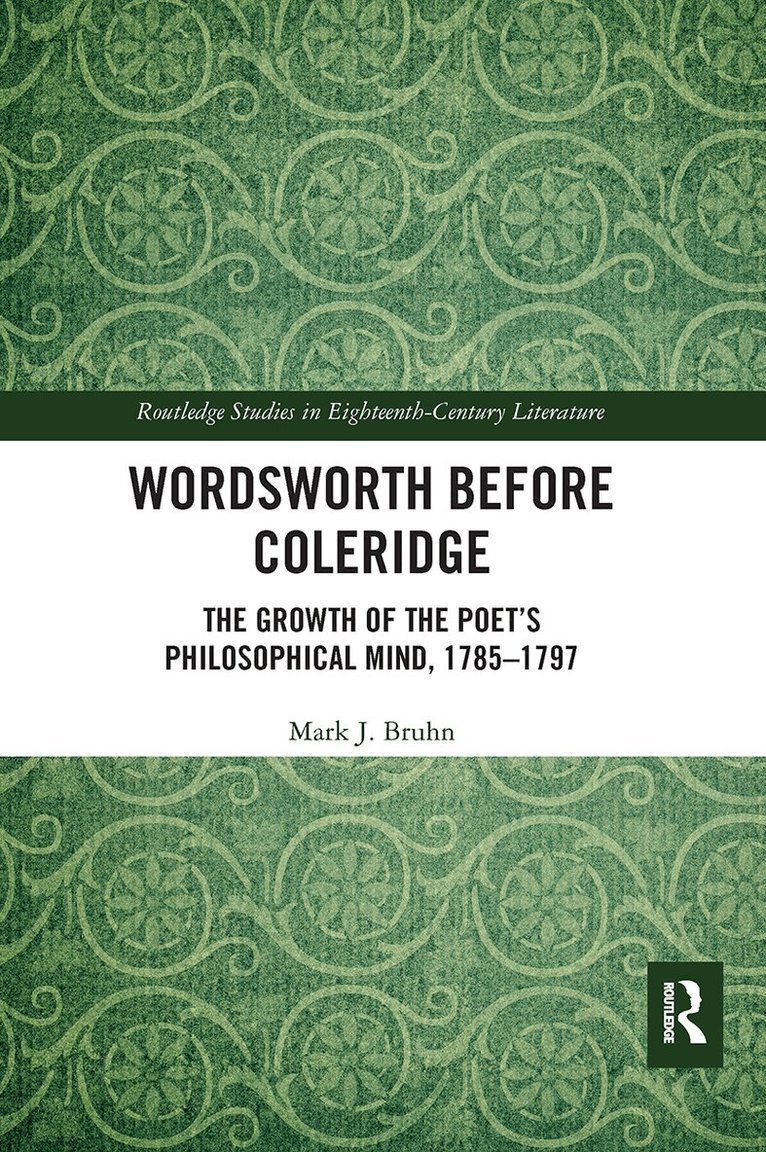
Wordsworth Before Coleridge
The Growth of the Poet’s Philosophical Mind, 1785-1797
Av Mark Bruhn
Del i serien Routledge Studies in Eighteenth-Century Literature
842 kr
Beställningsvara. Skickas inom 10-15 vardagar. Fri frakt över 249 kr.
Beskrivning
Produktinformation
- Utgivningsdatum: 2020-09-30
- Mått: 152 x 229 x 20 mm
- Vikt: 272 g
- Format: Häftad
- Språk: Engelska
- Serie: Routledge Studies in Eighteenth-Century Literature
- Antal sidor: 196
- Förlag: Taylor & Francis Ltd
- ISBN: 9780367667108
Utforska kategorier
Mer om författaren
Mark J. Bruhn, Professor of English at Regis University (Denver, Colorado), holds a PhD in English from Dalhousie University (Halifax, Nova Scotia). He is coeditor of Cognition, Literature, and History (Routledge, 2014) and guest editor of a special double-issue of Poetics Today on "Poetics and Cognitive Science" (2011). Bruhn has published widely on English literature from Chaucer and Spenser to Wallace Stevens and Margaret Atwood, and recent essays on Wordsworth in particular appear in The Oxford Handbook of Cognitive Literary Studies (2015), The Oxford Handbook of William Wordsworth (2015), and The Palgrave Handbook of Affect Studies and Textual Criticism (2017).
Recensioner i media
‘Written with extraordinary clarity and precision, argued with nuance and discrimination, this book establishes the qualifications Wordsworth had in 1796 to be equally reverenced, as Coleridge put it, "whether I regarded him as a poet, a philosopher, or a man", and to be asked, as he was, to adjudicate on matters of philosophical argument. Exploring a variety of constituents in his thinking, ranging from Descartes to Dugald Stewart, Cudworth and early periodical expositions of Kant, it contests the notion that Wordsworth was "a student of Coleridgean philosophy rather than philosophy per se". Crucially, it shows with exactitude that much (by no means all) of the philosophy of mind developed in The Pedlar and The Prelude originates in the 1794 revisions of An Evening Walk. This book deserves a wide and grateful audience for its ground-breaking argument, and if the profession is as open to illumination as it ought to be, it will have a revolutionary effect on the reception of Wordsworth's powers of thought.’ —Richard Gravil, Chairman of The Wordsworth Conference Foundation and author of Wordsworth’s Bardic Vocation
Betyg & recensioner
0 recensioner
Inga recensioner tillgängliga.