• Fri frakt över 249 kr
  • •
  • Snabba leveranser
  • •
  • Billiga böcker
Kundservice

Du är på sajten för privatpersoner.

Företag, bibliotek eller offentlig verksamhet?

Du handlar på classic.bokus.com, där alla dina funktioner finns intakta.
Till classic.bokus.com
Bokus logotyp. Gå till startsidan.
  • Erbjudanden
  • Nyheter
  • Student
  • Topplistor
  • Barn & ungdom
  • Bokus Play
  • E-böcker
  • Pocketböcker
  • Spel & pussel

10% studentrabatt med kod TERM26

Sidfot

Mina sidor

    Hjälp

    • Kundservice
    • Vanliga frågor och svar
    • Frakt och leverans
    • Retur vid ångerrätt
    • Reklamera vara
    • Betalning
    • Köpvillkor
    • Allmänna villkor
    • Information om webbplatsens tillgänglighet

    Om Bokus

    • Om oss
    • Pressrum
    • För studenter
    • För företag
    • För bibliotek och offentlig verksamhet
    • För leverantörer
    • Hållbarhet

    Populärt

    • Aktuella erbjudanden
    • Presentkort
    • Studentlitteratur
    • Nya böcker
    • Topplistor
    • Signerade böcker
    • Engelska böcker

    Inspiration

    • Boktips
    • BookTok
    • Populära bokserier
    • Barnbokskaraktärer
    • Populära författare
    Logotyp för Bokus
    Följ oss på Facebook (extern länk)Följ oss på Instagram (extern länk)Följ oss på YouTube (extern länk)Följ oss på TikTok (extern länk)
    bokus @ CookiesAnpassa cookiesIntegritetspolicyKöpvillkor
    Till Citymail hemsida (extern länk)Till Budbee hemsida (extern länk)Till Postnord hemsida (extern länk)Till Schenker hemsida (extern länk)Till Early Bird hemsida (extern länk)Till Walleys hemsida (extern länk)
    1. Samhälle och politik
    2. Sociologi och antropologi
    3. Sociologi

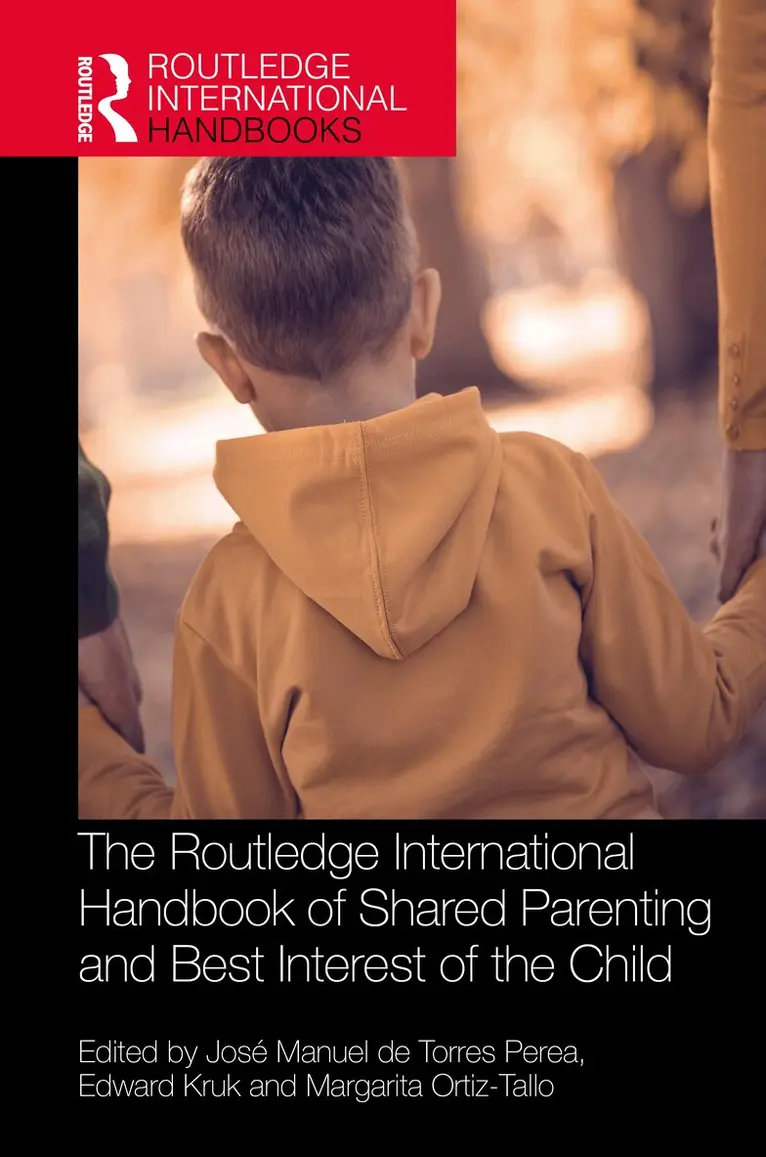
    Routledge International Handbook of Shared Parenting and Best Interest of the Child

    AvJosé Manuel de Torres Perea,Edward Kruk

    Inbunden, Engelska, 2021

    3 382 kr

    Beställningsvara. Skickas inom 10-15 vardagar. Fri frakt över 249 kr.

    Beskrivning

    This multidisciplinary volume offers an essential, comprehensive study of perspectives on the scope and application of the best interests of the child and focuses mainly on its application in relation to child custody.With expert contributions from psychological, sociological and legal perspectives, it offers scientific analysis and debate on whether it should be the primary consideration in deciding child custody cases in cases of divorce or separation or whether it should be one of several primary considerations. It explores complex dilemmas inherent in shared parenting and whether the advantages it offers children are sufficient when compared to attributing custody to one parent and limiting visitation rights of the other. Offering a comprehensive analysis of this complex topic, chapters provide detailed insight into the current state of research in this area, as well as expert guidelines aimed at resolving the controversies when parents agree or disagree over their children’s living arrangements. Cutting-edge topics explored include: transnational shared parenting; alternative dispute resolution; breastfeeding parents; religious disputes between parents and the psychological, social and economic factors that affect shared parenting.The Routledge International Handbook of Shared Parenting and Best Interest of the Child will be essential reading for scholars and graduate students in law, psychology, sociology and economics interested in shared parenting and family law.

    Produktinformation

    • Utgivningsdatum:2021-05-27
    • Mått:165 x 239 x 33 mm
    • Vikt:794 g
    • Format:Inbunden
    • Språk:Engelska
    • Antal sidor:480
    • Förlag:Taylor & Francis Ltd
    • ISBN:9780367691448

    Utforska kategorier

    • Sociologi inom Samhälle och politik
    • Familjepsykologi inom Psykologi och pedagogik
    • Familjerätt inom Juridik

    Mer om författaren

    José Manuel de Torres Perea is Associate Professor of Civil Law at the University of Málaga, Spain, specialising in Family Law. He is the author of significant contributions on shared parenting and the best interests of the child in Spanish legal literature. Edward Kruk is Associate Professor of Social Work at the University of British Columbia, specialising in child and family policy. He has published extensively on shared parental responsibility, child custody determination, parental alienation, family mediation and the role of fathers in child development. He is the inaugural president of the International Council on Shared Parenting (ICSP).Margarita Ortiz-Tallo is a Clinical Psychologist and Professor of Psychology at the University of Málaga, Spain, and has lectured in several countries. She has written numerous articles published in scientific journals, several specialist books on psychopathology and books for the general public on different psychological subjects.

    Innehållsförteckning

    • Preface Introduction; Part I: Best Interest of the Child and Shared Parenting 1. Children’s Experiences of Shared Care 2. Shared Parenting: Twelve Experts Exchange Views in Panel Discussions 3. Joint versus Sole Physical Custody: Which is Best for Children? 4. Best Interest of the Child: "A" or "the" Primary Consideration? Thoughts about the Acceptability of a Rebuttable Presumption in Favour of Shared Parenting 5. Does Joint Physical Custody "Cause" Children’s Better Outcomes? 6. When Children’s Rights are Undermined in the Name of the 'Best Interests of the Child': Switzerland’s Long Road to Child-Centred Custody Legislation 7. Rights and Guarantees of Unaccompanied Minors: Researching the Best Interest of the Child Principle in the Spanish Welfare State 8. The Right of Parents to Ensure the Religious and Moral Education of their Children: Parental Conflicts—An Analysis of Spanish Case Law 9. The Best Interests of the Child in Shared Parenting Judgments According to Spanish Law 10. Informational Physiology of Individual Development 11. Shared Parenting as a Protective Factor in Children’s and Adults’ Health; Part II: Socioeconomic Profile of Shared Parenting 12. Legislation and Family: Divorce and Granting of Custody 13. Family Structure, Parental Practices, and Child Wellbeing in Post-divorce Situations: The Case of Shared Parenting 14. Factors that Affect Judicial Decisions in Recolation Cases: Bridging the Gap between the Empirical Evidence and Socio-legal Practice 15. Shared Parenting versus Recolation Disputes 16. Shared Parenting and Financial Interests 17. Having Additional Children: Should the State Regulate Family Relations?; Part III: Shared Parenting and Parental Alienation 18. Shared Parenting as Preventative of Parental Alienation 19. Shared Parenting and Politics: Background of Equal Opportunities in the German Context 20. Child Sexual Abuse, Parental Alienation Syndrome and Custody 21. Parental Alienation Syndrome and 'Friendly Parent' Concept as Examples of Perversion of the System 22. Compensation for "Parental Alienation": Analysis of ECtHR 23641/17 23. The Cooperative Parenting Triangle: A Tool to Help Divorced Parents; Part IV: Alternative Dispute Resolution on Shared Parenting and Joint Parenting Plan 24. Mandatory Mediation and Legal Presumption for Shared Parenting 25. Parenting Coordination as an Alternative Dispute Resolution System in Spanish Family Law 26. PIFE - An Intervention Aimed at Restoring the Parent-child Bond Ruptured by Acute Separation Conflict or Parental Alienation 27. Co-Responsibility Plan and Shared Parenting; Part V: Recent Evolution of Shared Parenting in a Comparative Scenario 28. Recent Developments in Shared Parenting in Western Countries 29. What Happens When there is Presumptive 50/50 Parenting Time? An Evaluation of Arizona’s New Child Custody Statute 30. The Best Interests of the Child and Parental Authority in Philippine Family Law 31. Meeting their Parents: A Right Always Ignores for Divorced-affected Minors 32. The Best Interest of the Child in the Case Law of the Spanish Supreme Court 33. Divorce and Loss of Paternal Contact: A Perspective from Norway 34. Trying to Put Shared Parenting into Scottish Law 35. Features of Joint Custody and Shared Parenting in Slovakia 36. The Merits of the "Zaunegger-Approach" of the European Court of Human Rights Conclusion