• Fri frakt över 249 kr
  • •
  • Snabba leveranser
  • •
  • Billiga böcker
Kundservice

Du är på sajten för privatpersoner.

Företag, bibliotek eller offentlig verksamhet?

Du handlar på classic.bokus.com, där alla dina funktioner finns intakta.
Till classic.bokus.com
Bokus logotyp. Gå till startsidan.
  • Erbjudanden
  • Nyheter
  • Student
  • Topplistor
  • Barn & ungdom
  • Bokus Play
  • E-böcker
  • Pocketböcker
  • Spel & pussel

10% rabatt på allt med kod: NYSTART10 →

Sidfot

Mina sidor

    Hjälp

    • Kundservice
    • Vanliga frågor och svar
    • Frakt och leverans
    • Retur vid ångerrätt
    • Reklamera vara
    • Betalning
    • Köpvillkor
    • Allmänna villkor
    • Information om webbplatsens tillgänglighet

    Om Bokus

    • Om oss
    • Pressrum
    • För studenter
    • För företag
    • För bibliotek och offentlig verksamhet
    • För leverantörer
    • Hållbarhet

    Populärt

    • Aktuella erbjudanden
    • Presentkort
    • Studentlitteratur
    • Nya böcker
    • Topplistor
    • Signerade böcker
    • Engelska böcker

    Inspiration

    • Boktips
    • BookTok
    • Populära bokserier
    • Barnbokskaraktärer
    • Populära författare
    Logotyp för Bokus
    Följ oss på Facebook (extern länk)Följ oss på Instagram (extern länk)Följ oss på YouTube (extern länk)Följ oss på TikTok (extern länk)
    bokus @ CookiesAnpassa cookiesIntegritetspolicyKöpvillkor
    Till Citymail hemsida (extern länk)Till Budbee hemsida (extern länk)Till Postnord hemsida (extern länk)Till Schenker hemsida (extern länk)Till Early Bird hemsida (extern länk)Till Walleys hemsida (extern länk)
    1. Kultur
    2. Designböcker

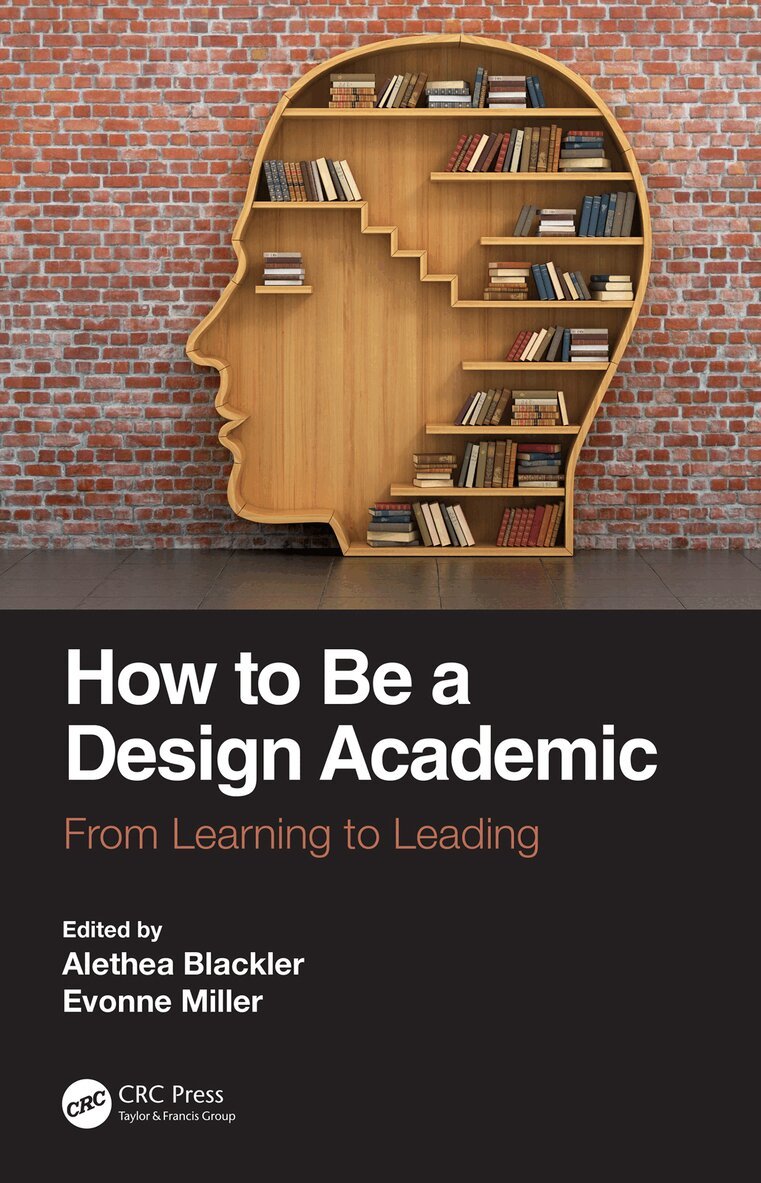
    How to Be a Design Academic

    From Learning to Leading

    AvAlethea Blackler,Evonne Miller

    Häftad, Engelska, 2024

    802 kr

    Beställningsvara. Skickas inom 10-15 vardagar. Fri frakt över 249 kr.

    Beskrivning

    This book is about how to be a design academic. In another words, how to manage the various challenges, requirements, and processes that come with both the everyday and extra-ordinary parts of an academic role in design fields (from architecture, urban design, interior design and landscape architecture, to fashion, industrial, interaction and graphic design). The book is organised in two parts – Part 1, Starting out and Part 2, Becoming a Leader. It includes real-life experiences of actual academics and offers a wide range of experiences of authors from early career researchers to full professors and heads of schools. It contains all aspects of academic life, including the highs and lows of teaching, research, leadership, and managing your working life and your career. This book is perfect for academics, aspiring academics, and research students in a wide range of design fields.

    Produktinformation

    • Utgivningsdatum:2024-10-04
    • Mått:156 x 234 x 19 mm
    • Vikt:540 g
    • Format:Häftad
    • Språk:Engelska
    • Antal sidor:328
    • Förlag:Taylor & Francis Ltd
    • ISBN:9780367724542

    Utforska kategorier

    • Designböcker inom Kultur
    • Högskola och universitet inom Psykologi och pedagogik
    • Pedagogisk metodik inom Psykologi och pedagogik

    Mer om författaren

    Alethea (Thea) Blackler (PhD) is Discipline Leader for Industrial Design, Interaction Design, Visual Communication and Fashion Design within the School of Design at QUT. Her principle area of research interest is intuitive interaction, in which she is one of the world leaders. She pioneered the first empirical work in the field, leading a federally funded Australian Research Council Discovery project on Facilitating Intuitive Interaction for Older People, as well as editing a journal issue and a book on intuitive interaction. She is also working in the area of older people and technology and design for dementia, and designing active play for young children. She has attracted and worked with external partners in government, community and industry on various projects and has had three Australian Research Council grants. She is a very experienced HDR supervisor, with 7 current PhD students and 13 PhD completions. She has published more than 80 peer reviewed papers, been invited to give presentations internationally and is the recipient of several awards, including a 2018 ig-nobel. Evonne Miller is Professor of Design Psychology and Director of the QUT Design Lab in the School of Design, Creative Industries Faculty at Queensland University of Technology. Evonne has secured over $3.5M in competitive grant funding and over 100 peer-reviewed publications in the fields of urban design, population ageing, health and wellbeing, climate change and sustainability, disaster and resilience. Her research focuses on how to design environments – built, technical, socio-cultural and natural – that better engage and support all users, especially older people in residential aged care. Her 2020 book, Creating Great Places: Evidence-based urban design for health and wellbeing (Routledge, with A/Prof Deb Cushing) outlines how designers can create great places that are inclusive, sustainable, and salutogenic. Evonne has supervised over 20 PhD students, and has a special interest in mentoring early career researchers.

    Innehållsförteckning

    • 1. Being a Design Academic: From Beginning to Winning. Part 1: Starting Out. Section 1: Crafting Your Unique Career Path. 2. Being a Design Academic: Design Process, Practice, Thinking. 3. Industry to Academia: The Enhanced Academic. 4. A "Non-Designer" in a Design School. Section 2: Being an Effective Design Researcher. 5. Getting a PhD – "How Hard Can It Be?’. 6. The Mindset of a New Design Academic. Section 3: Being an Effective Design Educator. 7. A Guide to Design Intensives. 8. Using Video and Blended Learning. 9. Reframing Learning via Technology: COVID-19 – Hacks and Reflections. Part 2: Becoming a Leader. Section 4: Leading Yourself. 10. How to "Dare Greatly" in Academia. 11. Running the Academic Marathon: Planning and Executing as Planned. Section 5: Leading Others. 12. Research Leadership. 13. Research Co-Design: Meaningful Collaboration in Research. 14. Design Curricula: Navigating Process and People. 15. Student Engagement through Mentoring. Section 6: Leading a Group or School. 16. Building a Research Group: Urban Informatics 2006 to Now. 17. Leading a Design School: Practices from Australia and the USA.