• Fri frakt över 249 kr
  • •
  • Snabba leveranser
  • •
  • Billiga böcker
Kundservice

Du är på sajten för privatpersoner.

Företag, bibliotek eller offentlig verksamhet?

Du handlar på classic.bokus.com, där alla dina funktioner finns intakta.
Till classic.bokus.com
Bokus logotyp. Gå till startsidan.
  • Erbjudanden
  • Nyheter
  • Student
  • Topplistor
  • Barn & ungdom
  • Bokus Play
  • E-böcker
  • Pocketböcker
  • Spel & pussel

10% rabatt på allt med kod: NYSTART10 →

Sidfot

Mina sidor

    Hjälp

    • Kundservice
    • Vanliga frågor och svar
    • Frakt och leverans
    • Retur vid ångerrätt
    • Reklamera vara
    • Betalning
    • Köpvillkor
    • Allmänna villkor
    • Information om webbplatsens tillgänglighet

    Om Bokus

    • Om oss
    • Pressrum
    • För studenter
    • För företag
    • För bibliotek och offentlig verksamhet
    • För leverantörer
    • Hållbarhet

    Populärt

    • Aktuella erbjudanden
    • Presentkort
    • Studentlitteratur
    • Nya böcker
    • Topplistor
    • Signerade böcker
    • Engelska böcker

    Inspiration

    • Boktips
    • BookTok
    • Populära bokserier
    • Barnbokskaraktärer
    • Populära författare
    Logotyp för Bokus
    Följ oss på Facebook (extern länk)Följ oss på Instagram (extern länk)Följ oss på YouTube (extern länk)Följ oss på TikTok (extern länk)
    bokus @ CookiesAnpassa cookiesIntegritetspolicyKöpvillkor
    Till Citymail hemsida (extern länk)Till Budbee hemsida (extern länk)Till Postnord hemsida (extern länk)Till Schenker hemsida (extern länk)Till Early Bird hemsida (extern länk)Till Walleys hemsida (extern länk)
    1. Ekonomi och Ledarskap
    2. Företagsekonomi

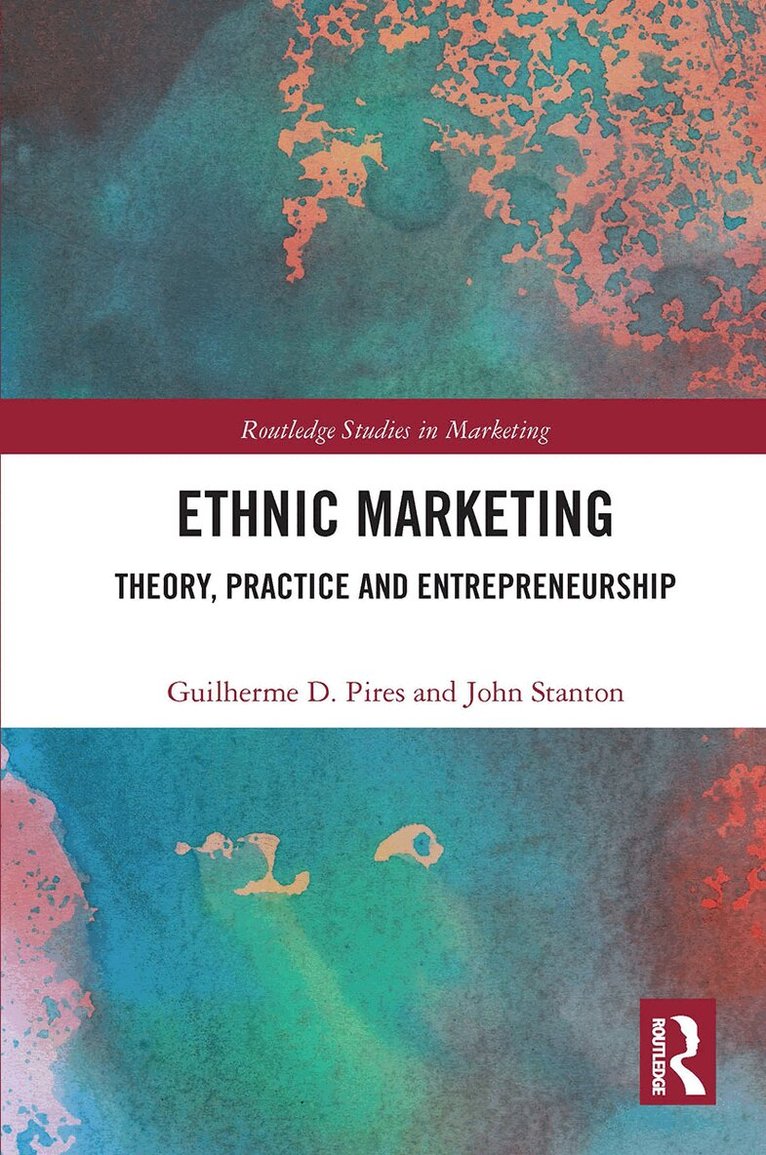
    Ethnic Marketing

    Theory, Practice and Entrepreneurship

    AvGuilherme Pires,John Stanton

    Häftad, Engelska, 2020

    Del i serien Routledge Studies in Marketing

    687 kr

    Beställningsvara. Skickas inom 10-15 vardagar. Fri frakt över 249 kr.

    Fler format och utgåvor

    Inbunden

    2 727 kr

    Inbunden

    2 495 kr

    Häftad

    919 kr

    Beskrivning

    Together with the development of transformative technologies that epitomize globalization, the ongoing movements of people across borders and other socio-economic pressures are creating a fast-changing business environment that is difficult for business to understand, let alone control. Dominant social expectations that immigrants should seek to adopt an assimilationist socialization path towards the host country’s mainstream are contradicted by minority ethnic group resilience. There is no evidence that these groups naturally disappear within the cultural and behavioural contexts of their adopted countries. Since ethnic minority consumers cannot be expected to assimilate, then they maintain some significant degree of unique ethnicity related consumer characteristics that convert into threats and opportunities for business. The inherent socialisation process also provides opportunities for ethnic entrepreneurship and for proliferation of ethnic minority business.Following from the extensive examination of scholarly perspectives of ethnic marketing theory, there is an acknowledged and marked divide between theoretical exhortations and what is done in practice, a relative oversight of the implications of mixed embedded markets, and a propinquity to overlook the crucial role played by ethnic entrepreneurship and ethnic networks. Opportunity valuations are difficult to enact due to a lack of intelligence about ethnic markets. Variable sentiment about the future of ethnic marketing links to different predictions on how the drivers of globalization will impact on the acculturation paths of ethnic minorities.Keeping a focus on the ethnic group as the unit of analysis, combining ethnic marketing and ethnic entrepreneurship theories provides intelligence about contemporary ethnic marketing and practice perspectives. The ultimate objective is to reduce the theory-practice divide through the development of a collaborative framework between business and scholars that converts into theory-in-use.

    Produktinformation

    • Utgivningsdatum:2020-12-18
    • Mått:152 x 229 x 32 mm
    • Vikt:453 g
    • Format:Häftad
    • Språk:Engelska
    • Serie:Routledge Studies in Marketing
    • Antal sidor:374
    • Förlag:Taylor & Francis Ltd
    • ISBN:9780367732172

    Utforska kategorier

    • Företagsekonomi inom Ekonomi och Ledarskap
    • Försäljning och marknadsföring inom Ekonomi och Ledarskap

    Mer om författaren

    Guilherme D. Pires, PhD, is an Associate Professor at the Newcastle Business School, Faculty of Business & Law at University of Newcastle, Australia. He is a Trustee for the Business & Economics Society International and serves on the editorial board of various scholarly journals. John Stanton, PhD, is an Adjunct Associate Professor (Marketing) in the School of Business, Western Sydney University, Australia.

    Innehållsförteckning

    • CHAPTER 1: ISSUES IN ETHNIC MARKETING THEORY, PRACTICE AND ENTREPRENEURSHIPConceptual ambiguityWhat is ethnic marketing? Definitional differencesEthnic marketing issuesOther issues identified by researchersCauses of a gap and approaches to reconciliationRecognising the gapOn the need for pragmatism or theory-in-usePragmatism in ethnic marketing theorySummary The path aheadReferencesCHAPTER 2: ETHNICITY, ETHNIC GROUPS AND ETHNIC IDENTITYThe meaning and relevance of ethnicityBasis for defining ethnicity We are all ethnic – or are we?Meaning and centrality of ethnic groupsEthnic groups as social networksEthnic group heterogeneityThe interlinking of ethnic identity with the ethnic group Development of ethnic identityEthnic identity, consumer behaviour and the ethnic groupSummaryReferencesCHAPTER 3: ACCULTURATION, THE ETHNIC GROUP AND ETHNIC CONSUMER BEHAVIOUR What is Acculturation?Acculturation PhasesIndicators of AcculturationAcculturation ForcesChoice of Acculturation PathIndividual AcculturationInter-generational differences Acculturation and ethnic identityAcculturation and consumer behaviourAcculturation and Ethnic Group dynamicsThe Acculturation Process in a Culturally Diverse CountrySummaryReferencesCHAPTER 4: RATIONALE FOR ETHNIC MARKETING FOC