• Fri frakt över 249 kr
  • •
  • Snabba leveranser
  • •
  • Billiga böcker
Kundservice

Du är på sajten för privatpersoner.

Företag, bibliotek eller offentlig verksamhet?

Du handlar på classic.bokus.com, där alla dina funktioner finns intakta.
Till classic.bokus.com
Bokus logotyp. Gå till startsidan.
  • Erbjudanden
  • Nyheter
  • Student
  • Topplistor
  • Barn & ungdom
  • Bokus Play
  • E-böcker
  • Pocketböcker
  • Spel & pussel

10% rabatt på allt med kod: NYSTART10 →

Sidfot

Mina sidor

    Hjälp

    • Kundservice
    • Vanliga frågor och svar
    • Frakt och leverans
    • Retur vid ångerrätt
    • Reklamera vara
    • Betalning
    • Köpvillkor
    • Allmänna villkor
    • Information om webbplatsens tillgänglighet

    Om Bokus

    • Om oss
    • Pressrum
    • För studenter
    • För företag
    • För bibliotek och offentlig verksamhet
    • För leverantörer
    • Hållbarhet

    Populärt

    • Aktuella erbjudanden
    • Presentkort
    • Studentlitteratur
    • Nya böcker
    • Topplistor
    • Signerade böcker
    • Engelska böcker

    Inspiration

    • Boktips
    • BookTok
    • Populära bokserier
    • Barnbokskaraktärer
    • Populära författare
    Logotyp för Bokus
    Följ oss på Facebook (extern länk)Följ oss på Instagram (extern länk)Följ oss på YouTube (extern länk)Följ oss på TikTok (extern länk)
    bokus @ CookiesAnpassa cookiesIntegritetspolicyKöpvillkor
    Till Citymail hemsida (extern länk)Till Budbee hemsida (extern länk)Till Postnord hemsida (extern länk)Till Schenker hemsida (extern länk)Till Early Bird hemsida (extern länk)Till Walleys hemsida (extern länk)
    1. Naturvetenskap och teknik
    2. Geovetenskap
    3. Miljövetenskap och miljöpolitik

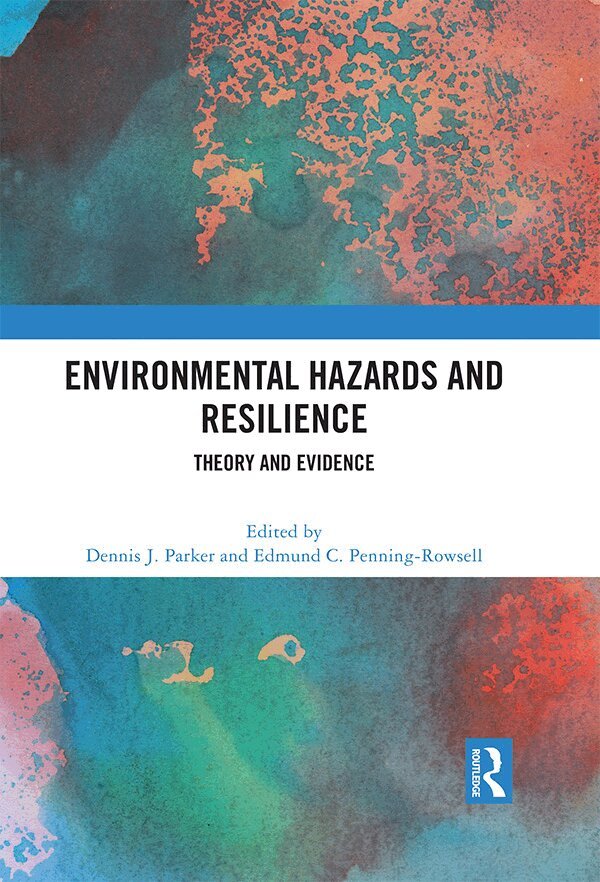
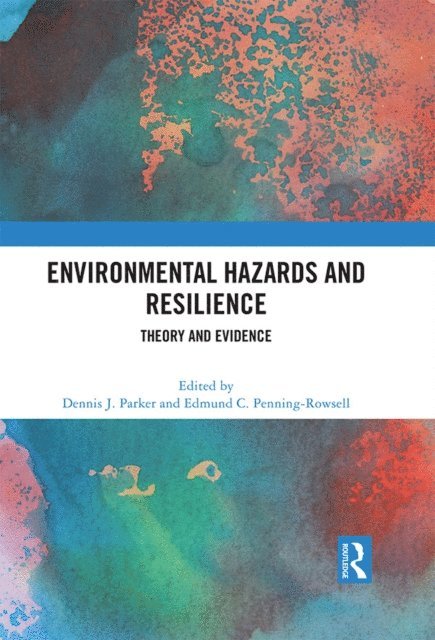
    Environmental Hazards and Resilience

    Theory and Evidence

    AvDennis J. Parker,Edmund C. Penning-Rowsell

    Inbunden, Engelska, 2021

    2 421 kr

    Beställningsvara. Skickas inom 10-15 vardagar. Fri frakt över 249 kr.

    Beskrivning

    Building resilience to the world’s increasingly damaging environmental hazards has become a priority. This book considers the scientific advances which have been made around the world to enhance this resilience.Although resilience is not new, it is through the idea of resilience that governments, organisations, and communities around the world are now seeking to address the rapidly increasing losses that environmental hazards cause so that fewer lives are lost, and damage is reduced. Alternative ideas and approaches have been helpful in reducing loss, but resilience offers a fresh and potentially effective means of reducing it further. Adopting a scientific approach and scientific evidence is important in applying the resilience idea in hazard mitigation. However, the science of resilience is at an immature stage of development with much discussion about the concept and how it should be understood and interpreted. Building useful theories remains a challenge although some of the building blocks of theory have been developed. More attention has been given to developing indicators and frameworks of resilience which are subsequently applied to measure resilience to hazards such as flooding, earthquake, and climate change. Environmental Hazards and Resilience: Theory and Evidence considers the scientific and theoretical challenges of making progress in applying resilience to environmental hazard mitigation and provides examples from around the world – including the USA, New Zealand, China, Bangladesh and elsewhere.The chapters in this book were originally published in the Environmental Hazards.

    Produktinformation

    • Utgivningsdatum:2021-08-27
    • Mått:174 x 246 x 16 mm
    • Vikt:620 g
    • Format:Inbunden
    • Språk:Engelska
    • Antal sidor:236
    • Förlag:Taylor & Francis Ltd
    • ISBN:9780367774493

    Utforska kategorier

    • Miljövetenskap och miljöpolitik inom Naturvetenskap och teknik
    • Miljöteknik inom Naturvetenskap och teknik

    Mer om författaren

    Dennis Parker is Professor at the Flood Hazard Research Centre, Middlesex University, UK. His research has focused on reducing the natural hazard losses across the globe. Dennis lives in Hertfordshire and has two daughters and six grandchildren.Edmund Penning-Rowsell OBE founded the Flood Hazard Research Centre at Middlesex University in 1970. He has more than 40 years’ experience of research and teaching in the flood hazard field, analysing floods and investment in flood alleviation, river management, water planning, and landscape assessment. Edmund lives in Oxfordshire and is also a member of the Oxford Water Security Network. He has two daughters and four grandchildren.

    Innehållsförteckning

    • PrefaceDennis J. ParkerIntroduction: Disaster resilience: developing a challenged scienceDennis J. Parker 1. Using vulnerability and resilience concepts to advance climate change adaptation Erin P. Joakim, Linda Mortsch and Greg Oulahen2. Foundations of community disaster resilience: well-being, identity, services and capitals Scott B. Miles3. Temporal and spatial change in disaster resilience in US counties, 2010–2015 Susan Cutter and Sahar Derakhshan4. Assessing community resilience: mapping the community rating system (CRS) against the 6C-4R frameworks Ajita Atreya and Howard Kunreuther5. Research on disaster resilience of earthquake-stricken areas in Longmenshan fault zone based on GIS Bin Liu, Xudong Chen, Zhongu Zhou, Min Tang and Shimming Li6. Coping and resilience in riverine Bangladesh Parvin Sultana, Paul M. Thompson and Anna Wesselink7. Urbanisation and disaster risk: the resilience of the Nigerian community in Auckland to natural hazards Osamuede Odiase, Suzanne Wilkinson and Andreas Neef8. The French Cat’ Nat’ system: post-flood recovery and resilience issues Bernard Barraquéa and Annabelle Moatty9. Stakeholder participation in building resilience to disasters in a changing climate Pauline Aldunce, Ruth Bellin, John Handmer and Mark Howden10. How does social learning facilitate urban disaster resilience? A systematic reviewQingxia Zhang, Junyan Hu, Xuping Song, Zhihong Li, Kehy Yang and Yongzhong Sha11. Local government, political decentralisation and resilience to natural hazard-associated disasters Vassilis Tseliosa and Emma Tompkins