• Fri frakt över 249 kr
  • •
  • Snabba leveranser
  • •
  • Billiga böcker
Kundservice

Du är på sajten för privatpersoner.

Företag, bibliotek eller offentlig verksamhet?

Du handlar på classic.bokus.com, där alla dina funktioner finns intakta.
Till classic.bokus.com
Bokus logotyp. Gå till startsidan.
  • Erbjudanden
  • Nyheter
  • Student
  • Topplistor
  • Barn & ungdom
  • Bokus Play
  • E-böcker
  • Pocketböcker
  • Spel & pussel

Må bättre, för mindre! Upp till 50% rabatt på hälsoböcker

Sidfot

Mina sidor

    Hjälp

    • Kundservice
    • Vanliga frågor och svar
    • Frakt och leverans
    • Retur vid ångerrätt
    • Reklamera vara
    • Betalning
    • Köpvillkor
    • Allmänna villkor
    • Information om webbplatsens tillgänglighet

    Om Bokus

    • Om oss
    • Pressrum
    • För studenter
    • För företag
    • För bibliotek och offentlig verksamhet
    • För leverantörer
    • Hållbarhet

    Populärt

    • Aktuella erbjudanden
    • Presentkort
    • Studentlitteratur
    • Nya böcker
    • Topplistor
    • Signerade böcker
    • Engelska böcker

    Inspiration

    • Boktips
    • BookTok
    • Populära bokserier
    • Barnbokskaraktärer
    • Populära författare
    Logotyp för Bokus
    Följ oss på Facebook (extern länk)Följ oss på Instagram (extern länk)Följ oss på YouTube (extern länk)Följ oss på TikTok (extern länk)
    bokus @ CookiesAnpassa cookiesIntegritetspolicyKöpvillkor
    Till Citymail hemsida (extern länk)Till Budbee hemsida (extern länk)Till Postnord hemsida (extern länk)Till Schenker hemsida (extern länk)Till Early Bird hemsida (extern länk)Till Walleys hemsida (extern länk)
    1. Ekonomi och Ledarskap
    2. Nationalekonomi
    3. Ekonomisk historia

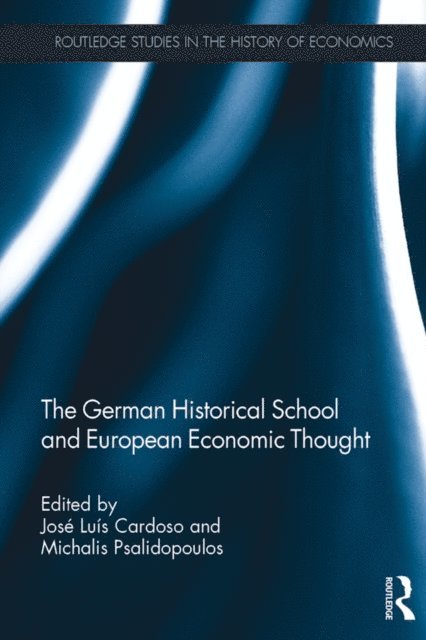
    German Historical School and European Economic Thought

    AvJosé Luís Cardoso,Michalis Psalidopoulos

    Häftad, Engelska, 2019

    Del i serien Routledge Studies in the History of Economics

    686 kr

    Beställningsvara. Skickas inom 10-15 vardagar. Fri frakt över 249 kr.

    Beskrivning

    The financial crisis of 2008 has revived interest in economic scholarship from a historical perspective. The most in depth studies of the relationship between economics and history can be found in the work of the so-called German Historical School (GHS). The influence of the GHS in the USA and Britain has been well documented, but far less has been written on the rest of Europe. This volume studies the interconnection between economic thought and economic policy from the mid-nineteenth century to the interwar period. It examines how the School’s ideas spread and was interpreted in different European countries between 1850 and 1930, analysing its legacies in these countries. In doing so, the book is able to trace the interconnection between economic thought and economic policy, adding new voices to the debate on the diffusion of ideas and flow of knowledge. This book identifies issues related to topics such as nationalism and cosmopolitanism in the history of ideas and clarifies themes in policy making that are still currently debated. These include monetary policy and benefits of free trade for all parties involved in international exchanges. This book will be of a great interest to those who study history of economic thought, economic theory and political economy.

    Produktinformation

    • Utgivningsdatum:2019-12-12
    • Mått:156 x 234 x 15 mm
    • Vikt:453 g
    • Format:Häftad
    • Språk:Engelska
    • Serie:Routledge Studies in the History of Economics
    • Antal sidor:242
    • Förlag:Taylor & Francis Ltd
    • ISBN:9780367874629

    Utforska kategorier

    • Ekonomisk historia inom Ekonomi och Ledarskap

    Mer om författaren

    José Luís Cardoso is a research professor at the Institute of Social Sciences, University of Lisbon, Portugal.Michalis Psalidopoulos is a professor at the Department of Economics, University of Athens and chairman of the board and scientific director of the Centre for Planning and Economic Research, Athens, Greece.

    Recensioner i media

    "The book, with its original conception, is likely to become a standard reference, and its work will not easily be duplicated...The book, therefore, is to be highly recommended..."Bertram Schefold, FB Wirtschaftswissenschaften, Goethe-Universität, Journal of Economic Literature "...this book is a valuable resource for anyone interested in the history of economic thought. Investigating the GHS’ contributions to economics, its critiques of classical economics, and its integration of ethical values into economic policies, protective measures, and the inductive method, could provide valuable and relevant insights into many of the issues and problems facing our contemporary economy."Birsen Filip, University of Ottawa, The European Journal of the History of Economic Thought

    Innehållsförteckning

    • Introduction José Luís Cardoso and Michalis Psalidopoulos 1. The impact of the German Historical School on the evolution of economic thought in Austria Günther Chaloupek 2. The reception of the German Historical Schools among French economists (1857-1900) Jean-Pierre Potier 3. Economics, Statistics and History. The Legacy of the German Historical School in Belgium Guido Erreygers and Maarten Van Dijck 4. On the surface things seemed quiet. The reception of the German Historical School in the Netherlands Bert Tieben and Evert Schoorl 5. The German Historical School of Economics in the Italian Debate (1870 – 1890) Vitantonio Gioia 6. The German Historical School in Spain. From the fringes to mainstream (1870-1936) Jesús Astigarraga and Juan Zabalza 7. The Influence of the German Historical School in Portugal António Almodovar and José Luís Cardoso 8. The Legacy of the German Historical School in Greek Economic Thought and Policy Michalis Psalidopoulos and Yorgos Stassinopoulos 9. A Hundred Years of German Connection in Turkish Economic Thought: Historismus and Otherwise Eyüp Özveren 10. Sweden and the Historical School: Eight Scholars going to Germany, 1874-1906 Benny Carlson 11. The Influence of German Historical School on Economic Theory and Economic Thought in Russia Vladimir Avtonomov and Georgy Gloveli 12. The Evolution of German Historical School in Bulgaria (1878-1944) Nikolay Nenovsky and Pencho D. Penchev Concluding Remarks Harald Hagemann