• Fri frakt över 249 kr
  • •
  • Snabba leveranser
  • •
  • Billiga böcker
Kundservice

Du är på sajten för privatpersoner.

Företag, bibliotek eller offentlig verksamhet?

Du handlar på classic.bokus.com, där alla dina funktioner finns intakta.
Till classic.bokus.com
Bokus logotyp. Gå till startsidan.
  • Erbjudanden
  • Nyheter
  • Student
  • Topplistor
  • Barn & ungdom
  • Bokus Play
  • E-böcker
  • Pocketböcker
  • Spel & pussel

Må bättre, för mindre! Upp till 50% rabatt på hälsoböcker

Sidfot

Mina sidor

    Hjälp

    • Kundservice
    • Vanliga frågor och svar
    • Frakt och leverans
    • Retur vid ångerrätt
    • Reklamera vara
    • Betalning
    • Köpvillkor
    • Allmänna villkor
    • Information om webbplatsens tillgänglighet

    Om Bokus

    • Om oss
    • Pressrum
    • För studenter
    • För företag
    • För bibliotek och offentlig verksamhet
    • För leverantörer
    • Hållbarhet

    Populärt

    • Aktuella erbjudanden
    • Presentkort
    • Studentlitteratur
    • Nya böcker
    • Topplistor
    • Signerade böcker
    • Engelska böcker

    Inspiration

    • Boktips
    • BookTok
    • Populära bokserier
    • Barnbokskaraktärer
    • Populära författare
    Logotyp för Bokus
    Följ oss på Facebook (extern länk)Följ oss på Instagram (extern länk)Följ oss på YouTube (extern länk)Följ oss på TikTok (extern länk)
    bokus @ CookiesAnpassa cookiesIntegritetspolicyKöpvillkor
    Till Citymail hemsida (extern länk)Till Budbee hemsida (extern länk)Till Postnord hemsida (extern länk)Till Schenker hemsida (extern länk)Till Early Bird hemsida (extern länk)Till Walleys hemsida (extern länk)
    1. Skönlitteratur
    2. Litteraturvetenskap
    3. Litteraturvetenskap

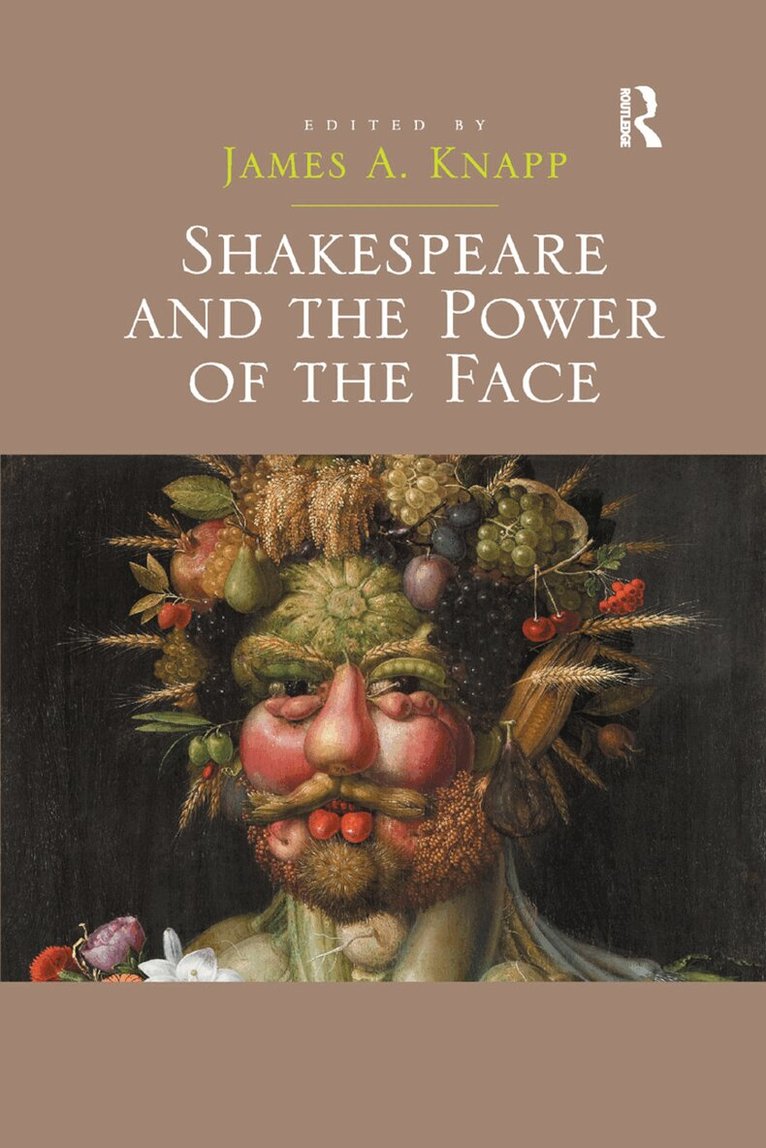
    Shakespeare and the Power of the Face

    AvJames A. Knapp

    Häftad, Engelska, 2019

    783 kr

    Beställningsvara. Skickas inom 10-15 vardagar. Fri frakt över 249 kr.

    Fler format och utgåvor

    E-bok

    926 kr

    E-bok

    928 kr

    Inbunden

    2 784 kr

    Beskrivning

    Throughout his plays, Shakespeare placed an extraordinary emphasis on the power of the face to reveal or conceal moral character and emotion, repeatedly inviting the audience to attend carefully to facial features and expressions. The essays collected here disclose that an attention to the power of the face in Shakespeare’s England helps explain moments when Shakespeare’s language of the self becomes intertwined with his language of the face. As the range of these essays demonstrates, an attention to Shakespeare’s treatment of faces has implications for our understanding of the historical and cultural context in which he wrote, as well as the significance of the face for the ongoing interpretation and production of the plays. Engaging with a variety of critical strands that have emerged from the so-called turn to the body, the contributors to this volume argue that Shakespeare’s invitation to look to the face for clues to inner character is not an invitation to seek a static text beneath an external image, but rather to experience the power of the face to initiate reflection, judgment, and action. The evidence of the plays suggests that Shakespeare understood that this experience was extremely complex and mysterious. By turning attention to the face, the collection offers important new analyses of a key feature of Shakespeare’s dramatic attention to the part of the body that garnered the most commentary in early modern England. By bringing together critics interested in material culture studies with those focused on philosophies of self and other and historians and theorists of performance, Shakespeare and the Power of the Face constitutes a significant contribution to our growing understanding of attitudes towards embodiment in Shakespeare’s England.

    Produktinformation

    • Utgivningsdatum:2019-12-12
    • Mått:156 x 234 x 24 mm
    • Vikt:410 g
    • Format:Häftad
    • Språk:Engelska
    • Antal sidor:222
    • Förlag:Taylor & Francis Ltd
    • ISBN:9780367879976

    Utforska kategorier

    • Litteraturvetenskap inom Skönlitteratur
    • Teater inom Kultur

    Mer om författaren

    James A. Knapp is Associate Professor and Edward Surtz, S.J. Professor of English, Loyola University Chicago. He is also author of Illustrating the Past in Early Modern England and Image Ethics in Shakespeare and Spenser.

    Recensioner i media

    'At once matter and metaphor, inside and outside, nature and art, self and other, the face is a crossroads; in their own facial theory and practice, the early moderns left us a window to their souls and a map of their world. With remarkable depth and methodological range, these essays chart that terrain, revealing the early modern face as a focal point of ideological negotiation, ethical encounter, and theatrical exchange. As unique, rich, and varied as its object of study, Shakespeare and the Power of the Face opens new avenues of thought and research that have been staring, so to speak, right at us.' Richard Preiss, author of Clowning and Authorship in Early Modern Theatre"The collection, complemented by an extensive bibliography, is structured to appeal to both early modern scholars and students in many fields including theatre, literature, and cultural studies." - Bríd Phillips, The University of Western Australia

    Innehållsförteckning

    • Shakespeare and the power of the face. Part 1 Powerful Faces: 'Thy face is mine': faces and fascination in Shakespeare's plays. Fashioning the face: embodiment and desire in early modern poetry. Facing marital cruelty in Shakespeare's The Taming of the Shrew and early modern London. Part 2 Signifying Faces: The two faces of Othello. Facing King Lear. Complex complexions: the facial signification of the black other in Lust's Dominion. Part 3 Staged Faces 'I knew by his face there was something in him': buried stage directions and authorial control. The play of looks: audience and the force of the early modern face. 'The counterfeit presentment of two brothers': the power of portraits in Hamlet. 'This painting wherein you see me smeared': Francis Bacon, Coriolanus, and the brutality of facialization.