• Fri frakt över 249 kr
  • •
  • Snabba leveranser
  • •
  • Billiga böcker
Kundservice

Du är på sajten för privatpersoner.

Företag, bibliotek eller offentlig verksamhet?

Du handlar på classic.bokus.com, där alla dina funktioner finns intakta.
Till classic.bokus.com
Bokus logotyp. Gå till startsidan.
  • Erbjudanden
  • Nyheter
  • Student
  • Topplistor
  • Barn & ungdom
  • Bokus Play
  • E-böcker
  • Pocketböcker
  • Spel & pussel

10% rabatt på allt med kod NYSTART10 →

Sidfot

Mina sidor

    Hjälp

    • Kundservice
    • Vanliga frågor och svar
    • Frakt och leverans
    • Retur vid ångerrätt
    • Reklamera vara
    • Betalning
    • Köpvillkor
    • Allmänna villkor
    • Information om webbplatsens tillgänglighet

    Om Bokus

    • Om oss
    • Pressrum
    • För studenter
    • För företag
    • För bibliotek och offentlig verksamhet
    • För leverantörer
    • Hållbarhet

    Populärt

    • Aktuella erbjudanden
    • Presentkort
    • Studentlitteratur
    • Nya böcker
    • Topplistor
    • Signerade böcker
    • Engelska böcker

    Inspiration

    • Boktips
    • BookTok
    • Populära bokserier
    • Barnbokskaraktärer
    • Populära författare
    Logotyp för Bokus
    Följ oss på Facebook (extern länk)Följ oss på Instagram (extern länk)Följ oss på YouTube (extern länk)Följ oss på TikTok (extern länk)
    bokus @ CookiesAnpassa cookiesIntegritetspolicyKöpvillkor
    Till Citymail hemsida (extern länk)Till Budbee hemsida (extern länk)Till Postnord hemsida (extern länk)Till Schenker hemsida (extern länk)Till Early Bird hemsida (extern länk)Till Walleys hemsida (extern länk)
    1. Naturvetenskap och teknik
    2. Teknik och industri
    3. Maskinteknik och material

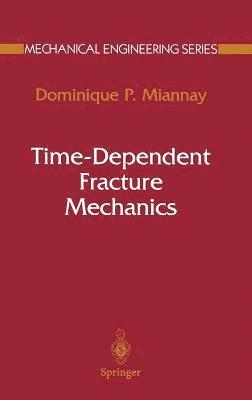
    Time-dependent Fracture Mechanics

    AvDominique Miannay

    Inbunden, Engelska, 2001

    Del i serien Mechanical Engineering Series

    869 kr

    Beställningsvara. Skickas inom 10-15 vardagar. Fri frakt över 249 kr.

    Beskrivning

    Intended for engineers, researchers, and graduate students dealing with materials science, structural design, and nondestructive testing and evaluation, this book represents a continuation of the author's "Fracture Mechanics" (1997). It will appeal to a variety of audiences: The discussion of design codes and procedures will be of use to practicing engineers, particularly in the nuclear, aerospace, and pipeline industries; the extensive bibliography and discussion of recent results will make it a useful reference for academic researchers; and graduate students will find the clear explanations and worked examples useful for learning the field. The book begins with a general treatment of fracture mechanics in terms of material properties and loading and provides up-to-date reviews of the ductile-brittle transition in steels and of methods for analyzing the risk of fracture. It then discusses the dynamics of fracture and creep in homogeneous and isotropic media, including discussions of high-loading-rate characteristics, the behavior of stationary cracks in elastic media under stress, and the propagation of cracks in elastic media.This is followed by an analysis of creep and crack initiation and propagation, describing, for example, the morphology and incubation times of crack initiation and growth and the effects of high temperatures. The book concludes with treatments of cycling deformation and fatigue, creep-fatigue fractures, and crack initiation and propagation. Problems at the end of each chapter serve to reinforce and test the student's knowledge and to extend some of the discussions in the text. Solutions to half of the problems are provided.

    Produktinformation

    • Utgivningsdatum:2001-06-27
    • Mått:160 x 230 x 32 mm
    • Vikt:893 g
    • Format:Inbunden
    • Språk:Engelska
    • Serie:Mechanical Engineering Series
    • Antal sidor:485
    • Förlag:Springer-Verlag New York Inc.
    • ISBN:9780387952123

    Utforska kategorier

    • Maskinteknik och material inom Naturvetenskap och teknik

    Innehållsförteckning

    • Chapter 1: Structural Integrity Assessment: The Relevant Fracture Toughness Evaluation; Chapter 2: Structural Integrity Assessment; Chapter 3: Dynamic Fracture: Elementary Dynamics and Microscopic Fracture; Chapter 4: Dynamic Fracture Mechanics: The Stationary Crack; Chapter 5: Dynamic Fracture Mechanics: The Moving Crack; Chapter 6: Creep Fracture: Creep Laws, Elementary Microscopic Fracture Models, and Rupture of Smooth Bars; Chapter 7: Creep Fracture Mechanics; Chapter 8: Fatigue and Creep-Fatigue Fractures.