• Fri frakt över 249 kr
  • •
  • Snabba leveranser
  • •
  • Billiga böcker
Kundservice

Du är på sajten för privatpersoner.

Företag, bibliotek eller offentlig verksamhet?

Du handlar på classic.bokus.com, där alla dina funktioner finns intakta.
Till classic.bokus.com
Bokus logotyp. Gå till startsidan.
  • Erbjudanden
  • Nyheter
  • Student
  • Topplistor
  • Barn & ungdom
  • Bokus Play
  • E-böcker
  • Pocketböcker
  • Spel & pussel

10% rabatt på allt med kod NYSTART10 →

Sidfot

Mina sidor

    Hjälp

    • Kundservice
    • Vanliga frågor och svar
    • Frakt och leverans
    • Retur vid ångerrätt
    • Reklamera vara
    • Betalning
    • Köpvillkor
    • Allmänna villkor
    • Information om webbplatsens tillgänglighet

    Om Bokus

    • Om oss
    • Pressrum
    • För studenter
    • För företag
    • För bibliotek och offentlig verksamhet
    • För leverantörer
    • Hållbarhet

    Populärt

    • Aktuella erbjudanden
    • Presentkort
    • Studentlitteratur
    • Nya böcker
    • Topplistor
    • Signerade böcker
    • Engelska böcker

    Inspiration

    • Boktips
    • BookTok
    • Populära bokserier
    • Barnbokskaraktärer
    • Populära författare
    Logotyp för Bokus
    Följ oss på Facebook (extern länk)Följ oss på Instagram (extern länk)Följ oss på YouTube (extern länk)Följ oss på TikTok (extern länk)
    bokus @ CookiesAnpassa cookiesIntegritetspolicyKöpvillkor
    Till Citymail hemsida (extern länk)Till Budbee hemsida (extern länk)Till Postnord hemsida (extern länk)Till Schenker hemsida (extern länk)Till Early Bird hemsida (extern länk)Till Walleys hemsida (extern länk)
    1. Psykologi och pedagogik
    2. Pedagogik
    3. Pedagogisk psykologi

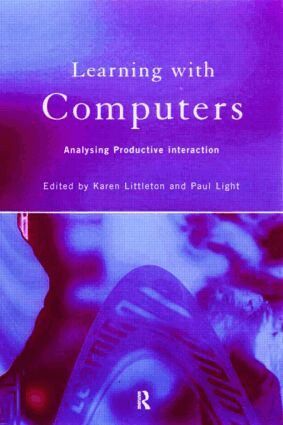
    Learning with Computers

    Analysing Productive Interactions

    AvPaul Light,Karen Littleton

    Häftad, Engelska, 1998

    608 kr

    Beställningsvara. Skickas inom 10-15 vardagar. Fri frakt över 249 kr.

    Beskrivning

    Contrary to the belief that computers isolate users, Karen Littleton and Paul Light demonstrate that learning with computers is often a collaborative and social activity. Learning with Computers brings together a significant body of research that shows how working with others at the computer can be beneficial to learners of all ages, from the early school years to the highest levels of education. It also investigates factors such as gender that explain why some interactions are not as productive as others.

    Produktinformation

    • Utgivningsdatum:1998-12-03
    • Mått:152 x 229 x 14 mm
    • Vikt:272 g
    • Format:Häftad
    • Språk:Engelska
    • Antal sidor:216
    • Förlag:Taylor & Francis Ltd
    • ISBN:9780415142861

    Utforska kategorier

    • Pedagogisk psykologi inom Psykologi och pedagogik
    • Material och digital teknik i undervisningen inom Psykologi och pedagogik
    • Människa – datorinteraktion inom Data och IT

    Mer om författaren

    Karen Littleton is a Lecturer in Psychology at The Open University. Her previous publications include Cultural Worlds of Early Childhood (1998), Learning Relationships in the Classroom (1998), Making Sense of Social Development (1998) (all edited with Martin Woodhead and Dorothy Faulkner)., Paul Light is Pro-Vice Chancellor at Bournemouth University. His previous publications include Learning to Think (1991) (edited with Sue Sheldon and Martin Woodhead) and Growing up in a Changing Society (1991) and Becoming a Person (1991) edited with Martin Woodhead and Ronnie Carr.

    Innehållsförteckning

    • Chapter 1 Introduction, Paul Light, Karen Littleton; Chapter 2 Task effects on co-operative and collaborative learning with computers, Jean Underwood, Geoffrey Underwood; Chapter 3 Productive interaction in the context of computer-supported collaborative learning in science, Christine Howe, Andrew Tolmie; Chapter 4 Time-based analysis of students studying the Periodic Table, Kim Issroff; Chapter 5 Collaborations in a primary classroom, Eileen Scanlon, Kim Issroff, Patricia Murphy; Chapter 6 Is ‘exploratory talk’ productive talk?, Neil Mercer, Rupert Wegerif; Chapter 7 Computers in the community of classrooms, Charles Crook; Chapter 8, Danièle Golay Schilter, Jean-François Perret, Anne-Nelly Perret-Clermont, Franco de Guglielmo; Chapter 9, Roger Säljö; Chapter 10, Paul Light, Vivienne Light; Chapter 11 Productivity through interaction, Karen Littleton;