• Fri frakt över 249 kr
  • •
  • Snabba leveranser
  • •
  • Billiga böcker
Kundservice

Du är på sajten för privatpersoner.

Företag, bibliotek eller offentlig verksamhet?

Du handlar på classic.bokus.com, där alla dina funktioner finns intakta.
Till classic.bokus.com
Bokus logotyp. Gå till startsidan.
  • Erbjudanden
  • Student
  • Topplistor
  • Barn & ungdom
  • Bokus Play
  • E-böcker
  • Ljudböcker
  • Pocketböcker
  • Spel och pussel

Pocketfynda! Hundratals böcker för 49 kr/st →

Sidfot

Mina sidor

    Hjälp

    • Kundservice
    • Vanliga frågor och svar
    • Frakt och leverans
    • Retur vid ångerrätt
    • Reklamera vara
    • Betalning
    • Köpvillkor
    • Allmänna villkor
    • Information om webbplatsens tillgänglighet

    Om Bokus

    • Om oss
    • Pressrum
    • För studenter
    • För företag
    • För bibliotek och offentlig verksamhet
    • För leverantörer
    • Hållbarhet

    Populärt

    • Aktuella erbjudanden
    • Presentkort
    • Studentlitteratur
    • Nya böcker
    • Topplistor
    • Signerade böcker
    • Engelska böcker

    Inspiration

    • Boktips
    • BookTok
    • Barnbokskaraktärer
    • Populära författare
    Logotyp för Bokus
    Följ oss på Facebook (extern länk)Följ oss på Instagram (extern länk)Följ oss på YouTube (extern länk)Följ oss på TikTok (extern länk)
    bokus @ CookiesAnpassa cookiesIntegritetspolicyKöpvillkor
    Till Citymail hemsida (extern länk)Till Budbee hemsida (extern länk)Till Postnord hemsida (extern länk)Till Schenker hemsida (extern länk)Till Early Bird hemsida (extern länk)Till Walleys hemsida (extern länk)
    1. Samhälle och politik
    2. Samhälle och kultur
    3. Sociala och etiska frågor

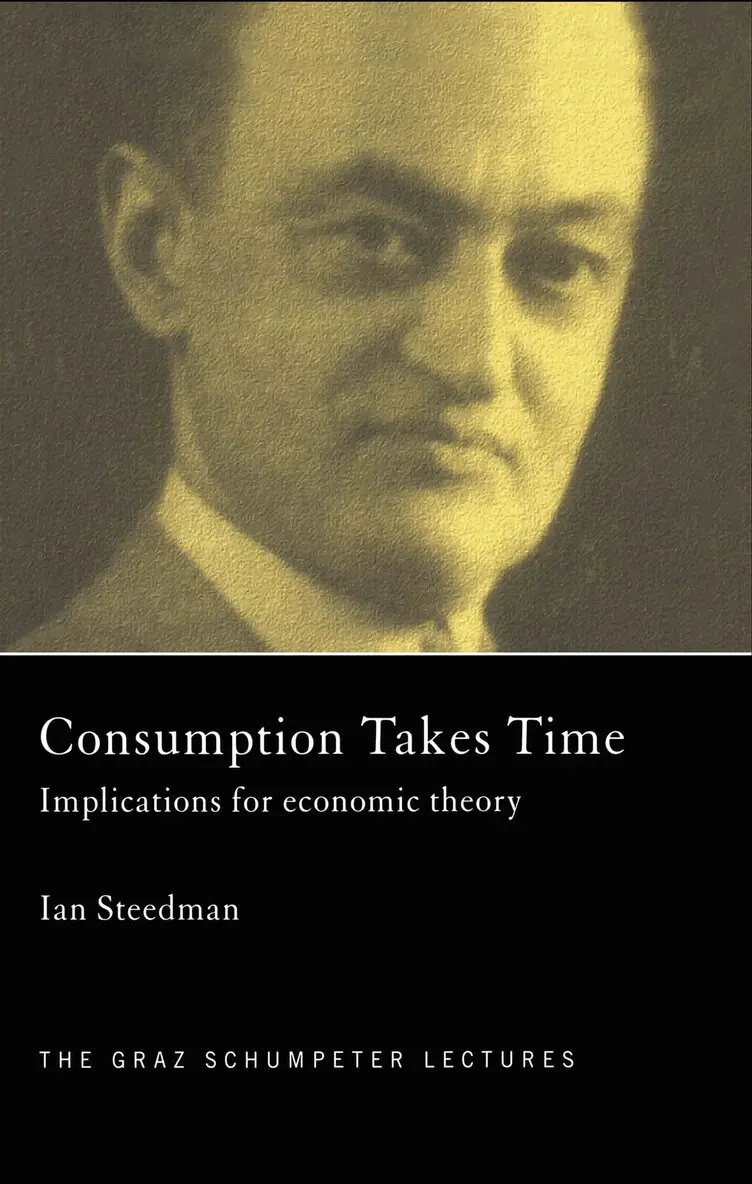
    Consumption Takes Time

    Implications for Economic Theory

    AvIan Steedman

    Inbunden, Engelska, 2001

    Del i serien Graz Schumpeter Lectures

    2 410 kr

    Beställningsvara. Skickas inom 10-15 vardagar. Fri frakt över 249 kr.

    Fler format och utgåvor

    Häftad

    720 kr

    E-bok

    883 kr

    Beskrivning

    Standard economic theory of consumer behaviour considers consumers' preferences, their incomes and commodity prices to be the determinants of consumption. However, consumption takes time and no consumer has more - or less - than 168 hours per week. This simple fact is almost invisible in standard theory, and takes the centre stage in this book. Whether one is 'money-rich but time-poor' or is 'money-poor and killing time', both money and time considerations matter.Recognition that consumers are subject to both time and expenditure constraints makes a real difference to the economic theory of consumption. 'Two-constraint' theory is genuinely different in various respects from the familiar one-constraint theory. Income effects, substitution effects etc. have to be reconsidered, expenditure functions have to be redefined, and the results are sometimes surprising. It is not only the positive theory of consumption and labour supply that must be reworked, welfare economics too changes significantly when time constraints on consumption are given their proper due. The focus on time not only changes the comparative states of consumer theory, but it also overcomes some of the more artificial barriers between social theory and practical, everyday matters of altruism and interpersonal decision taking.

    Produktinformation

    • Utgivningsdatum:2001-03-29
    • Mått:156 x 234 x 14 mm
    • Vikt:385 g
    • Format:Inbunden
    • Språk:Engelska
    • Serie:Graz Schumpeter Lectures
    • Antal sidor:176
    • Förlag:Taylor & Francis Ltd
    • ISBN:9780415250993

    Utforska kategorier

    • Sociala och etiska frågor inom Samhälle och politik

    Mer om författaren

    Ian Steedman (Manchester Metropolitan University, UK)

    Recensioner i media

    'These lectures... are written in a lively, entertaining style.' - Economica

    Innehållsförteckning

    • 1. Consumption takes time Textbook consumption theory Brief references to some literature Time as a context Two commodity case Three commodity case Non-linear time constraint Rates of consumption Satiation and general equilibrium Work, consumption and 'leisure' times Concluding remarks 2. Zuruck Zu Gossen Gossen on the uses of time Selected responses to Gossen's gem Georgescu-Roegen on Gossen Forgetting the forefather? Comparative statics Comparative statics of alternative preferences Many time-uses Concluding remarks 3. Further explanatory analysis The basic case and its simplification Further discussion Preference loops on the time-constraint plane The expenditure function A specific expenditure function Comparative statics of time-use Cobb-Douglas preference loops From time use to commodity use Other forms of the C matrix Demand relations in commodity space Rates of consumption (and characterization of choices) Availability without consumption Non-linearities and non-convex consumption sets Intertemporal consumption theory Work and leisure Concluding remarks 4. Welfare economics The basic case Rates of consumption Availability Pure leisure time Pareto efficiency and competitive equilibria Three commodities Liberal welfare economics Capabilities Concluding remarks 5. Activities rather than wants A generalization Risk and uncertainty Space, location and travel Intrinsically-valued and result-valued activities Doing two things at once Repetition and Gossen's second law Practicing Set-up-times Sleep Endogenous T Voluntary work and charitable donations Shared activity Time-use surveys Some broader considerations 'Time, that most valuable health' (Alfred Marshall, 1873) Decision-making Satiable preferences Wider still