• Fri frakt över 249 kr
  • •
  • Snabba leveranser
  • •
  • Billiga böcker
Kundservice

Du är på sajten för privatpersoner.

Företag, bibliotek eller offentlig verksamhet?

Du handlar på classic.bokus.com, där alla dina funktioner finns intakta.
Till classic.bokus.com
Bokus logotyp. Gå till startsidan.
  • Erbjudanden
  • Student
  • Topplistor
  • Barn & ungdom
  • Bokus Play
  • E-böcker
  • Ljudböcker
  • Pocketböcker
  • Spel och pussel

Pocketfynda! Hundratals böcker för 49 kr/st →

Sidfot

Mina sidor

    Hjälp

    • Kundservice
    • Vanliga frågor och svar
    • Frakt och leverans
    • Retur vid ångerrätt
    • Reklamera vara
    • Betalning
    • Köpvillkor
    • Allmänna villkor
    • Information om webbplatsens tillgänglighet

    Om Bokus

    • Om oss
    • Pressrum
    • För studenter
    • För företag
    • För bibliotek och offentlig verksamhet
    • För leverantörer
    • Hållbarhet

    Populärt

    • Aktuella erbjudanden
    • Presentkort
    • Studentlitteratur
    • Nya böcker
    • Topplistor
    • Signerade böcker
    • Engelska böcker

    Inspiration

    • Boktips
    • BookTok
    • Barnbokskaraktärer
    • Populära författare
    Logotyp för Bokus
    Följ oss på Facebook (extern länk)Följ oss på Instagram (extern länk)Följ oss på YouTube (extern länk)Följ oss på TikTok (extern länk)
    bokus @ CookiesAnpassa cookiesIntegritetspolicyKöpvillkor
    Till Citymail hemsida (extern länk)Till Budbee hemsida (extern länk)Till Postnord hemsida (extern länk)Till Schenker hemsida (extern länk)Till Early Bird hemsida (extern länk)Till Walleys hemsida (extern länk)
    1. Naturvetenskap och teknik
    2. Geovetenskap
    3. Regional planering

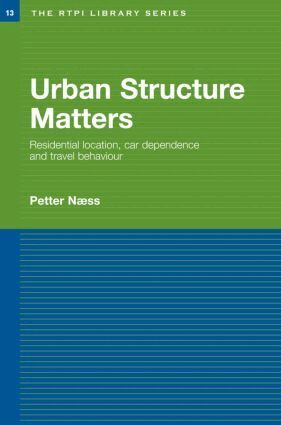
    Urban Structure Matters

    Residential Location, Car Dependence and Travel Behaviour

    AvPetter Naess

    Inbunden, Engelska, 2006

    Del i serien RTPI Library Series

    2 410 kr

    Beställningsvara. Skickas inom 10-15 vardagar. Fri frakt över 249 kr.

    Fler format och utgåvor

    E-bok

    906 kr

    E-bok

    906 kr

    Häftad

    761 kr

    Beskrivning

    Going beyond previous investigations into urban land use and travel, Petter Næss presents new research from Denmark on residential location and travel to show how and why urban spatial structures affect people's travel behaviour.In a comprehensive case study of the Copenhagen metropolitan area, Næss combines traditional quantitative travel surveys with qualitative interviews in order to identify the more detailed mechanisms through which urban structure affects travel behaviour. The case study findings are compared with those from other Nordic countries and analyzed and evaluated in the light of relevant theory and literature to provide solid, valuable conclusions for planning sustainable urban development. With a broader range of statistics than previous studies and conclusions of international relevance, Urban Structure Matters provides well-grounded conclusions for how spatial planning of urban areas can be used to reduce car dependence and achieve a more sustainable development of cities.

    Produktinformation

    • Utgivningsdatum:2006-07-06
    • Mått:156 x 234 x 23 mm
    • Vikt:800 g
    • Format:Inbunden
    • Språk:Engelska
    • Serie:RTPI Library Series
    • Antal sidor:340
    • Förlag:Taylor & Francis Ltd
    • ISBN:9780415375740

    Utforska kategorier

    • Regional planering inom Naturvetenskap och teknik
    • Miljövetenskap och miljöpolitik inom Naturvetenskap och teknik

    Recensioner i media

    "...a comprehensive study of the relationship between urban land use and travel." - Architectural Science Review

    Innehållsförteckning

    • Preface List of Figures List of Tables 1. Why is Knowledge about Urban Form and Travel Needed? 2. Urban Structures as Contributory Causes of Travel Behavior – A Theoretical Perspective 3. The Case of Copenhagen Metropolitan Area - Context and Research Methods 4. The "Car Tires" and the "Bike Hub": Typical Mobility Patterns in Different Parts of the Metropolitan Area 5. How does Urban Structure Motivate Daily-Life Travel Behavior? – Examples from Qualitative Interviews 6. Which Relationships Exist between Residential Location and Travel Behavior after Controlling for Demographic, Socioeconomic and Attitudinal Factors? 7. How does Residential Location Influence Location of Activities, Trip Lengths, Activity Participation and Travel Time? 8. Are there Additional, Indirect Effects of Residential Location on Travel? 9. Does Residential Location Influence Daily-Life Travel Differently among Different Population Groups? 10. Are Short Daily Trips Compensated by Higher Leisure Mobility? 11. Conclusions from the Copenhagen Metropolitan Area Study 12. Urban Form and Travel Behavior - A Wider Sustainability Perspective 13. Planning for a Sustainable and less Car-Dependent Urban Development References Appendix: The Independent Variables Included in Most of the Multivariate Analyses of the Main Survey Index Notes