• Fri frakt över 249 kr
  • •
  • Snabba leveranser
  • •
  • Billiga böcker
Kundservice

Du är på sajten för privatpersoner.

Företag, bibliotek eller offentlig verksamhet?

Du handlar på classic.bokus.com, där alla dina funktioner finns intakta.
Till classic.bokus.com
Bokus logotyp. Gå till startsidan.
  • Erbjudanden
  • Nyheter
  • Student
  • Topplistor
  • Barn & ungdom
  • Bokus Play
  • E-böcker
  • Pocketböcker
  • Spel & pussel

10% rabatt på allt med kod: NYSTART10 →

Sidfot

Mina sidor

    Hjälp

    • Kundservice
    • Vanliga frågor och svar
    • Frakt och leverans
    • Retur vid ångerrätt
    • Reklamera vara
    • Betalning
    • Köpvillkor
    • Allmänna villkor
    • Information om webbplatsens tillgänglighet

    Om Bokus

    • Om oss
    • Pressrum
    • För studenter
    • För företag
    • För bibliotek och offentlig verksamhet
    • För leverantörer
    • Hållbarhet

    Populärt

    • Aktuella erbjudanden
    • Presentkort
    • Studentlitteratur
    • Nya böcker
    • Topplistor
    • Signerade böcker
    • Engelska böcker

    Inspiration

    • Boktips
    • BookTok
    • Populära bokserier
    • Barnbokskaraktärer
    • Populära författare
    Logotyp för Bokus
    Följ oss på Facebook (extern länk)Följ oss på Instagram (extern länk)Följ oss på YouTube (extern länk)Följ oss på TikTok (extern länk)
    bokus @ CookiesAnpassa cookiesIntegritetspolicyKöpvillkor
    Till Citymail hemsida (extern länk)Till Budbee hemsida (extern länk)Till Postnord hemsida (extern länk)Till Schenker hemsida (extern länk)Till Early Bird hemsida (extern länk)Till Walleys hemsida (extern länk)
    1. Samhälle och politik
    2. Politik och statsskick
    3. Statsvetenskap och politisk teori

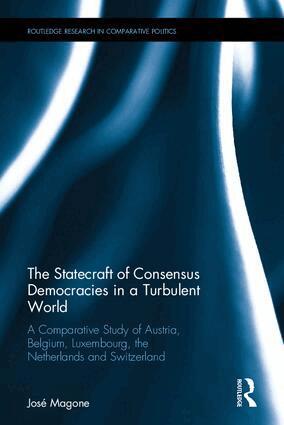
    Statecraft of Consensus Democracies in a Turbulent World

    A Comparative Study of Austria, Belgium, Luxembourg, the Netherlands and Switzerland

    AvJosé Magone

    Inbunden, Engelska, 2016

    Del i serien Routledge Research in Comparative Politics

    2 421 kr

    Beställningsvara. Skickas inom 10-15 vardagar. Fri frakt över 249 kr.

    Fler format och utgåvor

    Häftad

    723 kr

    E-bok

    855 kr

    E-bok

    858 kr

    Beskrivning

    Drawing on the work of Arend Lijphart, this book focuses on consensus democracies. These democracies entail a complex set of democratic institutional and conventional arrangements and can be regarded as a product of path-dependent development towards a national culture of compromise and bargaining.Taking a multi-dimensional and multi-spatial approach, this book examines the West central European consensus democracies of Austria, Belgium, Luxembourg, Netherlands and Switzerland, over the past 40 years. Magone examines how these democracies have been transformed by Europeanization thrusts and global turbulence yet are able to maintain political stability. It provides historical context including the different phases of transformation: the golden period (1945-1979); disorganised capitalism (1979-1993); and re-equilibration (1993-). It includes chapters on political culture, government, parliament, the rise of populism and political parties, subnational government, and the political economy and concludes deliberating on the relevance of consensus democracies’ experiences for the future of European and global governance.Based on original research, this book will be of strong interest to students and scholars of comparative politics, European government, West European politics, the politics of small states in Europe, and those with a particular interest in the politics of Austria, Belgium, the Netherlands, Luxembourg and Switzerland.

    Produktinformation

    • Utgivningsdatum:2016-12-13
    • Mått:156 x 234 x 25 mm
    • Vikt:635 g
    • Format:Inbunden
    • Språk:Engelska
    • Serie:Routledge Research in Comparative Politics
    • Antal sidor:342
    • Förlag:Taylor & Francis Ltd
    • ISBN:9780415502788

    Utforska kategorier

    • Statsvetenskap och politisk teori inom Samhälle och politik
    • Politik och statsskick inom Samhälle och politik

    Mer om författaren

    José M. Magone is Professor of Regional and Global Governance at the Berlin School of Economics and Law, Germany.

    Innehållsförteckning

    • 1. The Statecraft of Consensus DemocraciesIntroduction: Political Change in Consensus DemocraciesConceptualizing Consensus Democracies Strategic Management in Consensus Democracies: A Permanent Process of Re-equilibrationThe Great Transformation of the Late Twentieth Century and Consensus Democracies From International to Global Politics and Governance Europeanization of National Politics: From Government to Multilevel Governance Politics: Political Change, Insecurity and the Rise of Populism National Political Economy: Adjusting to Globalization Society: De-nationalization and Social Investment Structure of the Book Conclusions: The Consensus Democracies of West Central Europe 2. The Creation and Development of Consensus Democracies The Three Main Spaces of West Central Europe Until the Early Nineteenth CenturyRise and Decline of the Habsburg Empire (1273-1866) Between Autonomy and Centralization: The Origins of the Netherlands, Belgium and Luxembourg (1300-1848) The Difficult Road to Internal Statehood: The Case of Switzerland (1291-1848) The Making of Consensus Democracies (1815-1945): The Nationalization of PoliticsThe Nationalization of Politics in Austria: The Difficult Mentality Change from Empire to Small StateSwitzerland: From Civil War to a Virtuous Evolution towards Inclusive Democracy The Netherlands: Evolutionary Democracy in a Centralized State Belgium: From a Model Constitution to a Consensual Democracy Luxembourg: Reinventing its Identity through Democratisation The Glorious Thirty: Consensus Democracies in National Capitalism Austria: Consensus Politics as a New Found Political Culture of National Unity Switzerland: The ‘Magic Formula’ and the Continuity of Consensus Politics The Netherlands: Consensus Democracy and the Scientification of Policy Making Belgium: Consensus and Conflict in a Divided Country Luxembourg: The Creation of a National Model A Turbulent World Since 1980: Re-equilibrating Consensus Democracies Austria: The Politics of Memory and European Integration Switzerland: Consensus and Populism in Turbulent Times The Netherlands: Reviving the Polder Model Belgium: From Unitary to a Federal State Luxembourg: Consensus as a Way of Life Conclusions: Crafting Consensus Democracies in Turbulent Times 3.Constitutional Change in Consensus DemocraciesIntroduction Longevity of Constitutions and Change in Consensus Democracies Sketching the Political Institutional Framework of Consensus Democracies The Head of State and The Government The Structure and Procedures of Parliament The Constitutional and Administrative Court System Conclusions: Constitutions and Political Practice 4. Society and Civic Culture Introduction: The Complexity of Consensus Democracies From Welfare State to the Social Investment State: Recommodifying LabourThe Civic Culture: Attitudes towards Politics, Democracy and the Political SystemFrom Pillarised to a New Strong Civil Society Conclusions: Strong Civil Societies as Fundament of Consensus Democracies5. The Americanization of Electoral and Party Politics Introduction: The Rise of Populism in Americanized Electoral Markets From Pillarization to Americanization The Political Families in the Twentieth First Century The Socialist Family The Communist Family The Christian Democratic Family The Liberal Family The Greens Other parties Contextual Variables of the Party System The Electoral System: The Importance of Proportional Representation Party Funding System in Consensus Democracies Party System Change in Consensus Democracies Party System Change and Decline of the Established Parties The Rise of Total Volatility in Consensus Democracies The Fragmentation of the Party System Conclusions: The Americanization of Party Systems in Consensus Democracies6. Patterns of Government in Consensus Democracies Introduction Comparing Government Structure The Cabinet: Collegiality and Ministerial Autonomy The Prime Minister: Primus inter pares Patterns of Government Formation Cabinet Governance: Internal and External Coordination Government Longevity Conclusions: The Art of Sharing Power7. The Institutional Performance of Parliaments in Consensus Democracies Introduction: Parliaments in Consensus Democracies Contextualisation of Parliamentarianism The Structure of Parliaments: The Lower House The Upper Chamber: A Chamber of Reflection The Institutional Performance of Parliaments Parliamentary Workload Parliamentary Committee Work in Consensus Democracies Conflict and Consensus in the Legislative Process Controlling Instruments European Integration and National Parliaments Conclusions: Parliament as Centre of Consensus Democracies 8. The Regional and Local Patterns of Consensus DemocraciesIntroduction: The Deepening of Consensus DemocraciesPatterns of Subnational Democracy in Unitary States: The Netherlands and LuxembourgPatterns of Subnational Democracy in Federal Systems: Austria, Switzerland and Belgium Conclusions: Subnational Government in an Age of Europeanization and Globalization9. The Changing Political Economy of Consensus Democracies Introduction Varieties of Coordinated Capitalism in the Context of Europeanization and GlobalizationIndustrial Relations as Coordination: From Interventionist to Light Neo-Corporatism Switzerland: Changing Schweiz AGThe Netherlands: Continuity and Flexibility in the Polder ModelBelgium: A Multilevel Neo-CorporatismLuxembourg; Cooperation and Coordination in the Luxembourg Social Model Austria: The Re-Invention of Social Corporatism Conclusions: Coordination and Flexibility in a European Setting10.Consensus Democracies as a Model for European and Global Governance The Statecraft of Consensus Democracies in West Central Europe The Primacy of Political Stability: Coalition Government and Parliamentary Majority Changing Architecture of Politics: From Welfare to Competition State The Hybridization of Coordinated Market Economies and the welfare StateBig Democracy and Small Democracy: The Importance of Civil Society The Necessity of European Union Governance Consensus Democracies as Co-Founders and Rule Makers of the EC/EU Consensus Democracies as Model for other Small States Controlling Turbulence through Global Governance The Role of European Union in Promoting pax democratica Changing Global Capitalism: Expanding the European Social Model Conclusions: Consensus Democracies as a Way of Life