• Fri frakt över 249 kr
  • •
  • Snabba leveranser
  • •
  • Billiga böcker
Kundservice

Du är på sajten för privatpersoner.

Företag, bibliotek eller offentlig verksamhet?

Du handlar på classic.bokus.com, där alla dina funktioner finns intakta.
Till classic.bokus.com
Bokus logotyp. Gå till startsidan.
  • Erbjudanden
  • Nyheter
  • Student
  • Topplistor
  • Barn & ungdom
  • Bokus Play
  • E-böcker
  • Pocketböcker
  • Spel & pussel

10% studentrabatt med kod TERM26

Sidfot

Mina sidor

    Hjälp

    • Kundservice
    • Vanliga frågor och svar
    • Frakt och leverans
    • Retur vid ångerrätt
    • Reklamera vara
    • Betalning
    • Köpvillkor
    • Allmänna villkor
    • Information om webbplatsens tillgänglighet

    Om Bokus

    • Om oss
    • Pressrum
    • För studenter
    • För företag
    • För bibliotek och offentlig verksamhet
    • För leverantörer
    • Hållbarhet

    Populärt

    • Aktuella erbjudanden
    • Presentkort
    • Studentlitteratur
    • Nya böcker
    • Topplistor
    • Signerade böcker
    • Engelska böcker

    Inspiration

    • Boktips
    • BookTok
    • Populära bokserier
    • Barnbokskaraktärer
    • Populära författare
    Logotyp för Bokus
    Följ oss på Facebook (extern länk)Följ oss på Instagram (extern länk)Följ oss på YouTube (extern länk)Följ oss på TikTok (extern länk)
    bokus @ CookiesAnpassa cookiesIntegritetspolicyKöpvillkor
    Till Citymail hemsida (extern länk)Till Budbee hemsida (extern länk)Till Postnord hemsida (extern länk)Till Schenker hemsida (extern länk)Till Early Bird hemsida (extern länk)Till Walleys hemsida (extern länk)
    1. Kultur
    2. Arkitektur

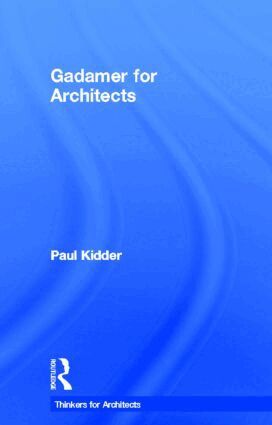
    Gadamer for Architects

    AvPaul Kidder

    Inbunden, Engelska, 2012

    Del i serien Thinkers for Architects

    2 434 kr

    Beställningsvara. Skickas inom 10-15 vardagar. Fri frakt över 249 kr.

    Fler format och utgåvor

    Häftad

    487 kr

    E-bok

    572 kr

    E-bok

    570 kr

    Beskrivning

    Providing a concise and accessible introduction to the work of the celebrated twentieth century German philosopher, Hans-Georg Gadamer, this book focuses on the aspects of Gadamer’s philosophy that have been the most influential among architects, educators in architecture, and architectural theorists. Gadamer’s philosophy of art gives a special place to the activity of "play" as it occurs in artistic creation. His reflections on meaning and symbolism in art draw upon his teacher, Martin Heidegger, while moving Heidegger’s thought in new directions. His theory of interpretation, or "philosophical hermeneutics," offers profound ways to understand the influence of the past upon the present and to appropriate cultural history in ever new forms. For architects, architectural theorists, architectural historians, and students in these fields, Gadamer’s thought opens a world of possibilities for understanding how building today can be rich with human meaning, relating to architecture’s history in ways that do not merely repeat nor repudiate that history.In addition, Gadamer’s sensitivity to the importance of practical thinking – to the way that theory arises out of practice – gives his thought a remarkable usefulness in the everyday work of professional life.

    Produktinformation

    • Utgivningsdatum:2012-11-08
    • Mått:138 x 216 x 12 mm
    • Vikt:460 g
    • Format:Inbunden
    • Språk:Engelska
    • Serie:Thinkers for Architects
    • Antal sidor:160
    • Förlag:Taylor & Francis Ltd
    • ISBN:9780415522724

    Utforska kategorier

    • Arkitektur inom Kultur
    • Arkitekturhistoria inom Kultur
    • Filosofiska discipliner inom Filosofi och religion

    Mer om författaren

    Paul Kidder is Associate Professor of Philosophy at Seattle University, USA, where he has taught courses on ethics, urban life, and the philosophy art.

    Innehållsförteckning

    • 1. Introduction 2. The Play of Art and the Art of Architecture 3. Historical Understanding and Architecture's Past 4. Humanism in the Age of Science 5. Practical Wisdom in Creative Collaboration 6. Architecture as a Way of Being Conclusion: The Hermeneutically-Minded Architect