• Fri frakt över 249 kr
  • •
  • Snabba leveranser
  • •
  • Billiga böcker
Kundservice

Du är på sajten för privatpersoner.

Företag, bibliotek eller offentlig verksamhet?

Du handlar på classic.bokus.com, där alla dina funktioner finns intakta.
Till classic.bokus.com
Bokus logotyp. Gå till startsidan.
  • Erbjudanden
  • Nyheter
  • Student
  • Topplistor
  • Barn & ungdom
  • Bokus Play
  • E-böcker
  • Pocketböcker
  • Spel & pussel

10% rabatt på allt med kod: NYSTART10 →

Sidfot

Mina sidor

    Hjälp

    • Kundservice
    • Vanliga frågor och svar
    • Frakt och leverans
    • Retur vid ångerrätt
    • Reklamera vara
    • Betalning
    • Köpvillkor
    • Allmänna villkor
    • Information om webbplatsens tillgänglighet

    Om Bokus

    • Om oss
    • Pressrum
    • För studenter
    • För företag
    • För bibliotek och offentlig verksamhet
    • För leverantörer
    • Hållbarhet

    Populärt

    • Aktuella erbjudanden
    • Presentkort
    • Studentlitteratur
    • Nya böcker
    • Topplistor
    • Signerade böcker
    • Engelska böcker

    Inspiration

    • Boktips
    • BookTok
    • Populära bokserier
    • Barnbokskaraktärer
    • Populära författare
    Logotyp för Bokus
    Följ oss på Facebook (extern länk)Följ oss på Instagram (extern länk)Följ oss på YouTube (extern länk)Följ oss på TikTok (extern länk)
    bokus @ CookiesAnpassa cookiesIntegritetspolicyKöpvillkor
    Till Citymail hemsida (extern länk)Till Budbee hemsida (extern länk)Till Postnord hemsida (extern länk)Till Schenker hemsida (extern länk)Till Early Bird hemsida (extern länk)Till Walleys hemsida (extern länk)
    1. Kultur
    2. Arkitektur

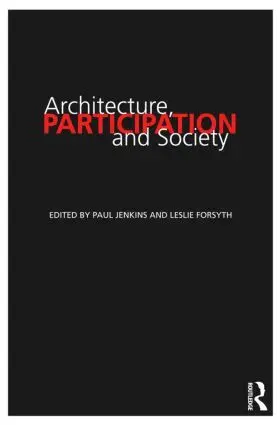
    Architecture, Participation and Society

    AvPaul Jenkins,Leslie Forsyth

    Häftad, Engelska, 2009

    918 kr

    Beställningsvara. Skickas inom 10-15 vardagar. Fri frakt över 249 kr.

    Beskrivning

    How can architects best increase their engagement with building users and wider society to provide better architecture?Since the mid 1990s government policy has promoted the idea of greater social participation in the production and management of the built environment but there has been limited direction to the practising architect.Reviewing international cases and past experiences to analyze what lessons have been learnt, this book argues for participation within other related disciplines, and makes a set of recommendations for architectural practices and other key actors.

    Produktinformation

    • Utgivningsdatum:2009-09-04
    • Mått:156 x 234 x 16 mm
    • Vikt:521 g
    • Format:Häftad
    • Språk:Engelska
    • Antal sidor:240
    • Förlag:Taylor & Francis Ltd
    • ISBN:9780415547246

    Utforska kategorier

    • Arkitektur inom Kultur
    • Regional planering inom Naturvetenskap och teknik

    Mer om författaren

    Paul Jenkins is an architect by initial training, expanding this to work in urban planning, housing policy and a wide range of social research related to the built environment. His career has included extensive experience working with communities in the UK and overseas in Sub-Saharan Africa. He directs the Centre for Environment and Human Settlements (CEHS) research group at the School of the Built Environment, Heriot-Watt University and is Research Professor at the School of Architecture in Edinburgh College of Art.Leslie Forsyth is an architect, planner and urban designer with experience in practice, consultancy, education and research in the UK and Germany. He currently is Head of the School of Architecture at Edinburgh College of Art where he also coordinates the postgraduate programmes in Urban Design.

    Innehållsförteckning

    • Foreword Jeremy Till Preface. Summary Part 1: Background, Context and Analytical Framework 1. Concepts of Social Participation in Architecture 2. A Brief Historical Review of Community Technical Aid and Community Architecture 3. International Experience 4. Wider Scoping of Relevant Literature Part 2: Illustrative Case Studies 5. Case Studies of Social Participation in Different Building Types in the UK 6. Case Studies of Organisations with Community-Based Practices in the UK 7. Case Studies of Architectural Educational Institutions 8. Case Studies on the Use of Participatory Computer-Based Techniques Part 3: Findings and Recommendations 9. Analysis of Findings 10. Current Challenges and Recommendations for the UK Part 4: Appendices