• Fri frakt över 249 kr
  • •
  • Snabba leveranser
  • •
  • Billiga böcker
Kundservice

Du är på sajten för privatpersoner.

Företag, bibliotek eller offentlig verksamhet?

Du handlar på classic.bokus.com, där alla dina funktioner finns intakta.
Till classic.bokus.com
Bokus logotyp. Gå till startsidan.
  • Erbjudanden
  • Nyheter
  • Student
  • Topplistor
  • Barn & ungdom
  • Bokus Play
  • E-böcker
  • Pocketböcker
  • Spel & pussel

Må bättre, för mindre! Upp till 50% rabatt på hälsoböcker

Sidfot

Mina sidor

    Hjälp

    • Kundservice
    • Vanliga frågor och svar
    • Frakt och leverans
    • Retur vid ångerrätt
    • Reklamera vara
    • Betalning
    • Köpvillkor
    • Allmänna villkor
    • Information om webbplatsens tillgänglighet

    Om Bokus

    • Om oss
    • Pressrum
    • För studenter
    • För företag
    • För bibliotek och offentlig verksamhet
    • För leverantörer
    • Hållbarhet

    Populärt

    • Aktuella erbjudanden
    • Presentkort
    • Studentlitteratur
    • Nya böcker
    • Topplistor
    • Signerade böcker
    • Engelska böcker

    Inspiration

    • Boktips
    • BookTok
    • Populära bokserier
    • Barnbokskaraktärer
    • Populära författare
    Logotyp för Bokus
    Följ oss på Facebook (extern länk)Följ oss på Instagram (extern länk)Följ oss på YouTube (extern länk)Följ oss på TikTok (extern länk)
    bokus @ CookiesAnpassa cookiesIntegritetspolicyKöpvillkor
    Till Citymail hemsida (extern länk)Till Budbee hemsida (extern länk)Till Postnord hemsida (extern länk)Till Schenker hemsida (extern länk)Till Early Bird hemsida (extern länk)Till Walleys hemsida (extern länk)
    1. Historia och arkeologi
    2. Arkeologi
    3. Arkeologiska perioder och områden

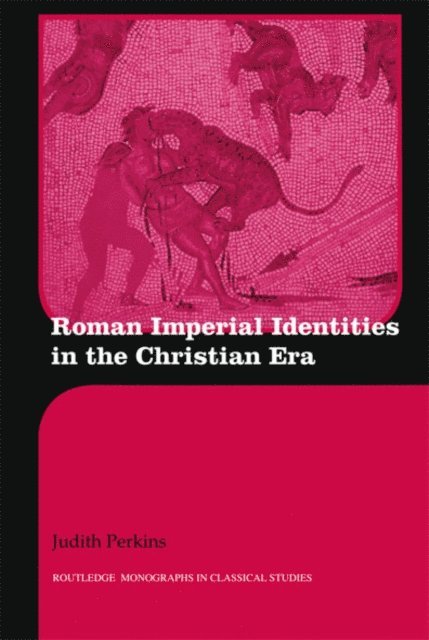
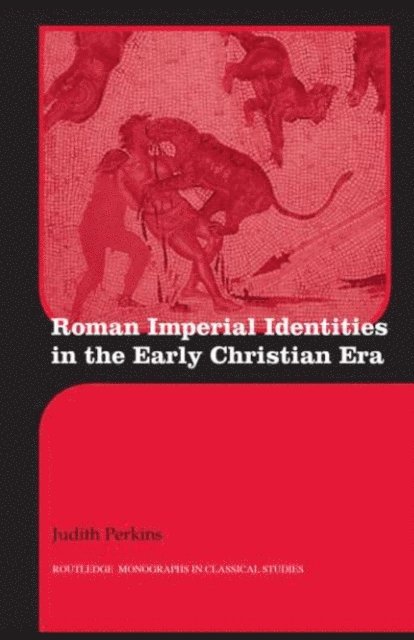
    Roman Imperial Identities in the Early Christian Era

    AvJudith Perkins

    Häftad, Engelska, 2010

    Del i serien Routledge Monographs in Classical Studies

    889 kr

    Beställningsvara. Skickas inom 10-15 vardagar. Fri frakt över 249 kr.

    Fler format och utgåvor

    Inbunden

    2 493 kr

    E-bok

    1 179 kr

    E-bok

    1 176 kr

    Beskrivning

    Through the close study of texts, Roman Imperial Identities in the Early Christian Era examines the overlapping emphases and themes of two cosmopolitan and multiethnic cultural identities emerging in the early centuries CE – a trans-empire alliance of the Elite and the "Christians." Exploring the cultural representations of these social identities, Judith Perkins shows that they converge around an array of shared themes: violence, the body, prisons, courts, and time. Locating Christian representations within their historical context and in dialogue with other contemporary representations, it asks why do Christian representations share certain emphases? To what do they respond, and to whom might they appeal? For example, does the increasing Christian emphasis on a fully material human resurrection in the early centuries, respond to the evolution of a harsher and more status based judicial system? Judith Perkins argues that Christians were so successful in suppressing their social identity as inhabitants of the Roman Empire, that historical documents and testimony have been sequestered as "Christian" rather than recognized as evidence for the social dynamics enacted during the period, Her discussion offers a stimulating survey of interest to students of ancient narrative, cultural studies and gender.

    Produktinformation

    • Utgivningsdatum:2010-08-18
    • Mått:156 x 234 x 16 mm
    • Vikt:390 g
    • Format:Häftad
    • Språk:Engelska
    • Serie:Routledge Monographs in Classical Studies
    • Antal sidor:210
    • Förlag:Taylor & Francis Ltd
    • ISBN:9780415594882

    Utforska kategorier

    • Arkeologiska perioder och områden inom Historia och arkeologi

    Mer om författaren

    Judith Perkins is professor of Classics and Humanities at Saint Joseph College, Connecticut. Her research focuses on the social and cultural dynamics of early Christian representation in its historical matrix. She is the author of  The Suffering Self (Routledge 1995).

    Recensioner i media

    "[T]his is an inspiring monograph that never fails to make its points clear . . . Perkins’ book is essential reading for scholars interested in Greek novels and early Christianity." – Alberto Quiroga, Ancient Narrative"This is a valuable and stimulating contribution to the understanding of the complex interplay between early Christianity and the Roman imperial society and judicial system. It also casts much light onto the backdrop of crucial theological and anthropological Christian conceptions such as the incarnation of Christ and the resurrection of all human beings." –Ilaria L.E. Ramelli, Catholic University of the Sacred Heart, Review of Biblical Literature, April 2009"Perkins provides much of interest to both researchers of early Christianity and classicists. She does not aim at a comprehensive picture, but instead provides a series of detailed studies . . . She supplies detailed analysis of both Christian and non-Christian texts and her broad bibliography includes much recent work. The very careful organization of each chapter and use of English translations makes the text accessible to scholars working outside their comfort zones as well as students." –Bryn Mawr Classical Review"Perkins convincingly argues that the emphasis on corporal punishment in Christian texts reflects a rejection of an unequal justice system and the expectation of a future, egalitarian one. . . . Perkins’ book not only firmly enunciates the importance of the body for the formation of early Christian identity, but also successfully argues for the cooperation between Classics and Religious Studies. . . . [T]hrough this interdisciplinary lens [she] is able to tease out . . . important conclusions." –Meredith Warren, McGill University, Arc

    Innehållsförteckning

    • 1. Cosmopolitan Identities 2. False Deaths and new Bodies 3. Constructing a Patriarchal Elite 4. Resurrection and Judicial Bodies 5. Place, Space and Voice 6. Trimalchio: Transformations and Possibilities 7. Reurrection and Social Perspectives 8. The Rhetoric of the Mternal Body 9. Competing Chronologies