• Fri frakt över 249 kr
  • •
  • Snabba leveranser
  • •
  • Billiga böcker
Kundservice

Du är på sajten för privatpersoner.

Företag, bibliotek eller offentlig verksamhet?

Du handlar på classic.bokus.com, där alla dina funktioner finns intakta.
Till classic.bokus.com
Bokus logotyp. Gå till startsidan.
  • Erbjudanden
  • Nyheter
  • Student
  • Topplistor
  • Barn & ungdom
  • Bokus Play
  • E-böcker
  • Pocketböcker
  • Spel & pussel

Må bättre, för mindre! Upp till 50% rabatt på hälsoböcker

Sidfot

Mina sidor

    Hjälp

    • Kundservice
    • Vanliga frågor och svar
    • Frakt och leverans
    • Retur vid ångerrätt
    • Reklamera vara
    • Betalning
    • Köpvillkor
    • Allmänna villkor
    • Information om webbplatsens tillgänglighet

    Om Bokus

    • Om oss
    • Pressrum
    • För studenter
    • För företag
    • För bibliotek och offentlig verksamhet
    • För leverantörer
    • Hållbarhet

    Populärt

    • Aktuella erbjudanden
    • Presentkort
    • Studentlitteratur
    • Nya böcker
    • Topplistor
    • Signerade böcker
    • Engelska böcker

    Inspiration

    • Boktips
    • BookTok
    • Populära bokserier
    • Barnbokskaraktärer
    • Populära författare
    Logotyp för Bokus
    Följ oss på Facebook (extern länk)Följ oss på Instagram (extern länk)Följ oss på YouTube (extern länk)Följ oss på TikTok (extern länk)
    bokus @ CookiesAnpassa cookiesIntegritetspolicyKöpvillkor
    Till Citymail hemsida (extern länk)Till Budbee hemsida (extern länk)Till Postnord hemsida (extern länk)Till Schenker hemsida (extern länk)Till Early Bird hemsida (extern länk)Till Walleys hemsida (extern länk)
    1. Psykologi och pedagogik
    2. Pedagogik
    3. Pedagogisk psykologi

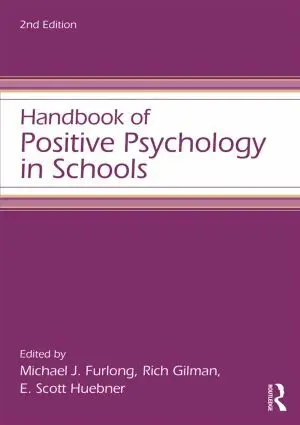
    Handbook of Positive Psychology in Schools

    AvMichael J. Furlong,Rich Gilman

    Häftad, Engelska, 2014

    Del i serien Educational Psychology Handbook

    1 862 kr

    Beställningsvara. Skickas inom 10-15 vardagar. Fri frakt över 249 kr.

    Beskrivning

    Understanding the factors that encourage young people to become active agents in their own learning is critical. Positive psychology is one lens that can be used to investigate the factors that facilitate a student’s sense of agency and active school engagement. In the second edition of this groundbreaking handbook, the editors draw together the latest work on the field, identifying major issues and providing a wealth of descriptive knowledge from renowned contributors. Major topics include: the ways that positive emotions, traits, and institutions promote school achievement and healthy social and emotional development; how specific positive-psychological constructs relate to students and schools and support the delivery of school-based services; and the application of positive psychology to educational policy making. With thirteen new chapters, this edition provides a long-needed centerpiece around which the field can continue to grow, incorporating a new focus on international applications of the field.

    Produktinformation

    • Utgivningsdatum:2014-02-21
    • Mått:174 x 246 x 29 mm
    • Vikt:990 g
    • Format:Häftad
    • Språk:Engelska
    • Serie:Educational Psychology Handbook
    • Antal sidor:522
    • Upplaga:2
    • Förlag:Taylor & Francis Ltd
    • ISBN:9780415621861

    Utforska kategorier

    • Pedagogisk psykologi inom Psykologi och pedagogik
    • Psykologiska teorier och skolor inom Psykologi och pedagogik
    • Studievägledning och elevhälsa inom Psykologi och pedagogik

    Mer om författaren

    Michael J. Furlong is a professor in the Department of Counseling, Clinical, and School Psychology at the University of California, Santa BarbaraRich Gilman is in the Division of Child and Adolescent Psychiatry at Cincinnati Children’s Hospital Medical Center, and Professor in the Department of Pediatrics at the University of Cincinnati Medical School, USScott Huebner is Professor in the School Psychology Program in the Department of Psychology at the University of South Carolina

    Innehållsförteckning

    • Section I. CONCEPTUAL FOUNDATIONS, Chapter 1. Toward a Science and Practice of Positive Psychology in Schools: A Conceptual Framework, Chapter 2. Covitality: A Synergistic Conception of Adolescents’ Mental Health, Section II. INDIVIDUAL POSITIVE PSYCHOLOGY ASSETS, Chapter 3. Measuring and Promoting Hope in Schoolchildren, Chapter 4. Optimism: What It Is and Its Relevance in the School Context, Chapter 5. Gratitude in School: Benefi ts to Students and Schools, Chapter 6. Empathy, Prosocial Behavior, and Positive Development in Schools, Chapter 7. Emotion Regulation: Implications for Positive Youth Development, Chapter 8. Academic Self-Efficacy, Chapter 9. Promoting Positive Motivational Goals for Students, Chapter 10. Achievement Emotions, Chapter 11. Creativity in the Schools: Renewed Interest and Promising New Directions, Chapter 12. Student Engagement, Chapter 13. Life Satisfaction and Schooling, Section III CONTEXTUAL EDUCATIONAL FACTORS AND RESOURCES, Chapter 14. Flow in Schools Revisited: Cultivating Engaged Learners and Optimal Learning Environments, Chapter 15. Meaningful Activity Participation and Positive Youth Development, Chapter 16. Cultivating Mindfulness in Students, Chapter 17. Peer Relationships and Positive Adjustment at School, Chapter 18. ClassMaps Consultation: Integrating Evaluation Into Classrooms to Promote Positive Environments, Chapter 19. Building Resilience in Schools Through Social and Emotional Learning, Chapter 20. School Climate: Defi nition, Measurement, and Application, Chapter 21. Engaging Students in School Climate Improvement: A Student Voice Strategy, Chapter 22. Positive Psychology and School Discipline, Chapter 23. Understanding and Promoting School Satisfaction in Children and Adolescents, Chapter 24. Innovative Models of Dissemination for School-Based Interventions That Promote Youth Resilience and Well-Being, Section IV. SCHOOL-BASED INTERNATIONAL PERSPECTIVES, Chapter 25. Positive Education: An Australian Perspective, Chapter 26. Enhancing Well-Being in Youth: Positive Psychology Interventions for Education in Britain, Chapter 27. Applications of Positive Psychology to Schools in China, Chapter 28. Emotional Intelligence: School-Based Research and Practice in Italy, Chapter 29. Hope in Students: Theory, Measures, and Applications to Portuguese Schools, Chapter 30. Positive Psychological Interventions in U.S. Schools: A Public Health Approach to Internalizing and Externalizing Problems, Section V. PERSPECTIVE, Chapter 31. Positive Psychology in Schools: Good Ideas Are Never Enough, Index