• Fri frakt över 249 kr
  • •
  • Snabba leveranser
  • •
  • Billiga böcker
Kundservice

Du är på sajten för privatpersoner.

Företag, bibliotek eller offentlig verksamhet?

Du handlar på classic.bokus.com, där alla dina funktioner finns intakta.
Till classic.bokus.com
Bokus logotyp. Gå till startsidan.
  • Erbjudanden
  • Nyheter
  • Student
  • Topplistor
  • Barn & ungdom
  • Bokus Play
  • E-böcker
  • Pocketböcker
  • Spel & pussel

10% rabatt på allt med kod: NYSTART10 →

Sidfot

Mina sidor

    Hjälp

    • Kundservice
    • Vanliga frågor och svar
    • Frakt och leverans
    • Retur vid ångerrätt
    • Reklamera vara
    • Betalning
    • Köpvillkor
    • Allmänna villkor
    • Information om webbplatsens tillgänglighet

    Om Bokus

    • Om oss
    • Pressrum
    • För studenter
    • För företag
    • För bibliotek och offentlig verksamhet
    • För leverantörer
    • Hållbarhet

    Populärt

    • Aktuella erbjudanden
    • Presentkort
    • Studentlitteratur
    • Nya böcker
    • Topplistor
    • Signerade böcker
    • Engelska böcker

    Inspiration

    • Boktips
    • BookTok
    • Populära bokserier
    • Barnbokskaraktärer
    • Populära författare
    Logotyp för Bokus
    Följ oss på Facebook (extern länk)Följ oss på Instagram (extern länk)Följ oss på YouTube (extern länk)Följ oss på TikTok (extern länk)
    bokus @ CookiesAnpassa cookiesIntegritetspolicyKöpvillkor
    Till Citymail hemsida (extern länk)Till Budbee hemsida (extern länk)Till Postnord hemsida (extern länk)Till Schenker hemsida (extern länk)Till Early Bird hemsida (extern länk)Till Walleys hemsida (extern länk)
    1. Samhälle och politik
    2. Samhälle och kultur
    3. Kultur och medier
    4. Referensverk och tvärvetenskap

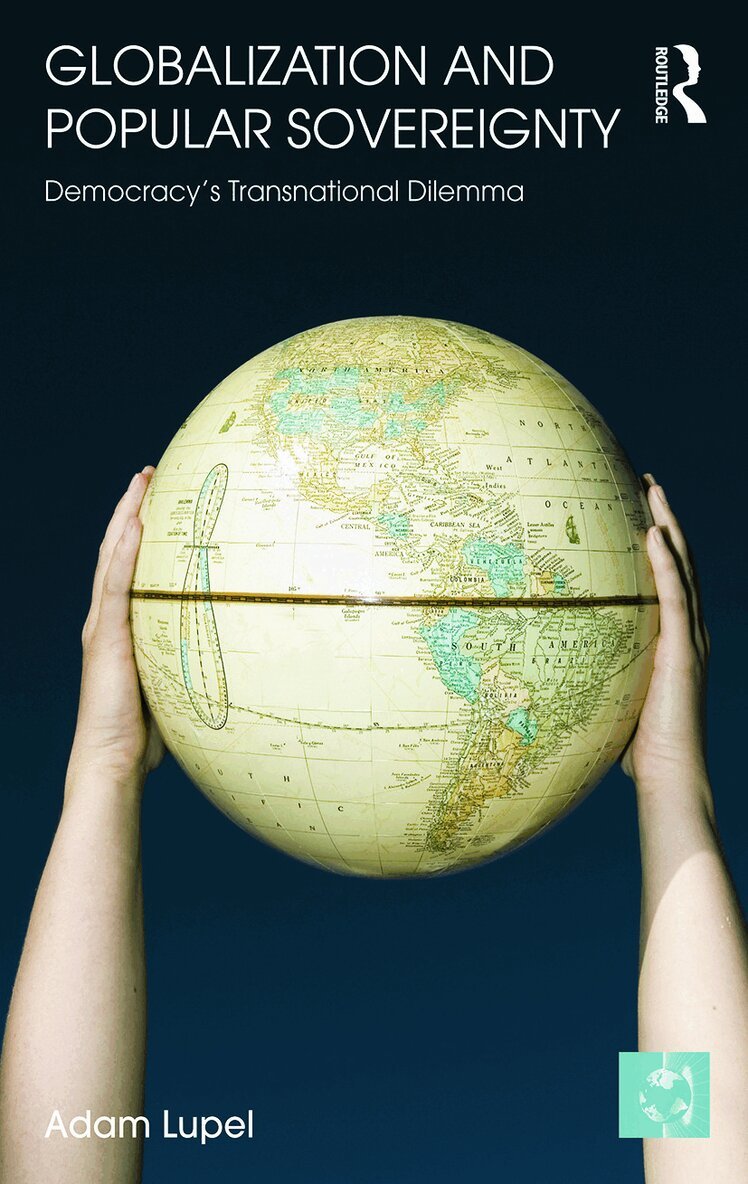
    Globalization and Popular Sovereignty

    Democracy’s Transnational Dilemma

    AvAdam Lupel

    Häftad, Engelska, 2011

    Del i serien Rethinking Globalizations

    723 kr

    Beställningsvara. Skickas inom 10-15 vardagar. Fri frakt över 249 kr.

    Fler format och utgåvor

    Inbunden

    2 423 kr

    E-bok

    855 kr

    E-bok

    855 kr

    Beskrivning

    We are living in a time of global transformation in which new political arrangements are being formed and old political arrangements now seem insufficient. In this context, alternative forms of authority are gaining strength, putting pressure on the normative currency of democratic politics; the central categories of democratic theory need to be re-examined or they risk becoming co-opted and diminished. Indeed, we must ask, how can the rule of the people be maintained in a transnational age?This volume analyzes the impact of globalization on the concept of popular sovereignty and rethinks it for the transnational domain. It explores how popular sovereignty has historically determined the form of democratic citizenship and how democratic citizenship and legitimacy can be conceived in the transnational sphere in the absence of a global sovereign order. By inquiring into the new global context of popular sovereignty, the book seeks to better understand the emerging structures of global governance and their potential for democratic legitimacy. Lupel argues:That the challenges of globalization necessitate a rethinking of the concept of popular sovereignty beyond the domain of the nation-state That such a rethinking reveals a tension between the particularism of democratic legitimacy and the universalism of cosmopolitan politics Thus critical attention to the constitutive processes of global governance must become an integral part of democratic theory in the context of globalization; and a principle of transnational popular sovereignty provides the best resources for this purpose. This book will be of interest to students and scholars of globalization, democratic theory and international relations theory.

    Produktinformation

    • Utgivningsdatum:2011-09-26
    • Mått:156 x 234 x 11 mm
    • Vikt:380 g
    • Format:Häftad
    • Språk:Engelska
    • Serie:Rethinking Globalizations
    • Antal sidor:200
    • Förlag:Taylor & Francis Ltd
    • ISBN:9780415670425

    Utforska kategorier

    • Referensverk och tvärvetenskap inom Samhälle och politik

    Mer om författaren

    Adam Lupel is Editor at the International Peace Institute in New York, USA. His work has appeared previously in Constellations, Critical Sociology, Globalizations, and Polity. Most recently, he co-edited "Peace Operations and Organized Crime", a special issue of International Peacekeeping (also published by Routledge).

    Recensioner i media

    An excellent discourse on the concept of sovereignty and on how this is transformed in the global age. It provides an imaginative and erudite comparison between the classic and the modern concepts of sovereignty. Lupel uncovers how democracy is today challenged and offers important insights to make democracy compatible with globalization by granting greater legitimacy and powers to transnational movements and institutions. Daniele Archibugi, Italian National Research Council, Italy, and Birkbeck College, University of London, UKDoes globalization render the concept of popular sovereignty dépassé? Seeking to redeem an indispensable element of democracy, Adam Lupel undertakes to re-imagine popular sovereignty for a postwestphalian world. After sorting the wheat from the chaff in leading proposals by Jürgen Habermas and David Held, Lupel develops an alternative conception whereby "the people" may exercise constituent authority in a decentered system of global governance. The result is an important exploration of the possible meanings of popular sovereignty in globalization. Nancy Fraser, Henry A. and Louise Loeb Professor of Political and Social Science, The New School for Social Research, New York, USA

    Innehållsförteckning

    • Preface 1. Introduction: Popular Sovereignty and Globalization 2. Trajectories of Popular Sovereignty 3. The Liberal Model of Popular Sovereignty: John Locke 4. The Republican Model of Popular Sovereignty: Jean-Jacques Rousseau 5. The Deliberative Model of Popular Sovereignty: Jürgen Habermas 6. Responses to Globalization (I) Habermas’s Postnational Constellation 7. Responses to Globalization (II) David Held’s Cosmopolitan Democracy and Global Civil Society 8. Conclusion: Toward a Transnational Politics of Popular Sovereignty