• Fri frakt över 249 kr
  • •
  • Snabba leveranser
  • •
  • Billiga böcker
Kundservice

Du är på sajten för privatpersoner.

Företag, bibliotek eller offentlig verksamhet?

Du handlar på classic.bokus.com, där alla dina funktioner finns intakta.
Till classic.bokus.com
Bokus logotyp. Gå till startsidan.
  • Erbjudanden
  • Nyheter
  • Student
  • Topplistor
  • Barn & ungdom
  • Bokus Play
  • E-böcker
  • Pocketböcker
  • Spel & pussel

Må bättre, för mindre! Upp till 50% rabatt på hälsoböcker

Sidfot

Mina sidor

    Hjälp

    • Kundservice
    • Vanliga frågor och svar
    • Frakt och leverans
    • Retur vid ångerrätt
    • Reklamera vara
    • Betalning
    • Köpvillkor
    • Allmänna villkor
    • Information om webbplatsens tillgänglighet

    Om Bokus

    • Om oss
    • Pressrum
    • För studenter
    • För företag
    • För bibliotek och offentlig verksamhet
    • För leverantörer
    • Hållbarhet

    Populärt

    • Aktuella erbjudanden
    • Presentkort
    • Studentlitteratur
    • Nya böcker
    • Topplistor
    • Signerade böcker
    • Engelska böcker

    Inspiration

    • Boktips
    • BookTok
    • Populära bokserier
    • Barnbokskaraktärer
    • Populära författare
    Logotyp för Bokus
    Följ oss på Facebook (extern länk)Följ oss på Instagram (extern länk)Följ oss på YouTube (extern länk)Följ oss på TikTok (extern länk)
    bokus @ CookiesAnpassa cookiesIntegritetspolicyKöpvillkor
    Till Citymail hemsida (extern länk)Till Budbee hemsida (extern länk)Till Postnord hemsida (extern länk)Till Schenker hemsida (extern länk)Till Early Bird hemsida (extern länk)Till Walleys hemsida (extern länk)
    1. Filosofi och religion
    2. Filosofi
    3. Filosofiska discipliner

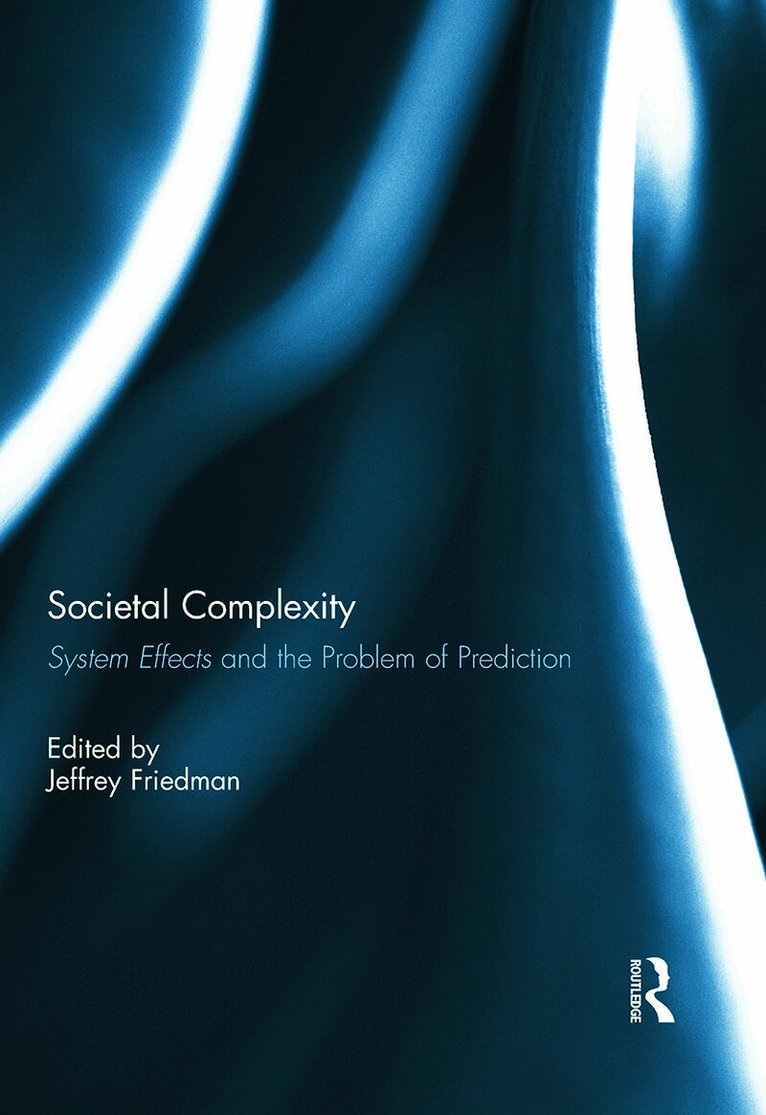
    Societal Complexity

    System Effects and the Problem of Prediction

    AvJeffrey Friedman

    Inbunden, Engelska, 2013

    1 466 kr

    Beställningsvara. Skickas inom 10-15 vardagar. Fri frakt över 249 kr.

    Beskrivning

    The complexity of the modern world makes it difficult to predict the effects of political actions. In his 1992 book, System Effects, Robert Jervis underscored this difficulty by pointing to various sources of complexity when people interact. For example, they may misperceive each other’s perceptions, leading their actions to backfire or create unintended side effects. In this collection, scholars of international relations, law, network analysis, political philosophy, and political science examine why questions of societal complexity have become unfashionable in some social sciences and fashionable in others. And they discuss whether complex social interactions tie our hands: if our actions are unpredictable, should we, and can we, stop acting? Among the contributors are noted legal theorist Richard Posner; Philip E. Tetlock, the world’s leading expert on the predictive shortcomings of "experts"; and Jervis himself, who contributes a retrospective look at his 1992 book and its lessons.This book was originally published as a special issue of Critical Review: A Journal of Politics and Society.

    Produktinformation

    • Utgivningsdatum:2013-10-10
    • Mått:174 x 246 x undefined mm
    • Vikt:430 g
    • Format:Inbunden
    • Språk:Engelska
    • Antal sidor:136
    • Förlag:Taylor & Francis Ltd
    • ISBN:9780415712965

    Utforska kategorier

    • Filosofiska discipliner inom Filosofi och religion
    • Internationella relationer inom Samhälle och politik

    Mer om författaren

    Jeffrey Friedman is a visiting scholar in the Department of Government, University of Texas at Austin, USA, received an MA in History from the University of California, Berkeley, USA, and a Ph.D. in Political Science from Yale University, USA. He is the founder and editor of Critical Review: A Journal of Politics and Society.

    Innehållsförteckning

    • 1. Introduction: System Effects and the Problem of Prediction Jeffrey Friedman 2. The Complexity of System Effects Andrea Jones-Rooy and Scott E. Page 3. We Can Never Study Merely One Thing: Reflections on Systems Thinking and IR Nuno P. Monteiro 4. Jervis on Complexity Theory Richard A. Posner 5. Should ‘‘Systems Thinkers’’ Accept the Limits on Political Forecasting or Push the Limits? Philip E. Tetlock, Michael C. Horowitz and Richard Herrmann 6. Conclusion: System Effects Revisited Robert Jervis