• Fri frakt över 249 kr
  • •
  • Snabba leveranser
  • •
  • Billiga böcker
Kundservice

Du är på sajten för privatpersoner.

Företag, bibliotek eller offentlig verksamhet?

Du handlar på classic.bokus.com, där alla dina funktioner finns intakta.
Till classic.bokus.com
Bokus logotyp. Gå till startsidan.
  • Erbjudanden
  • Nyheter
  • Student
  • Topplistor
  • Barn & ungdom
  • Bokus Play
  • E-böcker
  • Pocketböcker
  • Spel & pussel

10% rabatt på allt med kod NYSTART10 →

Sidfot

Mina sidor

    Hjälp

    • Kundservice
    • Vanliga frågor och svar
    • Frakt och leverans
    • Retur vid ångerrätt
    • Reklamera vara
    • Betalning
    • Köpvillkor
    • Allmänna villkor
    • Information om webbplatsens tillgänglighet

    Om Bokus

    • Om oss
    • Pressrum
    • För studenter
    • För företag
    • För bibliotek och offentlig verksamhet
    • För leverantörer
    • Hållbarhet

    Populärt

    • Aktuella erbjudanden
    • Presentkort
    • Studentlitteratur
    • Nya böcker
    • Topplistor
    • Signerade böcker
    • Engelska böcker

    Inspiration

    • Boktips
    • BookTok
    • Populära bokserier
    • Barnbokskaraktärer
    • Populära författare
    Logotyp för Bokus
    Följ oss på Facebook (extern länk)Följ oss på Instagram (extern länk)Följ oss på YouTube (extern länk)Följ oss på TikTok (extern länk)
    bokus @ CookiesAnpassa cookiesIntegritetspolicyKöpvillkor
    Till Citymail hemsida (extern länk)Till Budbee hemsida (extern länk)Till Postnord hemsida (extern länk)Till Schenker hemsida (extern länk)Till Early Bird hemsida (extern länk)Till Walleys hemsida (extern länk)
    1. Psykologi och pedagogik
    2. Psykologi
    3. Psykologiska teorier och skolor
    4. Freudiansk psykologi

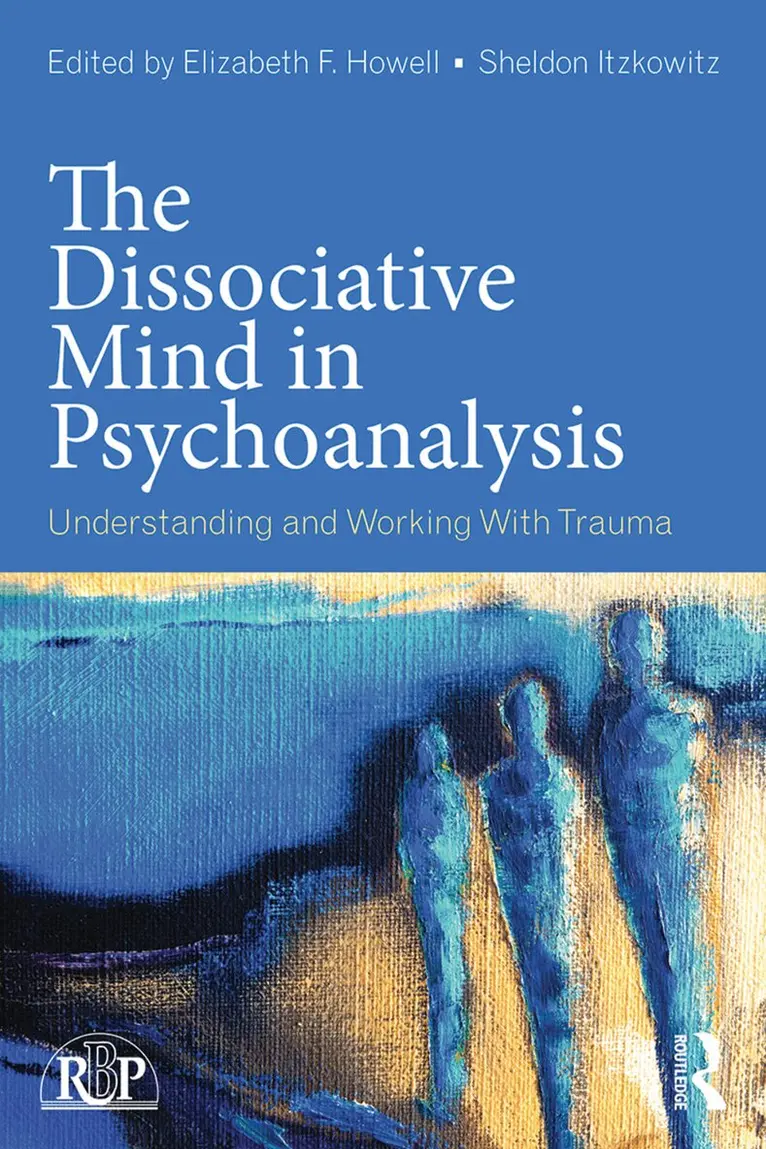
    Dissociative Mind in Psychoanalysis

    Understanding and Working With Trauma

    AvElizabeth Howell,Sheldon Itzkowitz

    Häftad, Engelska, 2016

    Del i serien Relational Perspectives Book Series

    716 kr

    Beställningsvara. Skickas inom 10-15 vardagar. Fri frakt över 249 kr.

    Beskrivning

    The Dissociative Mind in Psychoanalysis: Understanding and Working With Trauma is an invaluable and cutting edge resource providing the current theory, practice, and research on trauma and dissociation within psychoanalysis. Elizabeth Howell and Sheldon Itzkowitz bring together experts in the field of dissociation and psychoanalysis, providing a comprehensive and forward-looking overview of the current thinking on trauma and dissociation. The volume contains articles on the history of concepts of trauma and dissociation, the linkage of complex trauma and dissociative problems in living, different modalities of treatment and theoretical approaches based on a new understanding of this linkage, as well as reviews of important new research. Overarching all of these is a clear explanation of how pathological dissociation is caused by trauma, and how this affects psychological organization -- concepts which have often been largely misunderstood. The Dissociative Mind in Psychoanalysis will be essential reading for psychoanalysts, psychoanalytically oriented psychotherapists, trauma therapists, and students.

    Produktinformation

    • Utgivningsdatum:2016-02-16
    • Mått:156 x 234 x 16 mm
    • Vikt:418 g
    • Format:Häftad
    • Språk:Engelska
    • Serie:Relational Perspectives Book Series
    • Antal sidor:272
    • Förlag:Taylor & Francis Ltd
    • ISBN:9780415736015

    Utforska kategorier

    • Freudiansk psykologi inom Psykologi och pedagogik
    • Psykoterapi som behandlingsmetod inom Medicin

    Mer om författaren

    Elizabeth F. Howell, Ph.D., is the author of the award-winning books, The Dissociative Mind and Understanding and Treating Dissociative Identity Disorder: A Relational Approach. She is on the Editorial Board of the Journal of Trauma and Dissociation; Adjunct Clinical Associate Professor of Psychology, New York University Postdoctoral Program in Psychotherapy and Psychoanalysis; faculty, supervisor, Trauma Treatment Center, Manhattan Institute for Psychoanalysis; faculty, National Institute for Psychotherapies, faculty, Psychotherapy Training Program: International Society for the Study of Trauma and Dissociation, and an Honorary Member of the William Alanson White Psychoanalytic Society. She has written extensively and lectured nationally and internationally on various aspects of trauma and dissociation, as well as on gender and trauma/dissociation. She is in private practice in Manhattan.Sheldon Itzkowitz, Ph.D., is an Adjunct Clinical Associate Professor of Psychology and Clinical Consultant at the NYU Postdoctoral Program in Psychotherapy and Psychoanalysis; Guest Faculty, William Alanson White Institute, Eating Disorders, Compulsions, and Addictions Program; and on the teaching and supervisory faculty of the National Institute for the Psychotherapies Training Program in Psychoanalysis. He has presented his work on the treatment of extremely dissociated patients both nationally and internationally. He is an Associate Editor of Psychoanalytic Perspectives and a former President of the Division of Psychoanalysis of the New York State Psychological Association. He is in private practice in Manhattan.

    Recensioner i media

    "In this outstanding volume, Howell and Itzkowitz have collected a comprehensive set of scholarly contributions covering the depth and breadth of dissociative phenomena, as well as the clinical concerns in working with the sequelae of complex trauma. They include the full range of psychoanalytic orientations and provide extensive surveys of cultural, historical, diagnostic, and developmental considerations along with research findings. On top of this considerable achievement, the editors have situated all of these contributions within the context provided by their own introductory chapters. This book will be used as a basic teaching text for years to come."- Lewis Aron, Ph.D., Director, New York University Postdoctoral Program in Psychotherapy & Psychoanalysis.Psychoanalysts both, Itzkowitz and Howell are well-known for their work with the naturally occurring dissociative aspects of mind and for their wise, humanistic, and compassionate work with patients suffering with trauma-generated dissociation, patients many might be afraid to treat in private practice. Now they bring their accumulated wisdom, together with the thinking of many distinguished colleagues, to bear, placing dissociation and the dissociative mind firmly in the psychoanalytic tradition, reading it in various theoretical and cultural contexts, explaining how it became hidden from view, showing how to understand and treat its sufferers now. This book will teach, encourage, and support all therapists who look for the human being underneath the "pathology." A great gift to us all. - Donna Orange, Ph.D., Psy.D. author, The Suffering Stranger (Routledge, 2011)Drs. Howell and Itzkowitz have fashioned a resource for those who are interested in learning more about psychoanalytic treatment and how psychoanalysts work with and help victims of trauma, traumatic, dissociation and dissociative disorders. Psychoanalysis, cognitive science, cognitive neuroscience, and trauma research all have a say in this outstanding volume which explores trauma and dissociation within a broad psychoanalytic context. The editors should be commended for their written contributions, for gathering chapters from leading experts in the area, and for the scope and depth of the issues addressed.- Judith Alpert, Ph.D. is Professor, Department of Applied Psychology, New York University and Professor and Clinical Consultant at New York University Postdoctoral Program in Psychotherapy and Psychoanalysis

    Innehållsförteckning

    • Introduction Elizabeth F. Howell, Ph.D. & Sheldon Itzkowitz, Ph.D.SECTION 1 History of Complex Trauma and Dissociative Problems in Living1. Is Trauma-Analysis Psycho-Analysis Elizabeth F. Howell, Ph.D. & Sheldon Itzkowitz, Ph.D.2. From Trauma-Analysis to Psycho-Analysis And Back Again Elizabeth F. Howell, Ph.D. & Sheldon Itzkowitz, Ph.D.3. The Everywhereness of Trauma and the Dissociative Structuring of the Mind Elizabeth F. Howell, Ph.D. & Sheldon Itzkowitz, Ph.D.4. Pierre Janet, Sigmund Freud, and Dissociation of the Personality: The First Codification of a Psychodynamic Depth Psychology Onno van der Hart, Ph.D. 5. The Ferenczi Paradox: His Importance in Understanding Dissociation and the Dissociation of His Importance in Psychoanalysis Margaret L. Hainer, LCSW SECTION 2 Psychoanalytic Orientations and the Treatment of Complex Trauma Dissociation and Dissociative Disorders6. Models of Dissociation in Freud’s Work: Outcomes of Dissociation of Trauma in Theory and Practice Elizabeth F. Howell, Ph.D.7. Jung and Dissociation: Complexes, Dreams, and the Mythopoetic Psyche Donald Kalsched, Ph.D. 8. ‘A Queer Kind of Truth’: Winnicott and the Uses of Dissociation Dodi Goldman, Ph.D.9. A Kleinian Perspective on Dissociation and Trauma: Miscarriages in Symbolization Joseph Newirth, Ph.D.10. It Never Entered My Mind Philip Bromberg, Ph.D. 11. Precarious Places: Intersubjectivity in Traumatized States Jennifer Leighton LCSW12. Latah: An Ethnic Syndrome With Dissociative Features – A Sadomasochistic Pattern? Elizabeth Hegeman, Ph.D. SECTION 3 Aspects of Psychoanalytic Treatment of Complex Trauma and Dissociation13. Thoughts on Working with the Dreams of DID and DDNOS Patients Richard P. Kluft, M.D., Ph.D. 14. Who Moved My ‘Swiss’ Cheese? Eating Disorders And The Use Of Dissociation As An Attempt To Fill In The ‘Whole’ Jean Petrucelli, Ph.D. 15. A Bell Rings In The Empty Sky: Dissociative Attunement In A Resonant World Karen Hopenwasser, M.D. 16. Divide and Multiply; A Multi-Dimensional View of Dissociative Processes Wilma Bucci, Ph.D.17. The Personal Diagnostic Crisis: The Acknowledgement of Self-States in DID Richard A. Chefetz, M.D. 18. Psychoactive Therapy Of DID: A Multiphasic Model Ira Brenner, M.D. 19. The Seeming Absence of Children With DID Valerie Sinason, Ph.D. SECTION 4 Current Research Trends in Complex Trauma Dissociation and Dissociative Disorders20. A Tale of Two Offenders: Why Dissociation Is Under-Diagnosed In Forensic Populations Abby Stein, Ph.D.21. An Update On Research About the Validity, Assessment, and Treatment of DID Bethany Brand, Ph.D. & Daniel Brown B.S. 22. Speaking One’s Dissociated Mind: So Should My Thoughts Be Severed From My Griefs and Woes Brian Koehler, Ph.D.