• Fri frakt över 249 kr
  • •
  • Snabba leveranser
  • •
  • Billiga böcker
Kundservice

Du är på sajten för privatpersoner.

Företag, bibliotek eller offentlig verksamhet?

Du handlar på classic.bokus.com, där alla dina funktioner finns intakta.
Till classic.bokus.com
Bokus logotyp. Gå till startsidan.
  • Erbjudanden
  • Nyheter
  • Student
  • Topplistor
  • Barn & ungdom
  • Bokus Play
  • E-böcker
  • Pocketböcker
  • Spel & pussel

10% rabatt på allt med kod: NYSTART10 →

Sidfot

Mina sidor

    Hjälp

    • Kundservice
    • Vanliga frågor och svar
    • Frakt och leverans
    • Retur vid ångerrätt
    • Reklamera vara
    • Betalning
    • Köpvillkor
    • Allmänna villkor
    • Information om webbplatsens tillgänglighet

    Om Bokus

    • Om oss
    • Pressrum
    • För studenter
    • För företag
    • För bibliotek och offentlig verksamhet
    • För leverantörer
    • Hållbarhet

    Populärt

    • Aktuella erbjudanden
    • Presentkort
    • Studentlitteratur
    • Nya böcker
    • Topplistor
    • Signerade böcker
    • Engelska böcker

    Inspiration

    • Boktips
    • BookTok
    • Populära bokserier
    • Barnbokskaraktärer
    • Populära författare
    Logotyp för Bokus
    Följ oss på Facebook (extern länk)Följ oss på Instagram (extern länk)Följ oss på YouTube (extern länk)Följ oss på TikTok (extern länk)
    bokus @ CookiesAnpassa cookiesIntegritetspolicyKöpvillkor
    Till Citymail hemsida (extern länk)Till Budbee hemsida (extern länk)Till Postnord hemsida (extern länk)Till Schenker hemsida (extern länk)Till Early Bird hemsida (extern länk)Till Walleys hemsida (extern länk)
    1. Filosofi och religion
    2. Filosofi
    3. Filosofiska discipliner

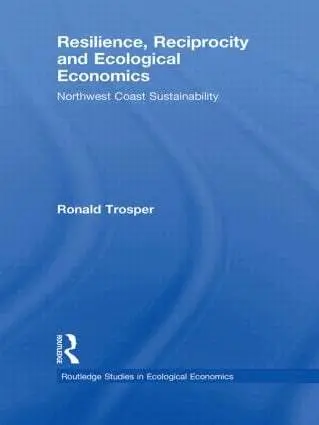
    Resilience, Reciprocity and Ecological Economics

    Northwest Coast Sustainability

    AvRonald Trosper

    Häftad, Engelska, 2011

    Del i serien Routledge Studies in Ecological Economics

    877 kr

    Beställningsvara. Skickas inom 10-15 vardagar. Fri frakt över 249 kr.

    Fler format och utgåvor

    Inbunden

    2 493 kr

    E-bok

    1 040 kr

    E-bok

    1 040 kr

    Beskrivning

    How did one group of indigenous societies, on the Northwest Coast of North America, manage to live sustainably with their ecosystems for over two thousand years? Can the answer to this question inform the current debate about sustainability in today’s social ecological systems? The answer to the first question involves identification of the key institutions that characterized those societies. It also involves explaining why these institutions, through their interactions with each other and with the non-human components, provided both sustainability and its necessary corollary, resilience. Answering the second question involves investigating ways in which key features of today’s social ecological systems can be changed to move toward sustainability, using some of the rules that proved successful on the Northwest Coast of North America.Ronald L. Trosper shows how human systems connect environmental ethics and sustainable ecological practices through institutions.

    Produktinformation

    • Utgivningsdatum:2011-03-10
    • Mått:156 x 234 x 12 mm
    • Vikt:370 g
    • Format:Häftad
    • Språk:Engelska
    • Serie:Routledge Studies in Ecological Economics
    • Antal sidor:202
    • Förlag:Taylor & Francis Ltd
    • ISBN:9780415782524

    Utforska kategorier

    • Filosofiska discipliner inom Filosofi och religion

    Recensioner i media

    "This anthropological and sociological study sets out to show how human systems connect environmental ethics and sustainable ecological practices through institutions. Based on the case of the Northwest Coast of America, the author asks, firstly, how one group of indigenous societies managed to live sustainably with their ecosystems for over 2,000 years, and secondly, whether the answer to this question can inform the current debate about sustainability in today’s social ecological systems." - Journal of Consumer Policy

    Innehållsförteckning

    • 1. Sustainability Needs Tested Ideas from the Pacific Northwest 2. Why it is So Difficult to Learn from Aboriginal North America 3. A Partial Policy Framework Already Exists 4. Gifts: Indian Giving Creates Consumption Connections to Mirror Ecosystem Connections 5. Chiefs: Empower Generous Facilitators to Resolve Conflicts 6. Contingency: Community limits on Individual Behavior Promote Resilience 7. Comparison of Indigenous and Industrial Salmon Management 8. Relicensing of Kerr Dam on the Flathead Indian Reservation 9: Nisga’a Nation and Treaty 10: Dams and Salmon on the Lower Snake River 11. The NW System Encourages Adaptive Management